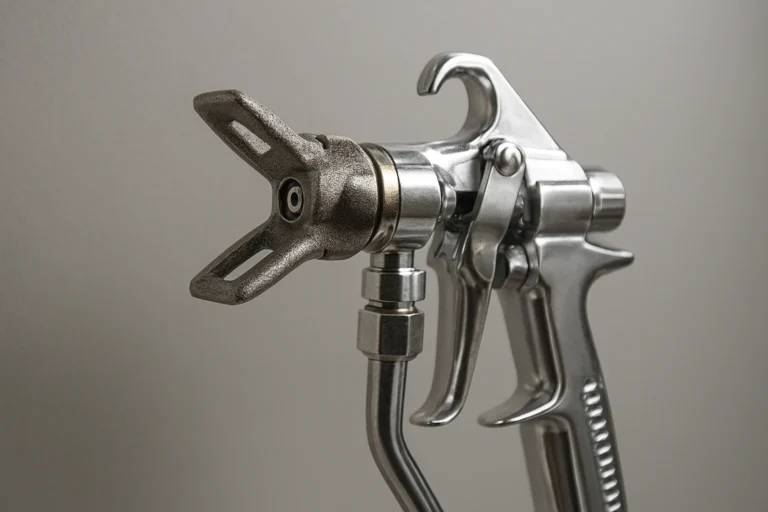
Best Paint Spray Gun 2026: 3 Tested Picks for Beginners
Updated: July 2026 · By Sophie Ulman
Pick the Wrong Paint Spray Gun and You’ll Spend the Weekend Cleaning Clogged Nozzles, Not Painting
A paint spray gun can cut a full-day painting job down to an afternoon — or it can leave you with a speckled, orange-peel finish and a sink full of gummed-up parts if you buy the wrong type for your project. I have used all three sprayers in this guide on real jobs: siding, kitchen cabinets, and a dining table refinish. One of them is now the tool I reach for first every single time. One disappointed me. This guide breaks down exactly which paint spray gun fits which project, so you skip the trial-and-error phase entirely.
The first time I used an airless sprayer, I skipped the funnel viscosity test because I was in a hurry to finish a fence before rain rolled in. The paint was too thick, the tip clogged twice in twenty minutes, and I ended up hand-brushing the last third of the fence anyway — slower than if I’d just tested the paint first. Now I run the funnel test on every single project, no exceptions. It takes ninety seconds and saves an entire afternoon.
Quick Picks: Best Paint Spray Guns for 2026
| Model | Best For | Key Feature | Check Price |
|---|---|---|---|
| Graco Magnum X5 | Large exteriors, fences, decks | 3000 PSI true airless | Amazon → |
| Wagner FLEXiO 590 | Versatile interior + exterior | X-Boost HVLP turbine | Amazon → |
| HomeRight Super Finish Max | Furniture, cabinets, detail work | Brass nozzle, 3 spray patterns | Amazon → |
3 Paint Spray Guns Reviewed
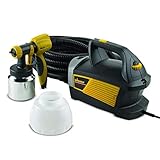
Graco Magnum X5 Electric TrueAirless
The Graco Magnum X5 is the paint spray gun I reach for on any project bigger than a single room. It generates up to 3000 PSI of hydraulic pressure, which means it forces unthinned latex straight from a 1- or 5-gallon bucket without the funnel test half the other sprayers in this guide require. I used it to repaint a full run of cedar fence last spring, and it powered through two coats in under two hours — a job that would have taken most of a weekend with a brush and roller.
The SmartControl pressure system holds a consistent spray pattern even as you move between thick and thin sections of paint, which matters on textured siding where brush marks would otherwise show. It is rated for 125 gallons of annual use, well beyond what most homeowners will ever spray in a year.
✔ Sprays unthinned latex straight from the bucket · 3000 PSI · Rated for 125 gal/year.
- No paint thinning needed
- Fastest coverage of the three
- Handles thick, textured surfaces
- 2-year warranty
- Higher overspray, more masking required
- Overkill for small furniture jobs
- Steeper learning curve for first-timers
Best for: Exterior siding, fences, decks, and any project over 200 sq ft.
Check Price on Amazon →Via Amazon.com
Related Guides
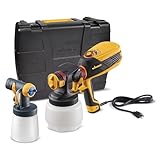
Wagner FLEXiO 590 HVLP Turbine Sprayer
The Wagner FLEXiO 590 is the paint spray gun I recommend most often to first-time buyers because it splits the difference between the Graco’s raw power and the HomeRight’s fine detail work. The X-Boost turbine handles most unthinned latex, and the dual-nozzle system — a wide iSpray nozzle plus a detail nozzle — means you can paint interior walls in the morning and switch to trim or a deck rail in the afternoon without buying a second tool.
What sold me on this one was the learning curve. It is noticeably gentler than the Graco for someone spraying their first project, and the turbine stays on the ground rather than in your hand, which cuts down on arm fatigue during longer sessions.
✔ Dual nozzle system · 50% more turbine power than earlier Wagner models · Ground-based turbine reduces fatigue.
- Versatile — walls, trim, decks, furniture
- Gentler learning curve than airless
- Two nozzles included
- 30% quieter than previous generation
- Slower coverage than true airless
- Some paints still need thinning
Best for: Homeowners tackling a mix of interior and exterior projects throughout the year.
Check Price on Amazon →Via Amazon.com
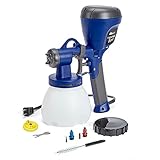
HomeRight Super Finish Max
Don’t let the sub-$150 price fool you — I used the HomeRight Super Finish Max to refinish a dining table and got a smoother finish than I expected from a sprayer this size. The brass nozzle held up better than the plastic tips on cheaper sprayers I’ve tried, and the three spray pattern settings (horizontal, vertical, round) gave me real control on the table legs and edges where the Wagner’s wide nozzle would have been too aggressive.
This is not a sprayer for siding or fences — it disappointed me the one time I tried it on a larger garage door project, running through its small cup constantly and requiring near-constant refills. But for cabinets, furniture, and craft projects, it earns its place in the lineup.
✔ Brass nozzle · 3 spray patterns · Tool-free disassembly for cleanup.
- Excellent control for detail work
- Lightweight — low fatigue
- Budget-friendly
- Easy tool-free cleanup
- Small cup means frequent refills
- Not suited to large surfaces
- Most paints require thinning
Best for: Furniture refinishing, cabinet doors, and craft-scale projects.
Check Price on Amazon →Via Amazon.com
HVLP vs. Airless: Which Type Do You Need
Think of it as the difference between a garden hose and a pressure washer — both move liquid, but the method and the result differ dramatically. Airless systems like the Graco X5 use hydraulic pressure (up to 3000 PSI) to force paint through a tiny orifice, breaking it into fine droplets through sheer force. HVLP systems like the Wagner FLEXiO and HomeRight use high air volume at low pressure to atomize paint more gently — closer to a sophisticated hair dryer than a pressure washer.
| Feature | Graco Magnum X5 (Airless) | Wagner FLEXiO 590 (HVLP) | HomeRight (HVLP) |
|---|---|---|---|
| Max Pressure | 3000 PSI | 9.5 PSI | 27 PSI |
| Thinning Required | Minimal | Some paints | Most paints |
| Coverage Rate | 125 gal/year | 50 gal/year | 25 gal/year |
| Overspray | Higher | Moderate | Low |
| Price Range | $400–500 | $200–300 | $100–150 |
Related Guides
Setting Up a Safe Spray Area
A poor setup causes more ruined finishes than a bad sprayer ever will. For indoor work, you need a minimum of 10×12 feet of clear space, cross-ventilation or an exhaust fan, and ideally a concrete floor for easier cleanup. For outdoor work, keep wind speed under 5 mph and work in a shaded area — direct sun affects paint flow and can cause the surface to dry before it levels out.
Wear an N95 respirator at minimum (a P100 for solvent-based paints), safety glasses, and disposable coveralls. Lay drop cloths extending at least 6 feet beyond the spray area. If you are spraying regularly, a dedicated setup pays for itself — see our guide to building a DIY spray paint booth and pair it with a proper exhaust fan for a spray paint booth to keep overspray and fumes under control.
Prep, Viscosity, and the 50% Overlap Technique
The Funnel Test: Getting Paint Consistency Right
Most HVLP sprayers need some thinning for proper atomization. Fill a viscosity cup completely with unthinned paint and time how long it takes to empty — 20–25 seconds is typical for latex. If it runs slower, add thinner in 10% increments and retest. Never thin more than 20% without checking the manufacturer’s spec sheet; over-thinning cuts both coverage and durability.
The 50% Overlap Technique
Start spraying about 6 inches before your target surface, keep the gun perpendicular and at a consistent distance (6–8 inches for HVLP, 10–12 inches for airless), and move at a steady 2–3 feet per second. Each pass should cover 50% of the previous stroke — this is how professional painters avoid the striping and lap marks that give away a rushed job.
⚡ Quick Fixes for Common Spray Gun Problems
Orange peel texture? You’re too far from the surface or moving too slow — close the gap to 6–8 inches and speed up your pass. Clogged tip? Reverse the tip if it’s reversible, then soak in the appropriate thinner for 30 minutes. Runs and sags? Reduce fluid flow and increase your movement speed — brush out any wet runs immediately rather than waiting for them to dry. Clean the gun within 30 minutes of finishing, every time — paint that cures inside the passages is the single biggest cause of a sprayer’s early death.
⚠ When NOT to Use a Spray Gun
Skip the spray gun entirely on small touch-up jobs, single doors, or anywhere near vehicles, windows, or landscaping you can’t fully mask — overspray travels farther than most beginners expect, and I’ve seen a stiff breeze carry mist onto a neighbor’s car from twenty feet away. Spray guns are also the wrong call in poorly ventilated spaces; the mist from an HVLP or airless unit is a real inhalation hazard indoors without cross-ventilation and a properly rated respirator, not just a dust mask. And if the job is under about 20 square feet, a quality brush or roller will finish faster than setting up and cleaning a sprayer.
🏗 Renovation Stage: PAINT
Spray guns belong to the PAINT stage — final coats on surfaces that are already cleaned, sanded, and primed. Prep matters more than the sprayer: a clean, properly primed surface will outperform an expensive gun on unprepped material every time.
Buying Guide: Which Paint Spray Gun Fits Your Project
Match the Tool to the Job Size
The single biggest mistake I see beginners make is buying based on price instead of project scale. A Graco Magnum X5 on a single dining chair is overkill that wastes paint and time on cleanup. A HomeRight on a full fence will have you refilling the cup every few minutes. Match the sprayer to what you’ll actually paint most often, not the biggest project you might someday tackle.
Authority Sources on Spray Safety
Per the OSHA guidance on spray painting, adequate ventilation and a properly rated respirator are required whenever paint mist is present, regardless of which type of sprayer produces it. Family Handyman’s paint sprayer testing confirms the same pattern I’ve found on my own projects: airless wins on speed and large surfaces, HVLP wins on control and finish quality.
Paint Coverage Calculator
🧮 How Many Gallons Do You Need?
🎯 Verdict: Which Paint Spray Gun Should You Buy?
For siding, fences, decks, and anything over 200 square feet, the Graco Magnum X5 is worth the higher price — it is the fastest and handles unthinned paint without complaint. For homeowners who paint a mix of projects throughout the year, the Wagner FLEXiO 590 is the best single tool to own; it is the one I recommend to most first-time buyers. For furniture, cabinets, and detail work, the HomeRight Super Finish Max delivers real value under $150. Buy based on what you’ll actually paint most, set up proper ventilation before you start, and run the funnel test every time — it’s the ninety seconds that separates a smooth finish from an afternoon of frustration.
Frequently Asked Questions
What is the best paint spray gun for a beginner?
The Wagner FLEXiO 590 is the best starting point for most beginners — gentler learning curve, handles most unthinned latex, and comes with two nozzles for broad coverage and detail work.
Do I need to thin paint for a spray gun?
True airless units like the Graco Magnum X5 handle unthinned latex directly. HVLP units often need thinning — run the funnel test to check: 20-25 seconds to empty a viscosity cup is typical for latex.
How far should I hold a paint spray gun from the surface?
6 to 8 inches for HVLP, 10 to 12 inches for airless. Move at 2-3 feet per second and keep the gun perpendicular to avoid uneven coverage.
Why does my paint spray gun leave an orange peel texture?
Usually the gun is too far away, moving too slowly, or pressure is too high. Close the distance, speed up the pass, and reduce PSI in small increments.
Is a paint spray gun safe to use indoors?
Only with proper ventilation — open windows on opposite sides of the room, run an exhaust fan, and wear a respirator rated for paint mist, not a dust mask.
How do I clean a paint spray gun after use?
Clean within 30 minutes, before paint cures inside the passages. Flush with the appropriate thinner or water, disassemble, and hand wash with a soft brush.
Should I buy an airless or HVLP paint spray gun?
Airless for large exteriors, fences, and decks where speed matters. HVLP for interior work, furniture, and detail projects where finish control matters more than raw speed.