High Heat Paint for Exhaust: What Survives a Full Season
Updated: July 2026 | By Sophie Ulman
Pick the wrong high heat paint for exhaust and it burns off in the first three heat cycles — flaking, smoking, and leaving your headers looking worse than bare steel. I learned that the expensive way. The first time I painted a set of shorty headers, I grabbed a can of regular gloss black enamel because it was on the shelf. By the second drive it had bubbled and turned brown, and I spent an afternoon wire-brushing it back off. Here is what I learned: the label rating and the prep matter more than the brand name on the can.
This guide covers the five picks I trust for exhaust and header work, what temperature each one actually survives, and the curing step almost everyone skips. Durability here is about 50% product and 50% surface prep — skip the degrease and cure, and even a 2000°F coating peels.
Quick picks: high heat paint for exhaust at a glance
| Pick | Best for | Max heat | Finish |
|---|---|---|---|
| VHT SP102 FlameProof | Headers & downpipes (hottest zone) | 2000°F intermittent | Flat black |
| Rust-Oleum 248903 | Budget street builds | 1200°F | Flat black |
| Dupli-Color DE1635 Ceramic | Engine bay & valve covers | 500°F | Semi-gloss black |
| VHT SP118 FlameProof Primer | Adhesion base under FlameProof | 2000°F | Flat white primer |
The 4 best high heat paints for exhaust, reviewed
I ranked these by where they belong on the car, not by a single “best” score. The right high heat paint for exhaust depends entirely on how hot that specific part gets. A downpipe near the turbo sees very different heat than a valve cover, so match the coating to the zone.
Headers & Downpipes
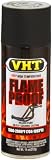
VHT SP102 FlameProof Coating (Flat Black)
FlameProof is a silicone-ceramic coating, not a standard enamel — that ceramic base is why it survives header temperatures that cook ordinary paint off in days. The silicone binder stays flexible as steel expands and contracts through heat cycles, so the film moves with the metal instead of cracking. It is rated for intermittent temperatures up to 2000°F, which covers the hottest section of a naturally aspirated exhaust.
The catch: FlameProof only reaches full hardness after a specific heat-cure schedule (I cover the numbers in the prep section). Spray it, let it flash off, then cure it in stages. The first set of headers I did with this, I skipped the final cure temperature and drove it — the finish stayed soft and picked up fingerprints for a week until the exhaust heat finished the job for me. Do the cure on the bench and it locks in rock-hard.
- True 2000°F ceramic rating
- Flexes with heat cycles, resists cracking
- Matte finish hides weld seams
- Requires a multi-stage heat cure to harden
- Flat-only — no gloss option
Via Amazon.com
Street Builds
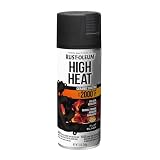
Rust-Oleum 248903 Automotive High Heat (Flat Black)
This is a high-heat enamel rather than a ceramic coating, rated to 1200°F. That number is the whole story: 1200°F is plenty for a mild-steel exhaust pipe, muffler, or heat shield on a street-driven car, but it is below what turbo downpipes and header primaries hit. The comfort-tip can sprays evenly and lays down without the heavy runs cheaper high-heat cans are known for.
Where it earns its spot is value and touch-up. On a daily driver I keep a can around for the mid-pipe and muffler — sections that never glow. What I have seen consistently is that on the hottest header section it browns over a season, so I do not use it there. Two thin coats always beat one thick coat here; the thick coat is what blisters when the pipe first heats up.
- Cheapest reliable option here
- Even spray, easy touch-ups
- No cure oven strictly required for mid-heat zones
- 1200°F ceiling — browns on the hottest sections
- Enamel, not ceramic; shorter life under extreme heat
Via Amazon.com
Valve Covers & Blocks
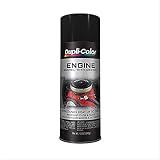
Dupli-Color DE1635 Engine Enamel with Ceramic (Semi-Gloss Black)
This one is not a header coating, and that is exactly the point. The ceramic resin gives it heat dissipation and gloss retention up to 500°F intermittent — the temperature range of an engine block, valve cover, or intake, not an exhaust primary. Because it holds a semi-gloss finish, it looks finished under the hood where a flat header coating would look unfinished.
I use this for the dress-up parts that sit near the exhaust but never touch header heat. The semi-gloss reads as a factory-plus finish and it does not chalk the way flat coatings do. Just know its limit: put this on an actual header and it will discolor fast. Match it to the block-and-accessory zone and it holds gloss for years. Pair it with a proper degrease and a light scuff for adhesion.
- Holds semi-gloss under 500°F
- Ceramic resin resists chalking
- EZ-touch nozzle, clean lay-down
- 500°F ceiling — not for headers or downpipes
- Semi-gloss shows surface flaws
Via Amazon.com
Adhesion Base
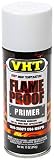
VHT SP118 FlameProof Primer (Flat White)
Most people skip primer on exhaust work, and it is the mistake I see most often. This is a matching silicone-ceramic primer rated to the same 2000°F as FlameProof topcoat, so it will not become the weak layer that lets everything above it flake. It gives the topcoat a mechanical bite on bare, blasted steel — which is where cheap high-heat jobs fail first.
Use it only where you are running a FlameProof topcoat and want maximum life on a header that will see hard heat cycling. The white base also makes it obvious when your black topcoat has full coverage. It is one more can and one more cure step, but on a header I plan to keep, I would not run FlameProof without it. Two thin coats of primer, cured, then your color.
- 2000°F rating matches FlameProof topcoat
- Strong bite on blasted steel
- White base confirms topcoat coverage
- Adds a can and a cure step
- Overkill under sub-1200°F enamels
Via Amazon.com
The fifth pick is not a product but a combination: FlameProof primer plus FlameProof topcoat, cured together, is the system I reach for on any header I want to survive multiple seasons. The two cans are built to work as one stack.
Pro tips: how to make it actually last
Degrease like you mean it. New steel headers ship with an oil film, and paint over oil is paint that peels. Wipe with lacquer thinner, then handle only with clean gloves — a bare thumbprint is enough oil to lift a coating.
Two thin coats, always. On exhaust work the thick single coat is the classic failure: the surface skins over, the solvent underneath stays wet, and the first heat cycle blisters it. Thin, let it flash, thin again.
Do the heat cure on the bench, not on the car. Every ceramic coating here reaches full hardness through a staged bake. Skip it and the exhaust cures it for you — badly, with fingerprints and soft spots locked in. Ten minutes of patience saves a redo.
Match the paint to the zone. A header primary can glow; a muffler never will. Using a 2000°F coating everywhere is fine; using a 500°F enamel on a header is money you will spend twice.
High heat paint for exhaust is a PAINT-stage job, but it lives or dies on the PREP stage before it. Blast or wire-wheel to bare metal, degrease, and only then spray. For a related bare-metal job, see how I handle rusty metal.
Exhaust coverage calculator
Estimate how many cans you need. Two thin coats is the default — thin coats are what make high heat paint for exhaust last.

Header paint, muffler paint, exhaust paint: what’s actually different
These three terms get used interchangeably on product labels and they should not be. They describe three different temperature jobs, and buying the wrong tier is the most common reason a coating burns off in the first week.
Header paint is the hottest tier — silicone-ceramic formulas rated to roughly 1300°F continuous and 2000°F intermittent, built for the primaries coming straight off the exhaust ports. It is the only tier that survives a turbo downpipe. It also almost always requires a heat cure cycle before it is chemically finished, which is why a fresh header job looks perfect in the driveway and then chalks after the first hard drive if you skipped the cure.
Muffler paint sits mid-range, typically rated 1200°F, aimed at mid-pipes, resonators, mufflers and heat shields — parts that are hot, but far enough downstream that gas temperature has dropped substantially. It is the tier most people actually need and the one most people overspend past.
Exhaust paint as a shelf label covers both of the above plus 500°F engine enamels, which belong on valve covers, blocks and intakes and will not survive anywhere on the exhaust itself. If a can says “engine enamel” and lists 500°F, it is not high heat paint for exhaust regardless of what the aisle sign said — that tier is covered properly in the engine paint guide.
The rule I use is distance from the head, not the name on the can. Anything within roughly eighteen inches of the exhaust port gets header-tier coating. Everything downstream gets the 1200°F tier. And anything with visible rust pitting gets stripped and treated first, because high heat coatings carry almost no rust-inhibiting power of their own — that is a job for a dedicated rust-metal primer system.
Buying guide: matching high heat paint for exhaust to your heat zone
The single decision that determines whether your finish lasts is temperature rating versus actual part temperature. Choose high heat paint for exhaust by where it goes, not by which can looks best on the shelf. Here is how the zones break down.
Header primaries and collectors (up to ~1200-1600°F)
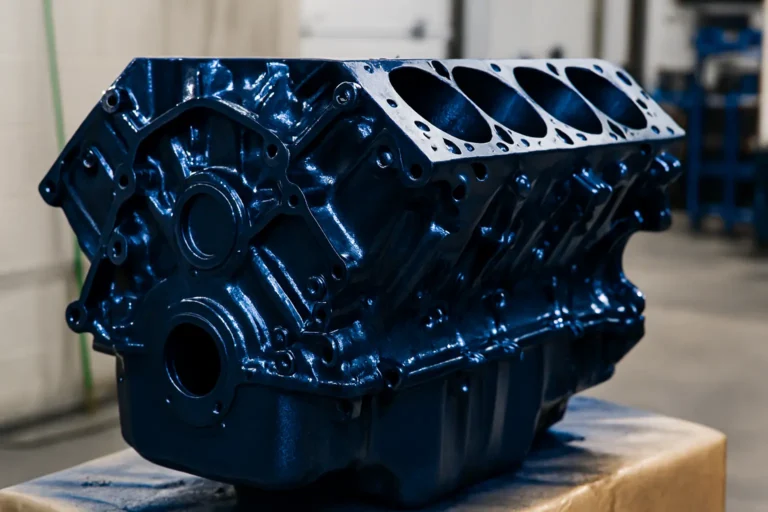
This is the hottest zone on a naturally aspirated engine. Only a true ceramic coating like VHT FlameProof (2000°F) belongs here. Enamels rated 1200°F will brown and thin out over a season. If you want maximum life, run the matching FlameProof primer underneath.
Turbo downpipes (extreme, sustained heat)
Downpipes near the turbine housing see sustained heat, not just intermittent spikes. Ceramic-based FlameProof is the minimum here, and many builders wrap or ceramic-coat professionally on top. Do not put an enamel on a downpipe.
Mid-pipes, mufflers, and heat shields (under 1200°F)
These sections never glow. A 1200°F enamel like Rust-Oleum 248903 is the sensible, economical choice — the ceramic premium is wasted here. This is where budget paint earns its keep.
Engine bay: blocks, valve covers, intakes (under 500°F)
These parts want a glossy, finished look, not a flat header coating. A 500°F ceramic engine enamel like Dupli-Color DE1635 holds its finish and resists chalking. For related dress-up work, see my notes on engine paint and painting aluminum.
When NOT to use high heat paint for exhaust
Do not use any of these coatings over rust, mill scale, or an oily surface — full stop. High-heat paint has almost no gap-filling ability; it needs bare, clean, slightly-textured metal to grip. Paint over rust and it will lift with the rust underneath it on the first heat cycle.
Do not use flat high-temp header paint on visible engine-bay parts you want glossy, and do not use a 500°F engine enamel anywhere near a header primary. And do not skip the cure: an uncured ceramic coating is not yet heat-resistant — it is just soft paint that will smear and burn. If you are painting a radiator or heating component instead, the rules differ again.
Prep steps that decide durability
Durability is roughly half product and half prep. Here is the sequence I follow before any high heat paint for exhaust touches the metal.
1. Strip to bare metal. Sandblast, or use a wire wheel and 80-grit, until you are on clean steel with no scale or old coating. Per Family Handyman, surface profile is what gives paint its mechanical grip.
2. Degrease twice. Wipe with lacquer thinner or acetone, let it flash, then wipe again with a fresh rag. From here, handle parts with gloves only.
3. Prime (for FlameProof jobs). Two thin coats of VHT SP118 primer, flashing between coats.
4. Topcoat thin. Two to three thin coats, 10-15 minutes apart. Never one thick coat.
5. Cure in stages. Follow the can’s schedule — typically air-dry, then a staged bake (for example 30 minutes at 250°F, 30 at 400°F, 30 at 650°F). Because you are heating parts and creating fumes, work with ventilation and a respirator; OSHA’s respiratory protection guidance is worth a read before you start. If you cannot bench-cure, the exhaust will cure it on first use — just expect a rougher result.
The verdict
For the hottest parts of any exhaust, VHT SP102 FlameProof is the coating I trust — 2000°F, ceramic, and built to flex through heat cycles. Run the matching FlameProof primer under it on headers you want to keep. For mufflers and mid-pipes, save money with Rust-Oleum 248903. For a glossy engine-bay finish under 500°F, Dupli-Color DE1635. Match the paint to the zone, prep to bare metal, cure in stages — do that and the finish outlives the trend.
Check Price on Amazon ->Frequently asked questions
Do you have to bake high heat paint for exhaust?
Yes, if you want it to last. Ceramic coatings like VHT FlameProof only reach full heat resistance after a staged cure. Skip the bake and the exhaust heat will cure it on the car — unevenly, and with any fingerprints or soft spots locked in.
What temperature does exhaust header paint need to handle?
Header primaries and collectors can hit 1200-1600°F on a naturally aspirated engine, so use a 2000°F ceramic coating there. Mufflers and mid-pipes stay under 1200°F, where a high-heat enamel is fine.
Can I use regular spray paint on an exhaust?
No. Standard enamel burns off within the first few heat cycles, smoking and flaking. You need paint specifically rated for high heat — 1200°F at minimum for cooler sections, 2000°F for headers.
Do I need primer under high heat exhaust paint?
On bare-steel headers you want to keep, yes. A matching 2000°F primer like VHT SP118 gives the topcoat a stronger bite and stops the base layer from becoming the failure point. Under sub-1200°F enamels on mufflers, you can usually skip it.
Why did my exhaust paint turn brown?
Almost always because the paint’s temperature rating was below the part’s actual heat. A 1200°F enamel on a header that runs hotter will discolor and thin. Move up to a 2000°F ceramic coating for that zone.
How many coats of high heat paint should I apply?
Two to three thin coats, 10-15 minutes apart. One thick coat traps solvent underneath and blisters on the first heat cycle. Two thin coats always beat one thick coat.