The Best Bed Liner Paint for a Truck Bed That Takes a Beating
Pick the wrong bed liner paint and you’ll watch it flake off the first time you drag a load of gravel or a steel toolbox across the bed. Then you’re sanding it all back down and starting over — one lost weekend, plus the cost of a second kit. A good coating does the opposite: it turns raw or rusting steel into a grippy, sealed surface that shrugs off scrapes, spills, and a full winter of road salt.
I’ve rolled bed liner paint onto two trucks and a utility trailer, and the gap between the good stuff and the cheap stuff shows up fast. The first time I coated a bed, I rushed the prep and skipped a proper scuff. Three weeks later the edges were peeling like a sunburn. Here’s what I learned: with any bed liner, adhesion is everything, and adhesion is 90% prep. Below are the five kits I’d actually buy again, sorted by how you plan to use them.
What’s in this guide
Best bed liner paint at a glance
| Product | Best for | Type | Finish |
|---|---|---|---|
| Herculiner HCL1B8 Kit | Best overall roll-on | Brush/roll polyurethane | Heavy texture |
| U-POL Raptor 0820 Kit | Toughest, whole-truck jobs | 2K spray urethane | Tunable texture |
| Rust-Oleum 323529 Pro Kit | Best impact resistance | Epoxy roll-on | Medium texture |
| Dupli-Color Bed Armor Kit | Easiest cleanup | Water-based roll-on | Light texture |
| Rust-Oleum Spray Coating | Small areas & touch-ups | Aerosol | Fine texture |
The 5 best bed liner paint kits for 2026
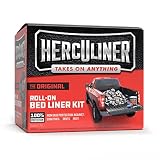
Herculiner HCL1B8 Roll-On Bed Liner Kit (Black, 1 Gal)
Herculiner is a brush-and-roll polyurethane loaded with rubber granules, and the mechanism is what makes it work: the rubber crumb sits proud of the film, so impact energy from a dropped tool hits the flexible granule instead of a hard, brittle shell. That’s why it dents and rebounds instead of cracking. The kit gives you the gallon, a brush for corners, two rollers, and an abrasive pad — you’re not hunting for extra tools mid-job.
I brushed this onto a 6-foot bed that had surface rust in two spots. After a full winter of firewood and a snowblower sliding around back there, the coating had scuffs but zero peel. The one honest limitation: the texture is aggressive. If you kneel in the bed a lot or slide bags out by hand, it will grab and shred cardboard and skin alike. That grip is the point, but know what you’re signing up for.
One gallon covers a standard 6.5-ft bed in two coats — roughly 50 sq ft.
Pros
- Thick rubberized film, real impact absorption
- Sticks to metal, wood, fiberglass, and most rigid plastic
- Complete kit, no extra tools
Cons
- Very coarse texture
- Strong solvent smell during cure
Via Amazon.com
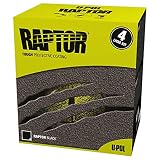
U-POL Raptor 0820 Black Bed Liner Kit (4 Liter)
Raptor is a two-component (2K) urethane, which is a real step up in chemistry. You mix in a hardener that triggers a chemical cross-link, so the film cures into a dense, tied-together network instead of just drying. That cross-linking is why Raptor resists solvents, UV fade, and abrasion far better than single-part coatings — it’s the closest a DIY bed liner paint gets to a professional spray booth result.
The first time I shot Raptor, I ran the schutz gun pressure too high and got a rough, sandpapery finish I didn’t want. Dialed the pressure down and thinned my technique, and the second panel came out even and controlled. Here’s the lesson: Raptor’s texture is entirely in your hands, so do a test panel first. The honest limitation — it contains isocyanates, so you cannot spray this in a t-shirt and a dust mask.
The 4L kit covers a full-size bed in two coats and tints to match with U-POL pouches.
Pros
- 2K urethane — best durability here
- Adjustable texture, tintable color
- Handles a whole truck, not just the bed
Cons
- Requires a spray gun and compressor
- Isocyanates demand a supplied-air or proper respirator
Via Amazon.com
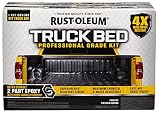
Rust-Oleum 323529 Professional Grade Bed Liner Kit
This is Rust-Oleum’s epoxy kit, and epoxy is the key word. It uses a two-part burst pouch — you snap an internal barrier and knead the resin and hardener together, which starts the same cross-linking reaction that makes epoxy floors so tough. Rust-Oleum rates it at roughly four times the impact resistance of their standard single-part truck bed gallons, and in use it takes a dropped hitch far better than the budget coatings.
I used the burst-pouch system on a trailer deck and appreciated that there’s no guessing on the mix ratio — it’s pre-measured, so you can’t get it wrong. The limitation worth flagging: once you burst the pouch, the clock is running. You get a working window of well under an hour, so tape, sand, and clean everything before you mix. There is no pausing for lunch.
The kit includes the pouch, roller, brush, sanding sponge, and gloves — enough for one standard bed.
Pros
- Epoxy toughness, strong chip resistance
- Foolproof pre-measured mixing
- Everything needed is in the box
Cons
- Short working time once mixed
- One kit only stretches to a single bed
Via Amazon.com
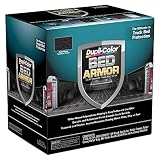
Dupli-Color BAK2010 Bed Armor DIY Kit
Bed Armor is a water-based rubberized polyurethane, and that water base changes the whole experience. Because the carrier is water rather than strong solvent, the fumes are mild and your tools rinse clean under a tap instead of soaking in mineral spirits. It still cures to a flexible, skid-resistant film — you just trade a little ultimate toughness for a far more pleasant application.
What I’ve seen consistently with water-based liners is that they are the most forgiving for a first-timer. The tradeoff, and I won’t pretend otherwise: water-based coatings want warmth and low humidity to cure right. Roll this on a damp 50°F morning and it will stay tacky far too long. Give it a dry day above 65°F and it sets up beautifully.
The 7-piece kit rolls out to about 50 sq ft — one standard short bed in two coats.
Pros
- Low odor, easy soap-and-water cleanup
- Beginner-friendly, forgiving to apply
- Complete kit with roller and tray
Cons
- Needs warm, dry conditions to cure
- Slightly less abrasion resistance than 2K options
Via Amazon.com
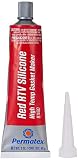
Rust-Oleum 248915 Truck Bed Coating Spray (15 oz)
Not every job is a full bed. This aerosol lays down the same textured, protective coating in a fine spray, which makes it the right tool for tailgates, wheel wells, rocker panels, or fixing a spot where a full liner got gouged. The propellant atomizes the coating into a consistent grain, so touch-ups blend into surrounding texture instead of standing out as a smooth patch.
I keep a can of this on the shelf specifically for repairs. When a corner of my rolled-on liner chipped down to metal, one scuff and two light passes with this made it disappear. The limitation is simple math: at 15 ounces a can, coating an entire bed would take a stack of cans and cost more than a proper kit. Use it for what it’s for — small areas, not whole beds.
One can covers roughly 10–15 sq ft in two thin coats — ideal for spot repair.
Pros
- No mixing, no tools, no cleanup
- Perfect texture match for touch-ups
- Cheap way to protect small panels
Cons
- Uneconomical for a whole bed
- Thinner film than roll-on kits
Via Amazon.com
Pro tips for a bed liner job that actually holds
Scuff every square inch until it’s dull — no exceptions. Glossy factory paint is a release surface; if you can still see a shine, the coating has nothing to bite into. I run 80-grit over the whole bed until there’s no gloss left, then wipe with a solvent cleaner.
Two thin coats always beat one thick coat. Always. A thick single pass skins over on top while the underside stays soft for days, and that soft layer is where peeling starts. Let coat one flash to tacky, then lay coat two.
Kill rust before you coat, don’t bury it. If there’s rust, treat or grind it first — a coating over active rust just traps moisture and lifts later. A rust stripping and prep step is not optional on an older bed.
Warm the bed, not just the air. Coatings cure by surface temperature. A cold steel bed on a warm day is still cold steel — park it in the sun or heat the garage first.
RENOVATION STAGE: SEAL
How much bed liner paint do you need?

How to choose your bed liner paint: roll-on vs spray
Roll-on kits: control and simplicity
A roll-on bed liner is the default for most DIYers, and for good reason. You need no compressor, the application is forgiving, and the thick film builds real protection in two coats. The tradeoff is texture: a roller lays down a coarser, more uneven grain than a gun. If you want maximum grip and don’t care about a glass-smooth look, roll-on is your lane.
2K spray systems: durability and finish
Two-part spray systems like Raptor deliver the toughest, most even finish you can get at home — but they demand a spray gun, a compressor, and real respiratory protection. This is the right path if you’re coating a whole vehicle or you want that professional, tunable texture. It’s overkill for a single tailgate.
Aerosols: repairs and small parts
Spray cans exist for touch-ups and small panels. They can’t compete on cost or film thickness for a full bed, but for blending a repair into existing texture, nothing is faster. Every serious bed gets a can of aerosol on the shelf for the inevitable chip.
Match the chemistry to the abuse
Light-duty hauling and a clean garage job? Water-based Bed Armor keeps it simple. Heavy point-impacts from steel and stone? Reach for the epoxy Rust-Oleum kit. Whole-truck durability and UV life? The 2K Raptor is worth the extra gear. The best bed liner paint is the one matched to how hard you’ll actually use the bed.
When NOT to use bed liner paint
Don’t roll a bed liner over active rust, flaking factory coating, or a greasy surface — it will lift, guaranteed. Fix the substrate first or skip the coating entirely.
Don’t spray a 2K urethane like Raptor without proper respiratory protection. These products contain isocyanates, which the OSHA isocyanates safety guidance flags as a serious respiratory sensitizer — a paper dust mask does nothing. Use a supplied-air setup or a properly fitted respirator, and coat in a ventilated space, ideally a dedicated spray area.
And don’t expect any coating to hide bad prep. If you’re not willing to scuff, degrease, and dry the whole bed, no product on this list will stay put. Prep is 50% of the job — the coating is the other 50%.
Prep steps that make bed liner paint stick
Clean the bed with a degreaser and rinse. Any wax, oil, or road film is a bond-breaker. For a step-by-step on stripping problem areas, the Family Handyman DIY guides are a solid reference.
Scuff the entire surface with 80-grit until the gloss is gone. Dull equals grip. Treat any rust down to sound metal before you continue.
Tape your lines and wipe with a solvent cleaner right before you coat, so no dust settles back in. Then apply two thin coats, respecting the flash time on the can. If you’re new to prepping automotive panels, the same discipline applies as in a full DIY car paint job, and a good respirator belongs on your face the whole time.
The verdict
For most people, the Herculiner roll-on kit is the bed liner paint to buy — it’s tough, complete, and needs no special gear. If you’re coating a whole truck or want the longest-lived finish, step up to the 2K U-POL Raptor kit. Want low fumes and easy cleanup? The water-based Dupli-Color Bed Armor is the friendliest of the group. Whichever you pick, the coating only holds if the prep holds — scuff hard, kill rust, and lay two thin coats.
Bed liner paint FAQ
Is roll-on bed liner as good as spray-on?
For durability, a quality roll-on like Herculiner comes remarkably close to a professional spray for a fraction of the cost. Spray-on 2K systems win on smoothness and ultimate toughness, but a well-prepped roll-on liner will protect a work truck for years.
How long does bed liner paint last?
Properly prepped and applied, a good bed liner lasts five to ten years or more. The number one thing that shortens its life is poor prep — skipping the scuff or coating over rust causes early peeling far more than product wear.
Do I need primer under bed liner paint?
Most kits are formulated to bond to scuffed, clean bare metal or existing paint without a separate primer. Bare, freshly ground steel benefits from a self-etching primer first, but for a scuffed factory bed, the coating bonds directly.
Can I apply bed liner paint over old factory paint?
Yes, as long as the factory paint is sound and fully scuffed dull. If the original finish is peeling or flaking anywhere, remove the loose material first — a coating is only as stable as the layer beneath it.
How many coats do I need?
Two thin coats is the standard and the right answer for nearly every kit. Two coats build proper film thickness and texture; one thick coat traps solvent underneath and invites peeling. Respect the flash time between them.
Will bed liner paint stop rust?
It seals out moisture and slows new rust, but it does not convert or stop existing rust. You must treat or remove rust before coating — sealing over active rust just traps it and leads to bubbling later.