Dealing With Leftover Paint Responsibly: Storage, Reuse, and Safe Disposal
Updated: August 2026 | By Sophie Ulman
Pour a gallon down the storm drain and you’ve just contaminated groundwater — and in most states, broken the law. Toss a wet can in the trash and the hauler can legally refuse your whole bin. That’s the real risk with leftover paint: it isn’t clutter, it’s regulated waste, and the wrong move costs you money or a fine. The good news is that almost every can falls into one of three buckets — keep it, give it away, or harden and bin it — and telling them apart takes about ninety seconds.
I’ve cleared out garages holding eleven-year-old cans. Some were still perfectly usable. Most were skinned solid and worth nothing. Below is the exact sort I run, plus the five products that make each path fast instead of miserable.
What’s in this guide
The 90-second sort: keep, donate, or harden
Open the can. Stir it with a stick for ten seconds. Three outcomes, three destinations.
| What you see | What it means | Where it goes |
|---|---|---|
| Smooth after stirring, no sour smell, no lumps | Still good. Latex lasts up to 10 years unopened, 2-5 years opened and stored well | Keep — reseal properly |
| Skin on top, liquid underneath, no odor | Surface oxidation only. Peel the skin off, strain, and it’s fine | Keep — strain first |
| Rancid or sour smell, won’t stir smooth | Bacterial spoilage. No fix exists | Harden and bin |
| Rubbery, chunky, or dried to the sides | Freeze-thaw damage or evaporation | Harden and bin |
| More than half a gallon, good condition, color you won’t use | Perfectly usable by someone else | Donate or recycle |
That smell test matters more than the date on the lid. Latex paint spoils biologically, not chemically — bacteria get in every time you open the can, and once they take hold the paint smells like sour milk and will never level out on a wall again. If you want the full shelf-life breakdown by paint type, I covered it in does paint expire.
The first time I threw out leftover paint, I did it wrong in the most expensive way possible — I set four half-full gallons at the curb on trash day. The hauler tagged the bin, skipped it, and I paid a special pickup fee to have them come back. Here’s what I learned: haulers aren’t checking whether the paint is good or bad. They’re checking whether it’s liquid. Solid paint in a can with the lid off goes in the regular trash almost everywhere. Liquid paint never does.
Quick picks
| Product | Best for | Why it earns the spot |
|---|---|---|
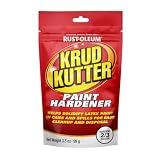
| Krud Kutter Waste Paint Hardener | Disposing of latex you’ll never use | Solidifies 2/3 gallon in about 10 minutes |
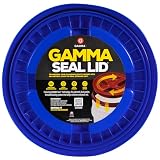
| Gamma2 Gamma Seal Lid | Storing a gallon or more long-term | Twin-gasket screw lid — no mallet, no dented rim |
| Bloxygen Preserver | Oil-based paint, varnish, and polyurethane | Argon blanket stops the skin from forming at all |
| Paint Strainer Bags (5-gal, 200 micron) | Rescuing a skinned can | Pulls out flakes before they show up on your wall |
| TCP Global 190 Micron Cone Strainers | Reusing old paint in a sprayer | Finer mesh — stops tip clogs that ruin a spray day |
The 5 products that do the work


Pro tips from the garage floor
Stop storing gallons. You will never use three quarters of a gallon for a touch-up. Pour what you’ll realistically need into a pint jar, label it with the room and the sheen, and get the rest out of the house. A pint of paint with almost no headspace outlasts a gallon can that’s three quarters empty — air is the enemy, and a full-to-the-brim small container has almost none.
Write on the can, not on a sticker. Stickers fall off in a cold garage. Marker on the lid tells you nothing when the can is on a shelf. Write the room, sheen, and date on the side, low down where you can read it from the aisle.
Never store it on a concrete floor. Concrete wicks cold straight into the can. Latex that freezes and thaws once may survive; twice and it’s ruined. A plank shelf six inches up is enough — I laid out the freeze thresholds in can paint freeze.
Two thin coats always beat one thick coat. That applies to the touch-up you’re saving this paint for, too — feather two light passes and the repair disappears instead of leaving a raised patch.
How much hardener do you need?
Each 3.5 oz packet solidifies about 2/3 of a gallon. Enter what’s actually in the can — not the can size.

How to store leftover paint so it’s still good in three years
Storage is where most people lose the paint they meant to keep. Three variables decide whether a can survives: air, temperature, and the seal. Get all three right and latex holds for years. Miss one and you’re buying a new gallon for a touch-up you could have done for free.
Air is the variable you control
A can that’s three quarters empty is three quarters air, and that air both oxidizes the surface and carries in the bacteria that spoil latex. Decant into the smallest container the paint will fit. Glass jars work. Plastic deli containers work. Anything that seals and leaves under half an inch of headspace works. This single step does more for shelf life than everything else combined.
Storing the can upside down is the classic workaround — the idea being that paint seals the lid from the inside. It does help, with a real caveat about rim damage. I tested that claim properly in does storing paint cans upside down actually work.
Temperature: the range is narrower than you think
Latex wants 50-80°F. Below freezing the emulsion can break permanently; above roughly 90°F the water evaporates fast even through a good seal. That rules out an uninsulated garage in most of the country, an attic anywhere, and a shed everywhere. An interior closet or a basement is the right answer. Yes, it’s less convenient. It’s also the difference between paint you can use and paint you have to pay to throw away.
The seal: stop wrecking the rim
Every screwdriver you lever under a lid bends the rim a little. After three or four openings the lid no longer seats and the can breathes. Use a proper opener — a flat lever that spreads the load — and wipe the rim groove clean before you close it, because dried paint in the groove holds the lid open by a millimeter. A rubber mallet seats it evenly; a claw hammer dents it. If you’re opening the same can regularly, a real can opener pays for itself in one saved gallon.
Label it like someone else will read it
Color name, brand, sheen, room, date. Without the sheen you’ll match the color and still see the patch, because a satin touch-up on eggshell reflects differently in daylight. If the label is already gone, you’re not stuck — matching paint already on a wall is a solvable problem, just a slower one.
When you must NOT put it in the trash
Oil-based paint, alkyd, stain, varnish, and solvents are hazardous waste in every state, liquid or solid. Hardener does not change that classification. These go to a household hazardous waste facility or a PaintCare drop-off site, full stop — check your county’s collection schedule through the EPA’s household hazardous waste guidance.
Aerosol cans are pressure vessels. A partly full spray can in a compactor truck can rupture. Empty ones are recyclable as steel in many areas; partly full ones are hazardous waste.
Anything from a home built before 1978 may contain lead. Do not sand it, do not burn it, and do not bin scrapings — the disposal rules are different and stricter. Confirm before you touch it with how to identify lead paint.
Never pour any paint down a drain, storm sewer, or on the ground. Municipal treatment plants aren’t built to remove pigments and binders, and storm drains usually run straight to a creek.
Step-by-step: hardening and binning latex
- Confirm it’s water-based. The label says latex, acrylic, or “soap and water cleanup.” If it says mineral spirits, stop — it’s hazardous waste.
- Work outdoors or in a ventilated space. Spoiled latex smells genuinely bad once you stir it.
- Measure what’s actually left. Use the calculator above. Under-dosing is the only common failure here.
- Add hardener and stir to the bottom. A stir stick, not a shake. Any liquid layer left underneath means it isn’t finished.
- Wait 10-15 minutes, then check. Push a stick in. It should meet resistance the whole way down.
- Leave the lid off and bin it. The lid stays off so the hauler can see it’s solid. That visual check is the whole point.
No hardener on hand? Cat litter, sawdust, or shredded paper all absorb latex the same way, just slower and messier. Kitty litter for old paint cans covers the ratios and where that method falls apart.
Give it away before you throw it away
Usable paint has real value to someone. Habitat for Humanity ReStores take sealed cans that are at least half full. Theater groups, school art departments, and community garden projects take almost anything with a color. PaintCare operates paid drop-off sites in a growing list of states, funded by a fee already built into the purchase price — you paid for the recycling when you bought the can.
Recycled latex gets reprocessed into new paint, which is a materially better outcome than landfilling it. Paint recycling goes into who takes what and the condition requirements. For the broader case on why this matters beyond your garage, This Old House has a solid overview of cleanup and disposal.
The verdict
Sort first, buy second. Most people buy a hardener and solidify cans that were perfectly good, or hoard gallons that were spoiled two years ago. Ninety seconds with a stir stick tells you which pile each can belongs in.
If you’re clearing out a garage today, the Krud Kutter hardener is the one product that turns an unsolvable problem into a ten-minute one. If you’re keeping paint for touch-ups, decant into small containers and put them somewhere climate-stable — that costs nothing and saves the most.
Frequently asked questions about leftover paint
Can I throw leftover paint in the trash?
Latex, yes — but only once it’s fully solid and the lid is off. Liquid paint of any kind is rejected by most haulers. Oil-based paint can never go in the trash regardless of whether it’s dried.
How long does leftover paint actually last?
Unopened latex holds up to 10 years. Once opened, expect 2-5 years if stored between 50 and 80°F with minimal air in the container. Oil-based lasts longer once opened because it isn’t vulnerable to freezing or bacteria.
How can I tell if old paint has gone bad?
Smell it. A sour or rancid odor means bacterial spoilage and there’s no recovering it. A skin on top with smooth liquid underneath is only oxidation — skim it, strain it, and use it.
Is it safe to pour paint down the drain?
No. Treatment plants aren’t designed to remove paint solids, and storm drains typically discharge directly into local waterways. It’s illegal in most jurisdictions and carries fines.
How much hardener do I need for a gallon?
One 3.5 oz packet treats roughly 2/3 of a gallon, so a full gallon needs two. Buy a spare — a partially hardened can that’s still liquid at the bottom has to be redone.
Where can I donate leftover paint?
Habitat for Humanity ReStores, community theater groups, school art programs, and PaintCare drop-off sites. Most require the can to be sealed, labeled, and at least half full.
Does freezing ruin latex paint?
One freeze-thaw cycle is often survivable if it stirs back to a smooth consistency. Repeated cycles break the emulsion permanently and the paint turns grainy or stringy — that can’t be fixed.