Can You Use Kitty Litter to Get Rid of Old Paint Cans?
Yes for latex and other water-based paint, no for anything oil-based. Stir plain clay litter into leftover latex until a stir stick stands up in the mix, leave the lid off until it is solid all the way through, and in most US areas the can can then go out with household trash. Oil-based paint, stain, varnish and lacquer are different: drying them does not make them safe or legal to bin, so they go to a hazardous waste collection.
If you are clearing several cans at once, a sachet of waste paint hardener does the same job faster than litter. And before you dry anything, check whether the paint is still worth keeping or donating; my guide on how to recycle paint covers which leftovers are worth saving.
I hardened my first can badly. Half a gallon of leftover eggshell, one scoop of litter stirred in, lid back on, straight into the bin. Two days later the collection crew left it at the kerb with a sticker on it, because the top inch had crusted over and everything underneath was still liquid. Here is what I learned: the litter has to be stirred through the whole depth until a stir stick stands up in it on its own, and the lid stays off so anyone can see it is solid.
Why You Can’t Just Throw Away Liquid Paint
Most waste collection services won’t accept liquid paint because it can leak, damage equipment, and pollute soil or water. That’s why you need to focus on drying paint cans for disposal first. This is where kitty litter comes in, it absorbs moisture and accelerates drying, turning paint into a solid that’s safer to throw away.
If you’re working on a bigger project, it also helps to plan ahead. Knowing how long it takes to paint a room or how to make paint dry fast can save you from leftover cans piling up.
How to Use Kitty Litter for Paint Disposal
The process is simple, budget-friendly, and effective. Here’s how to use kitty litter for safe paint can disposal:
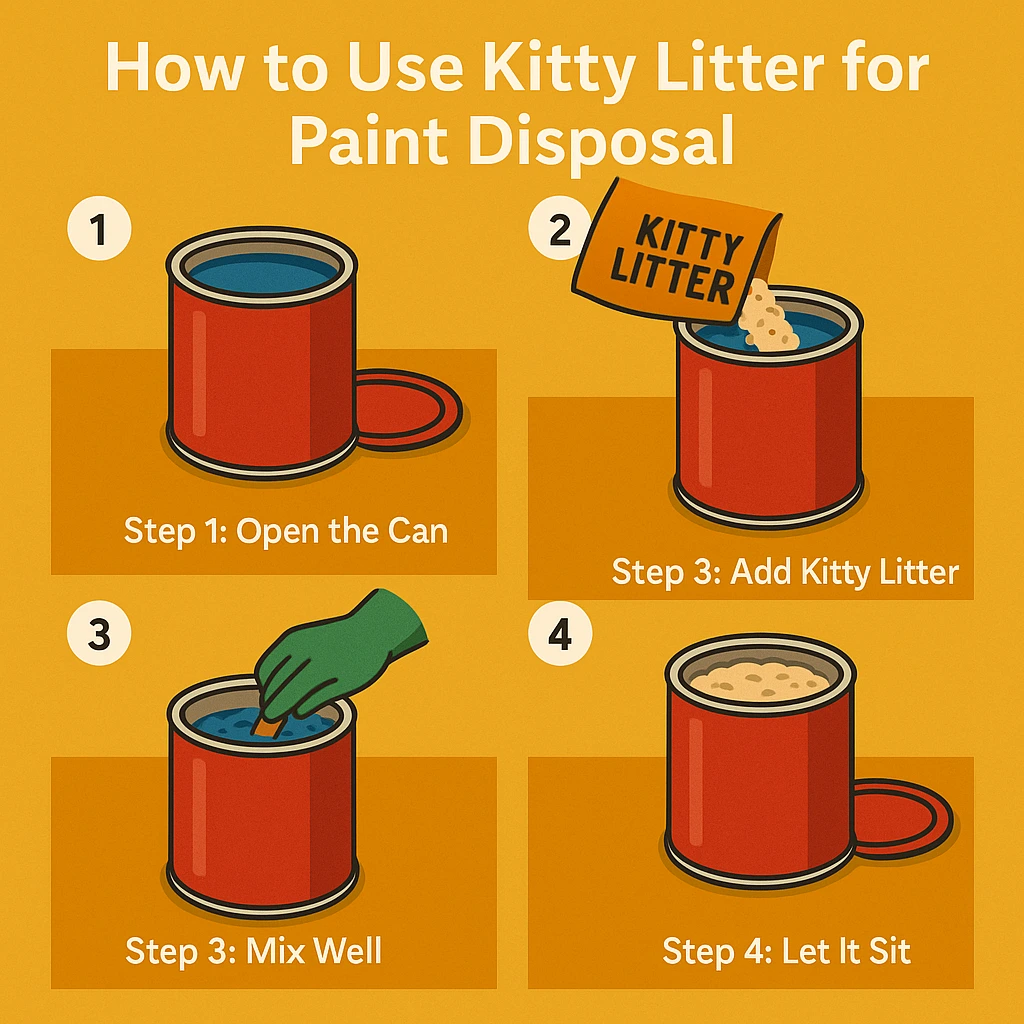
Step 1: Open the Can
Remove the lid and make sure the paint is accessible. If there’s only a thin layer left, you might not even need kitty litter, just let it air dry.
Step 2: Add Kitty Litter
For fuller cans, pour an equal amount of inexpensive, clay-based kitty litter into the paint. This mixture works as a kitty litter paint dryer by soaking up liquid quickly.
Step 3: Mix Well
Stir the paint and kitty litter together until it forms a thick, oatmeal-like texture.
Step 4: Let It Sit
Leave the can uncovered in a safe, ventilated area for 24–48 hours. The mixture will harden, making it safe to throw away with your household trash.
This simple method transforms messy liquid paint into a solid block, ideal for kitty litter paint disposal.
Kitty Litter Paint Removal vs. Other Methods
You might wonder if kitty litter paint removal is the only option. While it’s the most common household trick, alternatives include:
- Commercial paint hardeners: A sachet of waste paint hardener turns a half can solid in about fifteen minutes instead of overnight, and it does not leave you with a bag of wet clay to carry. It costs more than a scoop of litter, so it earns its place when you are clearing several cans at once, not one.
- Newspaper shreds or sawdust: Also absorb liquid but less effective than kitty litter.
- Air drying thin layers: Works well for small amounts of leftover paint.
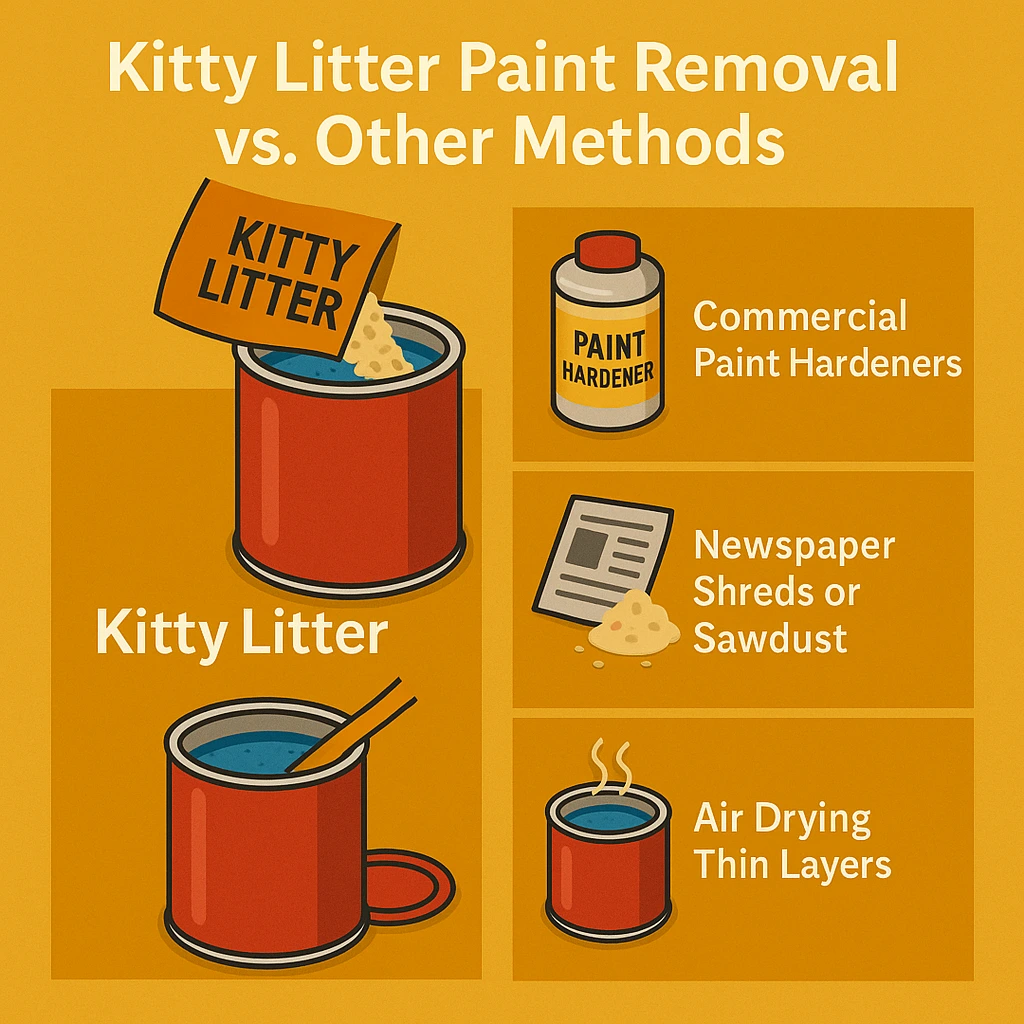
Still, kitty litter is often the easiest and cheapest way to handle paint cans for cat litter disposal. And if you ever need to get rid of paint from surfaces instead of cans, methods like removing paint with steam can be a safe alternative.
Can You Dry Paint Cans Without Kitty Litter?
Yes, you can. If there’s just a thin layer left, you can let the paint dry naturally. However, for half-full or larger cans, drying takes weeks without an additive. Kitty litter makes the process faster, safer, and more convenient.
When tackling other home projects, preparation is just as important. For example, learning how to clean walls before painting ensures your paint job looks fresh and lasts longer.
Safety Tips for Kitty Litter Paint Disposal
Before tossing your dried paint cans, keep these safety tips in mind:
- Check local regulations: Some areas have paint recycling programs instead of landfill disposal.
- Leave the lid off: Many waste services prefer the lid removed so they can confirm the paint is hardened.
- Avoid oil-based paints: These may need to be handled at a hazardous waste facility.
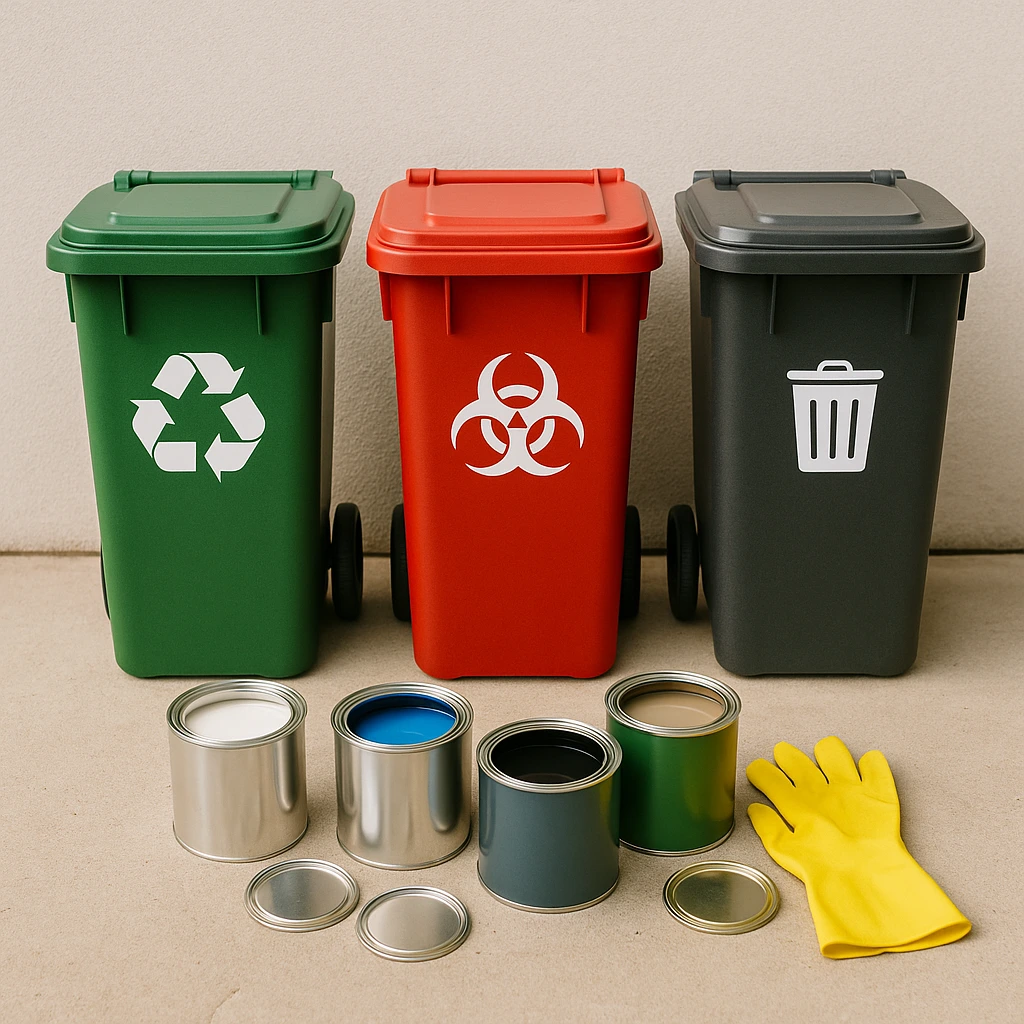
And if you’re wondering whether it’s worth the effort, remember that small habits like this protect your home and environment, much like the benefits of painting your home extend beyond just looks.
Final Thoughts: Is Kitty Litter the Best Solution?
So, can you dry paint cans with kitty litter and safely throw them away? Absolutely. It’s quick, cost-effective, and widely recommended by municipalities. Whether you’re finishing a big DIY project or just cleaning out your garage, kitty litter offers a simple solution for leftover paint.
If paint projects are on your horizon, you might also explore tips on how to stain a fence or the best tools to paint a ceiling so you can work smarter and avoid unnecessary waste.
How Much Kitty Litter You Actually Need
The ratio people quote online is “a bit of litter” and that is why so many cans end up as a wet grey sludge that never sets. What you are aiming for is a mix stiff enough that a stir stick stands up in it on its own. As a starting point, use roughly equal volumes of litter and paint, then keep adding until the stick stands.
| Paint left in the can | Clay litter to add | Time to fully dry |
|---|---|---|
| Less than one inch | Two large scoops | 2-4 hours |
| Quarter can | Roughly equal volume | 4-8 hours |
| Half can | Equal volume, stirred in two batches | Overnight |
| More than half a can | Do not do it in the can | Split into a lined cardboard box |
That last row is the one worth taking seriously. A nearly full gallon has no room left to absorb anything, and stirring litter into it just pushes paint over the rim. Line a cardboard box with a plastic bag, pour the paint in at no more than two inches deep, then mix the litter into that. More surface area means it dries in hours instead of days.
Clay, Clumping, or Crystal: Which Litter Works Best
They are not interchangeable, and the cheapest one is the best one here.
- Plain clay (non-clumping bentonite) – the one to use. Highly absorbent, cheap, and it stays loose while you stir. Buy the largest cheapest bag you can find; this is not a job for premium litter.
- Clumping litter – works, but wastefully. It grabs moisture fast and locks into hard lumps that stop absorbing. You end up using far more of it, and the lumps trap wet paint inside.
- Crystal silica litter – avoid. Expensive, and it absorbs by holding liquid in the beads rather than binding it. Fine for a cat, poor for a paint can.
If you have no litter at all, sawdust, shredded newspaper, or a commercial paint hardener do the same job. Sand does not – it adds weight without absorbing anything.
When NOT to use this method – read before you start
Kitty litter drying is for water-based latex and acrylic paint only. Do not use it on any of these:
- Oil-based paint, alkyd enamel, varnish, stain, or lacquer. These are classified as household hazardous waste. Drying them out does not make them safe and does not make them legal to bin – the solvents are the hazard, not the liquid state. They go to a hazardous waste collection, full stop.
- Anything from a home built before the late 1970s that might be lead-based. Do not stir it, do not sand it, do not create dust. Contact your local hazardous waste program.
- Paint thinner, mineral spirits, or brush cleaner. Litter soaked in solvent is a fire risk, not a disposal solution.
- Aerosol spray cans. Pressurised, and handled under separate rules entirely.
Check the Rule Before You Put It at the Kerb
In most parts of the US, fully hardened latex paint can go out with regular household trash with the lid off so the crew can see it is solid. In some areas it cannot, and in several states there is a better option anyway: paint stewardship programmes such as PaintCare take leftover paint free of charge at retail drop-off sites, and they would rather have it liquid so it can be reprocessed. Drying paint you could have donated or recycled is a waste of usable material – our guide on how to recycle paint covers what is worth saving before you reach for the litter.
The EPA’s household hazardous waste guidance is the reference for the oil-based side. Two minutes there is cheaper than a fine.
The Better Answer: Have Less Paint to Dispose Of
Most of the cans I have hardened over the years did not need to exist. They were the third of a gallon left over because the tin was bought without measuring, then stored badly until it skinned over. Prep matters more than the brand here as much as it does on the wall: measure the room, buy accordingly, and store the leftovers properly. Sealed tight — a screw-on gamma seal lid does what a hammered-back tin lid never quite does after the second opening — kept off a concrete floor, and stored somewhere that does not freeze, latex paint stays usable for years – the storage detail is covered in does paint expire, and the upside-down trick people swear by is tested in does storing paint cans upside down actually work.
Frequently Asked Questions
How long does kitty litter take to dry out paint?
Two to four hours for a shallow layer, overnight for a quarter to half a can. Leave the lid off in a ventilated space. It is dry when a stir stick pulls out clean and the mass is solid all the way through, not just crusted on top.
Can I put the hardened paint can in normal trash?
In most US areas, yes – latex only, fully solid, lid off so it can be seen. Rules vary by municipality, so check your local waste authority’s page once. It takes a minute and the answer applies to every can you ever dispose of.
Does kitty litter work on oil-based paint?
It will thicken it, but that is not the point. Oil-based paint is hazardous waste whether it is liquid or solid, and hardening it does not change how it must be disposed of. Take it to a hazardous waste collection.
What if the paint is already half dry and skinned over?
Even easier. Peel off the skin, stir the litter into what is still liquid underneath, and it will set in a couple of hours. A skinned can usually has far less usable liquid in it than it looks.
Is there a cheaper alternative to kitty litter?
Shredded newspaper and sawdust both work and are often free. Sawdust is the better of the two because it absorbs faster. Commercial paint hardener is the fastest option. It costs more per can than litter, so it earns its place when you have several cans to clear.
Do I need to remove the dried paint from the can?
No. Leave it in, take the lid off, and put the whole can out. Prising a solid block of paint out of a steel can achieves nothing except a mess.
About the author — Sophie Ulman
Sophie Ulman has renovated and painted more rooms than she can count — and made every mistake in the book so you don’t have to. She focuses on real-world durability: not how products perform on day one, but whether the repair holds through a full seasonal cycle.