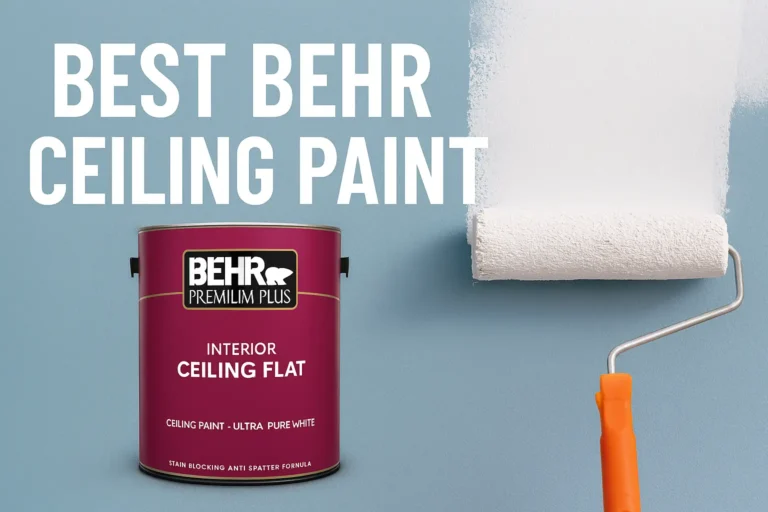
Best Paint for Newly Plastered Ceilings: Mist Coat First
Freshly plastered ceilings are a blank canvas—but only the right paint can turn them into a masterpiece. Whether you’re a weekend DIYer or a home renovator, choosing the best paint for newly plastered ceilings is critical for a professional finish that lasts.
Before we get to products: the first time I painted a freshly plastered ceiling, I waited four days, decided it looked dry enough, and rolled straight on with full-strength emulsion. Within a week the paint was flaking off in sheets the size of my hand. The plaster had looked dry on the surface and was still holding moisture underneath. Here is what I learned: with new plaster, the calendar matters more than the product, and prep matters more than the brand every single time.
In this guide, we’ll cover everything from prep work to product reviews, including how to paint new plastered ceilings, the best primer for plaster ceiling, and even the cheapest plaster wall paint options. Let’s dive in.
Why You Need Special Paint for New Plaster
New plaster is incredibly porous. If you apply undiluted paint straight onto it, it will absorb too quickly, leading to patchiness and peeling. That’s why using a mist coat or a high-quality primer is essential.
Pro Tip: Always wait until the plaster has completely dried before painting. This can take 5–10 days, depending on ventilation and temperature.
Step-by-Step: How to Paint a New Plastered Ceiling
1. Let the Plaster Dry
Never rush the process. Painting wet plaster leads to poor adhesion and mold issues. The ceiling should turn a uniform light pink or pale color before proceeding.
2. Apply a Mist Coat (Your First Layer)
A mist coat is simply watered-down emulsion paint (usually a 70/30 paint-to-water ratio). This helps the paint absorb evenly and creates a base for your top coats.
Check out our full guide: Best Way to Paint a Ceiling
3. Apply the Best Primer for Plaster Ceiling
Using the best primer for plaster wall and ceiling ensures longevity. It seals the porous surface and promotes even paint coverage.
Best Primer for Plaster Ceiling: Top Pick
Zinsser Bulls Eye 1-2-3 Plus Primer
4.6/5 | 2,900+ Ratings
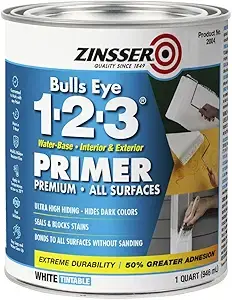
Why it’s great:
- Stain-blocking and mold-resistant
- Works well on unpainted plaster
- Fast drying and low VOC
What we don’t love:
- Slightly thinner than others—requires careful application
This is also a great choice if you’re wondering how to paint new plastered walls, same principles apply.
Best Paint for Newly Plastered Ceilings: Our Top Picks
After priming, it’s time to bring color to your ceiling. Whether you want pure white or a subtle hue, these are the most reliable options for newly plastered surfaces.
1. Prestige Interior Ceiling Paint, Brite White
4.4/5 | 1,000+ Ratings
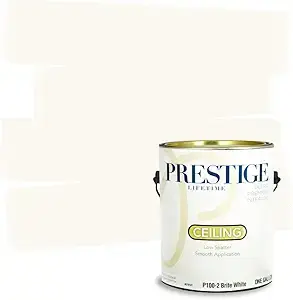
Pros:
- Excellent coverage
- True matte finish
- Affordable
Cons:
- Can dry fast—use a wet edge to avoid lap marks
This is ideal if you’re after a cheapest plaster wall paint alternative with professional results.
2. Zinsser Ceiling Paint and Primer in One
4.3/5 | 1,500+ Ratings
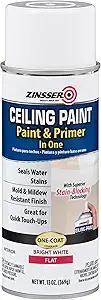
Pros:
- Applies pink, dries white (helps spot missed areas)
- One-coat coverage for white ceilings
- Excellent stain-blocking
Cons:
- May not work as well on textured ceilings
Want ceiling paint that hides imperfections? This Zinsser paint is also featured in our Best Ceiling Paint article.
Best Paint for Plastering Walls and Ceilings (Multipurpose Options)
If you’re working on walls and ceilings together, why buy two different paints?
3. Dulux Trade Supermatt Emulsion
4.7/5 | Pro Decorators’ Favorite

Why it stands out:
- Ideal for new plaster
- High opacity for fewer coats
- Breathable—great for drying walls
Ideal for:
- Ceiling and wall touch-ups
- Post-plaster renovation projects
What to Avoid: Common Mistakes
Skipping the Mist Coat
Going straight to full-strength paint will cause peeling. Always apply a mist coat or primer first.
Painting Too Soon
Even the best paint for new plaster will fail if the surface is still damp.
Ignoring Tools
Don’t underestimate tools. Check out our guides to Best Ceiling Paint Rollers, Best Painters Tape, and Best Ladders for Painting.
Bonus: Related Guides You’ll Love
Best Ceiling Paint Color
How to Clean Walls Before Painting
How Long Does It Take to Paint a Room?
How to Make Paint Dry Fast
Best Paint for Bathroom Ceiling to Prevent Mold
Final Thoughts: Don’t Just Paint—Transform
When choosing the best paint for new plaster, your ceiling deserves attention, not shortcuts. From mist coating to priming and finishing, each step contributes to a professional-looking surface that lasts.
Key Takeaway:
For pristine results, pair Zinsser Bulls Eye Primer with Prestige Ceiling Paint or Zinsser Ceiling Paint, depending on your surface needs and budget.
Whether you’re painting one room or the whole house, we hope this guide makes your job easier, faster, and more enjoyable.
Have questions? Comment below and we’ll help you out—happy painting!
Affiliate Disclosure: This article contains Amazon affiliate links. We may earn a small commission at no extra cost to you if you purchase through our links.
How Long to Wait Before Painting New Plaster
Plaster does not dry at one fixed speed. It dries at the speed your room lets it. A skimmed ceiling in a warm, ventilated living room behaves nothing like the same skim in a north-facing bedroom in February. The colour change is your signal: fresh plaster is dark pink-brown, and it is ready when the entire surface has gone a uniform pale pink with no dark patches left in the corners or around the light fitting.
| Conditions | Realistic drying time | What to watch for |
|---|---|---|
| Warm room, windows open, summer | 4-7 days | Ready early, but check corners last |
| Average heated room, autumn | 7-10 days | The most common real-world case |
| Cold or north-facing room, winter | 14-21 days | Dark patches linger at wall junctions |
| Bathroom or kitchen ceiling | 14+ days | Steam re-wets the surface daily |
| Thick two-coat float and set | Add 5-7 days | The backing coat holds water longest |
If you want to speed this up, ventilate rather than heat. Cranking a heater at a fresh ceiling drives the surface dry while the core stays wet, which is exactly the trap I fell into. Cross-ventilation pulls the moisture out of the whole thickness. If you need the room back fast, our guide on how to make paint dry fast covers the airflow set-up that works without cracking the finish.
Mist Coat Ratios That Actually Work
A mist coat is watered-down matt emulsion, and its only job is to soak into the plaster and give the topcoats something to grip. Get the ratio wrong in either direction and you pay for it. Too thick and it sits on the surface like a skin that peels later. Too thin and it runs off the roller and drips in your face without sealing anything.
- Standard skim, contract matt emulsion: 70% paint to 30% clean water. This is the ratio to start with.
- Very porous or over-trowelled plaster: 60/40. If your first mist coat vanishes into the surface with no sheen at all, the plaster was thirstier than average – put a second mist coat on.
- Never use vinyl silk or any sheen finish as a mist coat. The vinyl content forms a film instead of soaking in, and the whole coat can lift off the plaster in one piece.
Two thin coats always beat one thick coat, and that holds for the mist coat as much as the topcoat. If you are thinning by eye for the first time, the technique in our guide to how to thin latex paint transfers directly – same principle, same stirring discipline, same test patch before you commit the whole ceiling.
When NOT to use this method
A mist coat is for bare, new plaster only. Skip it and use a bonding primer instead if any of these apply:
- The ceiling is patch-plastered – part new plaster, part old painted surface. A mist coat over old paint will not bond and you will see the patch lines through the topcoat.
- There is any staining from a leak. Water and nicotine stains bleed straight through emulsion. Seal them with a stain-blocking primer first.
- The plaster is still showing dark patches. Waiting is not optional here – it is the whole job.
- The surface is plasterboard with taped joints rather than a full skim. That needs a drywall primer-sealer, not a mist coat.
Matt, Silk, or Durable: Which Finish Belongs on a Ceiling
Almost every ceiling should be matt, and the reason is optical rather than technical. Any sheen catches raking light from a window or a downlight and turns every minor trowel ripple into a visible shadow. Matt scatters that light instead. The exception is a bathroom or a kitchen ceiling, where you want a moisture-resistant formulation – and even then choose the lowest sheen the range offers. If mould is your real concern, the product decision is covered properly in our guide to the best paint for a bathroom ceiling to prevent mould.
One thing worth checking on the tin before you buy: the VOC content. Ceilings are large surfaces in enclosed rooms, and you will be under one for hours. The EPA’s guidance on volatile organic compounds is worth two minutes of reading if you are painting a bedroom or a nursery. Most modern water-based ceiling paints are low-VOC, but the cheap trade tubs are not always.
Colour is the last decision, not the first. A new plaster ceiling is the one chance you get at a perfectly flat base, so it is worth spending ten minutes on the shade rather than defaulting to brilliant white – our breakdown of the best ceiling paint colour explains why a hint of warmth usually reads better than pure white under artificial light.
Frequently Asked Questions
Can I use primer instead of a mist coat on new plaster?
Yes, and on a patchy or previously painted ceiling you should. A dedicated plaster or drywall primer-sealer does the same sealing job with more consistency than a home-mixed mist coat. On uniform bare plaster the mist coat is cheaper and works just as well.
How many coats does a newly plastered ceiling need?
Three in total: one mist coat plus two full topcoats. Very porous plaster sometimes takes a second mist coat, which makes four. If you are still seeing patchy absorption after two topcoats, the mist coat was too thin.
What happens if I paint new plaster too soon?
Trapped moisture pushes the paint film off the surface. You get flaking, blistering, and in a poorly ventilated room, mould growing between the plaster and the paint. It is not fixable with another coat – you scrape back to bare plaster and start again.
Do I need to sand new plaster before painting?
Only lightly, and only where there are trowel ridges or splashes. A well-finished skim needs nothing more than a soft brush and a wipe. Aggressive sanding opens the surface unevenly and makes absorption worse, not better.
Can I use leftover wall paint as a mist coat?
Only if it is a matt emulsion. Silk, satin, eggshell, and anything labelled washable or durable contains binders designed to form a film rather than soak in – exactly what you do not want against raw plaster.
Why is my new plaster ceiling drying patchy after painting?
Uneven porosity. Some areas of the skim absorbed more of the mist coat than others, so the topcoat is sinking in at different rates. Another full topcoat usually evens it out. If it does not, the ceiling needed a second mist coat.
About the author: Sophie Ulman has renovated and painted more rooms than she can count — and made every mistake in the book so you don’t have to. She focuses on real-world durability: not how products perform on day one, but whether the repair holds through a full seasonal cycle.