Best Primer for Kitchen Cabinets: Top Picks for Lasting Adhesion
Updated: August 2026 | By Sophie Ulman
Choosing the best primer for kitchen cabinets is the decision that most separates a lasting cabinet repaint from one that peels within a year. The primer is not optional. It’s the layer that bonds the topcoat to whatever is already on your cabinets — whether that’s bare wood, old varnish, grease residue, or laminate. Get it right, and your topcoat lasts a decade. Get it wrong, and no paint brand will save you.
We cut through the options to give you four primers that cover the real scenarios kitchen cabinets actually present. Each one has been validated for quality, adhesion chemistry, and compatibility with water-based topcoats.
Quick Picks at a Glance
| Pick | Product | Type | Link |
|---|---|---|---|
| 🥇 Best Overall | Zinsser BIN Shellac Primer (Quart) | Shellac-based | View on Amazon |
| 🥈 Best Low-Odor | Zinsser BIN Advanced Synthetic Shellac | Synthetic shellac | View on Amazon |
| 🥉 Best Water-Based | KILZ 3 Premium Multi-Surface Primer | Water-based | View on Amazon |
| 🏅 Best Budget | KILZ Original Low Odor Primer | Water-based | View on Amazon |
Top 4 Cabinet Primers Reviewed
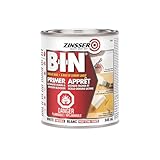
Zinsser BIN Shellac-Based Primer-Sealer & Stain Killer — 1 Quart
Zinsser BIN is the benchmark that every other cabinet primer is measured against. It’s shellac-based, which gives it an adhesion profile that water-based products simply can’t match on difficult surfaces. It bonds to bare wood, previously painted surfaces, glossy factory finishes, oil-based lacquers, and even lightly contaminated surfaces where other primers fail. For kitchen cabinets — which are often varnished, greasy, or both — that broad adhesion capability is not a luxury, it’s a requirement.
The stain-killing performance is equally exceptional. Wood tannins, smoke stains, water marks, and cooking grease that bleeds up through water-based primers are stopped dead by BIN. One coat is typically enough. Dry time is 45 minutes, and it can be recoated in under an hour. The one real tradeoff is the solvent smell — this product requires open windows and ideally a respirator. Cleanup requires denatured alcohol. For most kitchen projects, that’s a manageable trade for bulletproof adhesion.
✅ Pros
- Unmatched adhesion on glossy and contaminated surfaces
- Stops tannin and grease bleed-through completely
- Fast dry — project stays on schedule
❌ Cons
- Strong odor — needs ventilation
- Cleanup requires denatured alcohol
- Higher price per quart
Best for: Previously varnished, lacquered, or greasy kitchen cabinets — any surface where adhesion is uncertain.
Check Price on Amazon →Via Amazon.com
🔗 Related Reads on ThePaintly
- How to Paint Garage Walls — primer strategies on large porous surfaces
- Painting Wood Paneling — tannin-blocking primer techniques on wood
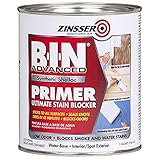
Zinsser BIN Advanced Synthetic Shellac Primer — 1 Quart
BIN Advanced is Zinsser’s answer to the main complaint about original BIN: the smell. It uses a synthetic shellac formula that delivers approximately 85–90% of the adhesion and stain-blocking performance of the original product, with significantly lower odor and water-based cleanup. For kitchens that are part of a living space — where you can’t fully isolate the work area — the odor reduction makes a real practical difference.
The performance gap between Advanced and the original BIN is narrow enough that for most kitchen cabinet projects, this is the pragmatic choice. It handles previously painted surfaces, light grease residue, and minor staining without issue. Where it loses ground is on heavily contaminated surfaces with deep tannin bleed or thick old lacquer — for those scenarios, the original BIN is worth the extra ventilation effort. Covers up to 250 sq ft per quart on smooth surfaces.
✅ Pros
- Dramatically lower odor than original BIN
- Water cleanup — no solvents needed
- Strong stain-blocking on most kitchen surfaces
❌ Cons
- Less effective than original BIN on heavy tannin bleed
- Slightly longer dry time than original
Best for: Kitchens in occupied homes where solvent smell is not acceptable.
Check Price on Amazon →Via Amazon.com
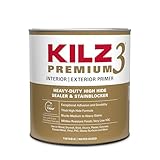
KILZ 3 Premium Multi-Surface Stain Blocking Primer — 1 Quart
KILZ 3 Premium is the best water-based primer for kitchen cabinets when the surface is in reasonably good condition — previously painted, clean, and with no heavy tannin or grease issues. It delivers excellent hide, solid stain-blocking for light water stains and minor surface discoloration, and dries to a uniform matte surface that accepts both water-based and oil-based topcoats without issue. Coverage is approximately 300–400 sq ft per quart on smooth surfaces.
The application experience is notably better than shellac primers — it has a familiar latex consistency, levels well, and can be thinned slightly with water if needed. Dry to touch in 30 minutes, recoatable in 1 hour. The practical advantage over shellac is everything that comes after application: no special ventilation, no solvent cleanup, and the ability to use the same brush for both primer and topcoat if you clean it properly between coats.
✅ Pros
- No odor issues — fully livable during application
- Excellent coverage per quart
- Accepts any topcoat — water or oil based
❌ Cons
- Not suitable for heavy tannin bleed or greasy surfaces
- Less adhesion than shellac on glossy factory finishes
Best for: Previously painted cabinets in good condition with no major staining or tannin issues.
Check Price on Amazon →Via Amazon.com
🔗 More from ThePaintly
- Best Spray Primer for Wood & Metal — spray-on primer options for faster coverage
- Best Paint Remover for Wood & Metal — when stripping is the right move before priming
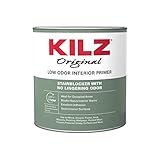
KILZ Original Low Odor Interior Primer — 1 Quart
KILZ Original Low Odor is a reformulated version of the original KILZ oil-based primer, optimized to reduce the sharp solvent smell while preserving the strong stain-blocking and adhesion properties that made the original a trade staple. It works on most interior surfaces including previously painted wood, drywall, masonry, and bare wood. For kitchen cabinet projects where the budget is tight and the surface is in decent condition, it delivers solid results at a lower price point than the shellac options.
The stain-blocking performance sits between a standard water-based primer and a full shellac. It handles light to moderate water stains, mild surface grease, and minor discoloration reliably. For raw oak or pine cabinets with visible grain and tannin concerns, step up to one of the Zinsser options — KILZ Original won’t fully stop tannin bleed on problem wood. But for painted MDF or previously primed surfaces being refreshed, it’s an efficient and cost-effective choice.
✅ Pros
- Most affordable per-quart price on this list
- Better stain-blocking than standard latex primer
- Low odor — usable without full ventilation
❌ Cons
- Not strong enough for heavy tannin or deep grease bleed
- Less adhesion on glossy surfaces than shellac
Best for: Budget-conscious projects on already-primed or painted surfaces in good condition.
Check Price on Amazon →Via Amazon.com
💡 Pro Tips on Cabinet Primer
One coat is usually enough. Primer isn’t a finish coat — its job is adhesion and sealing, not appearance. A single thin, even coat accomplishes both. Two coats are only needed if the surface is unusually porous or stained.
Sand between primer and paint. After primer dries, a light pass with 220-grit smooths any raised grain and gives the topcoat a better mechanical bond. Wipe with a tack cloth before painting.
Tinted primer hides better. Ask a paint store to tint your primer toward your topcoat color — this improves coverage and often lets you achieve full color with two topcoats instead of three.
Primer Comparison Table
| Primer | Type | Tannin Block | Grease Seal | Odor | Cleanup |
|---|---|---|---|---|---|
| Zinsser BIN Original | Shellac | ✅ Excellent | ✅ Excellent | High | Denatured alcohol |
| Zinsser BIN Advanced | Synthetic shellac | ✅ Very Good | ✅ Good | Low-Medium | Water |
| KILZ 3 Premium | Water-based | ⚠️ Moderate | ⚠️ Moderate | Very Low | Water |
| KILZ Original Low Odor | Water-based | ⚠️ Light-Moderate | ⚠️ Light | Low | Water |
Renovation Stage: PRIME
Primer is the PRIME stage of your kitchen cabinet renovation — the critical link between surface prep and topcoat. It follows degreasing and light sanding. After primer, you’re ready for cabinet paint. See our complete guide: how to approach painting wood surfaces for the full sequence.
Primer Coverage Calculator
Estimate how much primer you need before you buy.

Buying Guide: Shellac vs. Water-Based Primer
The most consequential decision in cabinet primer selection is the base chemistry. Everything else — brand, price, dry time — is secondary to getting this right.
When to Use Shellac-Based Primer
Use shellac primer (Zinsser BIN original or Advanced) when your cabinets are any of the following: previously varnished or lacquered with a glossy factory finish, made from tannin-rich wood like oak or pine, visibly stained with water marks or grease, or when adhesion on a test area with water-based primer is poor. Shellac is the only chemistry that reliably stops tannin bleed — the yellow-brown discoloration that ruins light paint jobs weeks after application. According to This Old House, shellac primer is the professional standard for raw oak cabinet repaints for exactly this reason.
When Water-Based Primer Is Sufficient
Water-based primers (KILZ 3 Premium, KILZ Original) work well on previously painted surfaces in good condition, painted MDF, or surfaces that have already been successfully primed and painted in the past. They’re practical — low odor, water cleanup, fast dry — and the performance gap with shellac disappears when the surface is clean, stable, and not prone to bleed-through. The Family Handyman recommends water-based primer as the baseline option for most DIY cabinet projects, with shellac as the upgrade for problem surfaces.
The Test Patch Method
If you’re unsure which primer category you need, do a test patch. Apply one coat of water-based primer to an inconspicuous cabinet door. Let it dry fully. Then apply your topcoat color. Wait 48 hours and check for any yellow or brown discoloration bleeding through. If you see it, switch to shellac. If the surface looks clean, continue with water-based for the rest of the project.
How to Apply Cabinet Primer Correctly
Correct application matters as much as primer selection. Here are the steps that make the difference.
Prep the Surface First
Primer bonds to what’s underneath it. A clean, deglossed surface is essential. Degrease with Krud Kutter or TSP substitute, allow to dry, then lightly scuff with 220-grit sandpaper. Wipe off all dust with a tack cloth. Applying primer to a greasy or dusty surface is like taping over a wall without cleaning it — the tape falls off, and so does your primer.
Apply a Thin, Even Coat
Primer does not need to be thick. A thin, even coat seals and bonds better than a heavy coat, which can sag or trap solvents. Use a quality synthetic brush for edges and an inexpensive foam roller for flat faces. Work in sections and maintain a wet edge to avoid lap marks.
Sand After Primer Dries
After primer fully dries, a light pass with 220-grit smooths any raised wood grain and creates a slightly textured surface that the topcoat bites into. This is the step most DIYers skip and then wonder why their paint looks rough. Wipe clean with a tack cloth before applying your first coat of cabinet paint.
Primer is one stage of a longer sequence, and getting it right does not save you if the stages around it go wrong. If you have not started yet, read the full seven-step method for painting kitchen cabinets so the finish does not chip — it covers door labeling, degreasing, cure time between coats, and the rehanging window, which is where most cabinet projects actually fall apart.
Our Verdict
For most kitchen cabinet projects, Zinsser BIN Advanced Synthetic Shellac hits the best balance: near-shellac performance with manageable odor and water cleanup. Step up to the original Zinsser BIN if you’re dealing with oak, raw wood, heavy staining, or any surface where adhesion is uncertain.
For clean, previously painted surfaces in good shape, KILZ 3 Premium is a practical, low-stress choice. Budget-constrained projects on stable surfaces can work with KILZ Original Low Odor. Whatever you pick, prime before you paint — it’s the step that makes everything else work.
Choosing the Best Primer for Kitchen Cabinets: What I Learned the Hard Way
The first time I painted a set of oak cabinets, I used a general-purpose wall primer because it was already open in the garage. It rolled on beautifully. Four months later the paint was lifting off every door edge in sheets — the primer had never bonded to the factory varnish underneath. I stripped the whole kitchen and started again with shellac. That second kitchen is seven years old now and still has zero chipping at the handles.
The lesson: on cabinets, the primer is not a base coat, it is the adhesion layer. Everything above it is decoration. Prep and primer decide whether the finish survives, not the topcoat brand — durability is roughly half product and half surface preparation.
That is why I treat priming as its own project stage rather than a step. If your doors are varnished, laminated, or have ever met cooking grease, degrease first with a strong cleaner, scuff with 220-grit, then prime. If you would rather skip the abrasive step entirely, the deglosser-and-bonding-primer route in my guide to painting kitchen cabinets without sanding gets you close, though it demands a cleaner surface to start with. Once the primer is cured, the topcoat choice becomes a color decision — and if you are going classic, the shortlist in my roundup of the best white paint for kitchen cabinets pairs cleanly with every primer on this page. Slick laminate fronts behave differently again, which is covered in best paint for laminate cabinets.
Two thin coats always beat one thick coat — with primer that matters even more, because a heavy shellac coat skins over on top while the solvent underneath is still moving. You get a surface that feels dry and sands like chewing gum.
When NOT to Use Shellac Primer on Cabinets
Shellac is the strongest bonding option here, but it is the wrong call in three situations. First, in a kitchen you cannot ventilate: the denatured alcohol carrier is aggressive, and without cross-ventilation and a respirator it is genuinely unpleasant and unsafe to be around. Second, on cabinets you plan to finish with an oil-based enamel over bare, tannin-heavy wood that is still damp — trapped moisture has nowhere to go. Third, if you are only spot-priming a few scratches on an otherwise sound painted finish: a water-based bonding primer is easier to feather and will not flash a different sheen.
Shellac also cannot be cleaned up with water. If you are spraying it, budget for ammonia or denatured alcohol and expect to strip the gun down the same day. Leave it overnight and the gun is scrap.
Frequently Asked Questions
Do you need to prime kitchen cabinets before painting?
Yes — primer is essential for kitchen cabinets. It provides the adhesion layer between the cabinet surface and the topcoat. Without primer, paint on cabinets chips and peels significantly faster, especially on varnished, laminate, or tannin-rich wood surfaces.
What is the difference between shellac primer and water-based primer for cabinets?
Shellac-based primers (like Zinsser BIN) bond to virtually any surface including glossy varnish and oil-based lacquers, and permanently block tannins and stain bleed-through. Water-based primers are easier to use (low odor, water cleanup) but bond less reliably on glossy or contaminated surfaces and don’t stop tannin bleed as effectively.
How many coats of primer do kitchen cabinets need?
One coat of primer is sufficient for most kitchen cabinet projects. Two coats may be needed on bare, raw wood, heavily stained surfaces, or when switching from a very dark to a very light color. The goal is a uniform, sealed surface — not thick buildup.
Can I skip priming if I use a paint-and-primer-in-one product?
For kitchen cabinets, we recommend against relying on paint-and-primer-in-one products. These products work on new drywall and lightly prepared surfaces, but kitchen cabinet surfaces are varnished, greasy, and high-use — conditions where a dedicated primer layer is what separates a 1-year finish from a 10-year finish.
What primer works on laminate kitchen cabinets?
Shellac-based primer (Zinsser BIN) is the best choice for laminate cabinets. Laminate is one of the slickest surfaces that primer needs to bond to, and shellac chemistry is the only reliable option. Scuff the laminate with 220-grit before priming to add mechanical adhesion.
How long should primer dry before painting kitchen cabinets?
Shellac primers (Zinsser BIN) dry to recoat in 45 minutes to 1 hour. Water-based primers (KILZ) dry to recoat in 30–60 minutes. For best results, allow the primer to dry fully — at least 1–2 hours — before sanding and applying the first topcoat. Humidity and temperature affect dry time; cool or humid conditions add time.