The Best Paint for Car Rims That Actually Survives Brake Heat
Updated: July 2026 | By Sophie Ulman
Choose the wrong paint for car rims and you will see it fail before the season is out. Brake heat cooks it, road salt lifts it, and the first stone chip peels a strip clean off the lip. I have stripped and redone more wheels than I would like to admit, and the pattern never changes: cheap general-purpose spray paint on a rim is a repaint waiting to happen. The right paint for car rims is built to take heat, flex with the metal, and shrug off the grit a wheel lives in every day. Related: car touch up paint pen.
Below are five wheel coatings I trust, each matched to a specific job, plus the prep that decides whether any of them last. Get the prep right and even a budget can holds for years. Skip it and the priciest paint for car rims on the shelf still flakes.
What you will find here
Quick picks · The 5 wheel paints · Coverage calculator · How to choose paint for car rims · Prep steps that matter · FAQ
Quick picks at a glance
| Wheel paint | Best for | Heat rating | Finish |
|---|---|---|---|
| Rust-Oleum 248928 Matte Black | Daily-driver alloys | ~180°F service | Matte black |
| VHT Poly Wheel Gloss Black | High brake heat | Up to ~250°F | Gloss black |
| Rust-Oleum 248927 Steel | Factory OEM look | ~180°F service | Silver steel |
| Dupli-Color HWP101 Silver | Alloy restoration | ~200°F service | Bright silver |
| Rust-Oleum 248929 Clear | Sealing painted rims | Topcoat | Gloss clear |
The 5 best paint for car rims, matched to the job
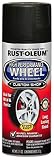
Rust-Oleum 248928 High Performance Wheel Paint (Matte Black)
This is an acrylic enamel built specifically for wheels, and the chemistry is what makes it stick. The resin cures into a hard film that resists brake dust, road chemicals, and the cleaning solvents most people blast their rims with. That solvent resistance is the part general spray paint gets wrong: a normal enamel softens the moment wheel cleaner hits it. This one holds.
I ran it on a set of 15-inch steel wheels on a winter beater and checked the lower lips after a full salt season. No lifting, no rust bleed at the valve stem. The one honest limitation: matte finishes show brake dust more than gloss, so you will wipe these down more often to keep them looking clean.
Dries to the touch in about 20 minutes and one 11 oz can covers roughly two wheels.
- Real wheel-grade solvent resistance
- Fast recoat window
- Hides minor lip scuffs
- Matte shows brake dust
- Needs a clear coat for max chip resistance
Check Price on Amazon ->
Via Amazon.com
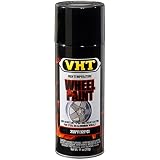
VHT Poly Wheel Coating (Gloss Black)
VHT built this polyurethane coating around heat, which is exactly what a rim near hard-working brakes needs. Polyurethane holds its film integrity at intermittent temperatures up to about 250°F, where a standard enamel starts to soften and bubble. If you are painting calipers at the same time, the same heat logic applies there and we cover it in our guide to the best brake caliper paint. If you drive spiritedly or tow, that heat tolerance is not marketing — it is the difference between a clean gloss and a blistered mess after a mountain descent.
The first time I used a high-heat wheel coating like this, I made the mistake of laying it on thick to get gloss fast. It sagged and dried skinned-over on top while staying soft underneath for days. Two thin coats. Always. Done right, the gloss black finish is deep and it cleans up with a wipe.
Withstands intermittent temperatures up to roughly 250°F, well above what daily-driver enamels tolerate.
- Genuine high-heat tolerance near brakes
- Deep gloss that resists dust
- Tough polyurethane film
- Unforgiving if applied too thick
- Gloss shows swirl marks if wiped dry
Check Price on Amazon ->
Via Amazon.com
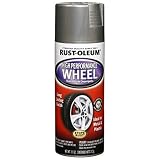
Rust-Oleum 248927 High Performance Wheel Paint (Steel)
When you want rims that look like they came from the factory, color match matters more than anything. This steel-tone enamel mimics the muted silver of OEM alloys rather than the bright chrome-silver that screams rattle-can. It uses the same wheel-grade resin as the matte black above, so you get the solvent and brake-dust resistance in a factory color.
I used this to blend one corner after a curb scrape and the color sat close enough that you had to know where to look. The honest limitation: it is a satin steel, not a mirror, so if your wheels were polished aluminum you will notice this reads flatter. For cast or painted factory alloys, it is a near-perfect match.
The steel tone is formulated to sit near OEM alloy silver, not the brighter aftermarket silver.
- Convincing factory silver
- Blends spot repairs well
- Wheel-grade durability
- Satin, not mirror-polished
- Best over primer on bare metal
Check Price on Amazon ->
Via Amazon.com
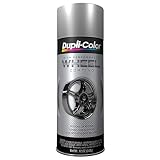
Dupli-Color HWP101 High Performance Wheel Paint (Silver)
Dupli-Color built this acrylic enamel to grip steel, aluminum, and even plastic wheel covers, which is why it is my pick for tired alloys. Adhesion is the whole game on aluminum — the metal is slick and oxidizes fast, so a coating that bites is what keeps your work from peeling at the lug holes. This one restores original appearance and shields against brake dust, chemicals, heat, and chipping.
Bright silver is a demanding color because it shows every flaw underneath, so this rewards careful sanding. I skipped a proper scuff on one aluminum rim to save ten minutes and the silver telegraphed every swirl in the old finish. On a properly prepped wheel, though, the restored shine is genuinely convincing.
Bonds to steel, aluminum, and plastic wheel coverings, and is dry to the touch in about 30 minutes.
- Sticks to aluminum and plastic
- Bright, restorative silver
- Fast handling time
- Shows every prep flaw
- Bright silver, not OEM-muted
Check Price on Amazon ->
Via Amazon.com
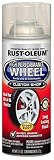
Rust-Oleum 248929 High Performance Wheel Clear Coat
This is not a color — it is the insurance policy over one. A wheel clear coat lays a hard, glossy film over your color coat that takes the chip and the solvent so the color underneath does not. That is why professionally painted rims last: the clear is the sacrificial layer, and replacing a clear coat is far easier than redoing color.
I now treat clear as non-negotiable on any set I want to keep past a year. On an unsealed matte respray I did years ago, the color chipped at the lip within months; the same paint under this clear on the next set is still intact. The limitation: clear only performs if the color coat below is fully cured, so do not rush it.
Formulated to go over Rust-Oleum wheel color coats for a high-gloss, chip-resistant seal.
- Dramatically boosts chip resistance
- Adds depth and gloss
- Easy to refresh later
- Needs a fully cured color coat
- Adds a step and dry time
Check Price on Amazon ->
Via Amazon.com
How many cans do you need?

How to choose the right paint for car rims
Match the heat rating to your driving
Brakes throw heat straight into the wheel, and that heat is what breaks a coating down first. A commuter on gentle roads is fine with a daily-driver enamel rated around 180°F. If you drive hard, tow, or run performance brakes, step up to a polyurethane wheel coating that holds to roughly 250°F. Under-rate the heat and you get bubbling at the barrel where the paint sits closest to the caliper. This is the same logic behind high-temp engine paint — heat dictates chemistry.
Match the paint to the metal
Steel and aluminum behave differently under coating. Aluminum is slick and oxidizes quickly, so it demands a paint with aggressive adhesion or a self-etching primer first. Steel is more forgiving but rusts, so a rust-inhibiting enamel earns its keep. If you are coating plastic hubcaps or trim, you need a formula flexible enough not to crack — the same concern covered in our guide to the best spray paint for plastic. For bare aluminum wheels, the adhesion notes in our paint for aluminum guide apply directly.
Decide on a clear coat up front
A clear topcoat roughly doubles how long a painted rim survives, because it takes the chips and solvent instead of your color. If you want the wheels to last more than a season, budget for clear from the start. It is the single cheapest upgrade to durability you can make, and it is why factory and professional finishes outlast rattle-can jobs. Consumer testing consistently finds surface prep and topcoat quality drive coating lifespan more than color brand does, a point echoed by Consumer Reports in its paint durability work.
Prep matters more than the brand you buy
Here is the truth every wheel job comes down to: durability is about half product and half preparation. The best paint for car rims on the market will peel on a greasy, glossy wheel, and a budget can will hold for years on a properly prepped one. Prep is not the boring part before the real work — it is the work.
The first time I repainted a set of steel rims, I sprayed straight over the brake dust and old clear to save an afternoon. Two months later the new paint was flaking off in sheets around every lug hole. Now I never skip degreasing and scuffing. Ever. Here is the sequence that actually holds:
- Degrease hard. Brake dust is baked-on iron and oil. Hit the wheel with a dedicated degreaser and a brush until the rag comes away clean.
- Scuff the whole surface. Knock the gloss off old paint with 400-grit so the new coating has a mechanical grip. Glossy surfaces shed paint.
- Prime bare metal. Any spot down to aluminum or steel needs a self-etching primer. This is non-negotiable on bare alloy.
- Two thin coats of color. Light passes, ten minutes apart. Thin coats bond and cure evenly; one heavy coat sags and stays soft underneath.
- Clear coat, then cure. Seal it and let it fully harden before mounting — days, not hours, for full chemical cure.
For small chips down the road, keep a touch-up paint pen handy rather than re-spraying a whole wheel. And if you are working with unusual metals, our note on whether you can paint stainless steel covers the adhesion rules that apply to trim and lug hardware too. For step-by-step spray technique, the wheel-painting walkthrough at Family Handyman is a solid visual reference.
If you are refinishing all four wheels, the cans are the expensive part
Every pick above is an aerosol, and for one curbed rim that is the correct answer. Four wheels is a different arithmetic. A full set with a clear coat runs six to eight cans once you account for the two you will waste learning the fan pattern, and aerosol tips flutter near the end of the can — which is exactly when you are spraying the last spoke and least want a run.
The alternative is a gravity-feed gun. A 1.3 mm fluid tip is the standard size for wheel-grade basecoat and clear — both are light-to-medium viscosity, which is exactly what that tip is cut for. It has the reach for spokes, barrels and the pocket behind each lug, and unlike a rattle can you can back the trigger off to feather an edge instead of committing to a full blast.
TCP Global Professional HVLP Spray Gun, 1.3 mm Gravity Feed with 1-Litre Cup and Air Regulator
This is the full-size gun rather than a touch-up gun: a 1.3 mm stainless needle and nozzle set, a one-litre aluminium cup, and a micrometer air regulator with a gauge that mounts at the gun inlet. It sprays the same wheel-grade enamels and clears you were already buying, just from a quart instead of a can, and it gives you the one thing an aerosol cannot: control over how much material leaves the tip.
The practical difference shows up on coat two. With a can, thin coats are a matter of how fast you move your arm. With a gun you set the fluid, the fan and the pressure, then repeat those three numbers on all four wheels. That is what the gauge is actually for: pressure drifts as the compressor cycles, and drifting pressure is why a rattle-canned set usually has one wheel that reads slightly darker in daylight. A sprayed set matches because the settings did not move.
This is a real-air gun: it wants roughly 4.2 to 7.1 CFM, which is more than a small pancake compressor will hold. You also have to thin and strain the paint before it goes in the cup.
- One quart covers what six or seven cans would
- One-litre cup does all four wheels without a refill
- Consistent film across all four wheels
- Tip cleans instead of clogging mid-job
- Needs more air than a pancake compressor gives
- Thinning and straining is real extra work
- Overkill for a single curbed rim
Check Price on Amazon ->
Via Amazon.com
When to skip it: if this is one wheel after one curb, buy two cans and an afternoon. You will spend less and finish sooner, and the gun will sit in its box. The tool earns its place on the second job, not the first — and check what your compressor can actually hold before you buy the gun, because on this one the compressor is the expensive half of the switch.
The verdict
For most drivers, Rust-Oleum 248928 Matte Black is the paint for car rims I reach for first — genuine wheel-grade durability at a fair price. If your brakes run hot, step up to the VHT Poly Wheel coating for its heat tolerance. Restoring faded alloys? The Dupli-Color HWP101 Silver grips aluminum and brings back the shine. Whichever color you choose, seal it with the Rust-Oleum 248929 Clear and prep like your finish depends on it — because it does.
Frequently asked questions
Can you spray paint car rims yourself?
Yes, and it holds well if you prep properly. Degrease, scuff to 400-grit, prime any bare metal, then apply two thin coats of a wheel-specific paint and a clear coat. The prep is what separates a lasting job from one that peels in weeks.
How long does painted rim finish last?
With proper prep and a clear coat, a quality wheel enamel lasts several years on a daily driver. Skip the clear coat or the prep and you may see chipping within a single season, especially on salted winter roads.
Do I need primer to paint car rims?
You need primer anywhere the wheel is down to bare metal. A self-etching primer bites into aluminum or steel so the color coat holds. Over sound existing paint that you have scuffed, you can often go straight to color.
What paint for car rims handles brake heat best?
Polyurethane wheel coatings like VHT tolerate intermittent temperatures around 250°F, well above standard enamels rated near 180°F. If you drive hard or tow, choose the higher heat rating to avoid bubbling near the brakes.
Will wheel paint stick to aluminum alloy?
It will if the paint is formulated for it and the surface is prepped. Aluminum oxidizes fast and is slick, so scuff thoroughly and use a self-etching primer or an adhesion-focused paint like Dupli-Color HWP101.
Do painted rims need a clear coat?
Not strictly, but a clear coat roughly doubles the lifespan by taking chips and solvent instead of your color. It is the cheapest single upgrade to durability, which is why professional finishes always include it.
ThePaintly is reader-supported. We only recommend products we’ve personally evaluated. When you buy through links on this site, we may earn an affiliate commission at no extra cost to you.