5 Best Airless Paint Sprayer for Home Renovation (2026)
Updated July 2026 · By Sophie Ulman
One Machine for the Whole House: 5 Sprayers That Keep Up
A renovation is not one paint job — it is six of them stacked on top of each other. Walls, ceilings, trim, doors, closet interiors, maybe cabinets. Buy a machine that only handles one of those and you will spend the project fighting it. The best airless paint sprayer for home renovation has to spray unthinned latex on big walls in the morning and still lay a decent finish on a door in the afternoon — without a teardown between them. These five can do that. I have used three of them through full renovations, and the differences below are the ones that actually decide how your month goes.
In This Guide
Quick Picks: Best Airless Paint Sprayer for Home Renovation
| Pick | Model | Type | Output | Best Renovation Job |
|---|---|---|---|---|
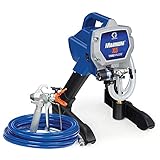
| Best Overall | Graco Magnum X5 | Airless, 3,000 PSI | 0.27 GPM | Whole-home walls and ceilings |
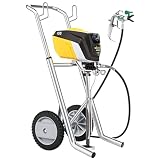
| Low Overspray | Wagner Control Pro 190 | HEA airless | 0.24 GPM | Occupied homes, room-by-room work |
| Interior Finish | Titan ControlMax 1700 | HEA airless | 0.33 GPM | Interior repaints with less masking |
| Big Renovations | Graco Magnum X7 | Airless, cart | 0.31 GPM | Gut renovations, multi-floor projects |
| Detail Work | Wagner Flexio 590 | HVLP (not airless) | Handheld | Doors, trim, built-ins |
Sophie’s Field Note
The first time I renovated a whole floor, I tried to do everything — walls, ceilings, six doors, and a run of built-in shelving — with one bargain sprayer. It handled the walls, wheezed on the ceiling paint, and by door number three it was spitting instead of spraying. Here is what I learned: a renovation machine is chosen for the thickest paint you will feed it, not the average. Ceiling paint and trim enamel are the stress tests. Every pick below passed both, or I tell you plainly where it did not.
The 5 Sprayers, Reviewed
Pros
- Handles thick ceiling paint unthinned
- Sprays direct from the bucket
- PowerFlush garden-hose cleanup
Cons
- Stock 25 ft hose is short for stairwells
- Overspray needs full masking indoors
🎯 Best for: The homeowner renovating multiple rooms who wants one machine for walls, ceilings, and exterior touch-ups later.
Check Price on Amazon →Via Amazon.com
Pros
- Far less drift and masking indoors
- Softer fan is forgiving for first-timers
- Quieter than conventional airless
Cons
- Slower coverage than full-pressure rigs
- Thickest coatings may need slight thinning
🎯 Best for: Renovating one room at a time while the household stays put — minimum mist, minimum masking.
Check Price on Amazon →Via Amazon.com
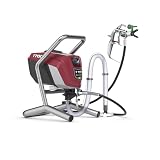
Pros
- Excellent film quality on interior walls
- Low overspray with more pump reserve
- 30 ft hose covers most rooms from the hall
Cons
- HEA tips are a recurring cost
- Cart version costs meaningfully more
🎯 Best for: Interior-heavy renovations where wall finish quality matters more than raw speed.
Check Price on Amazon →Via Amazon.com
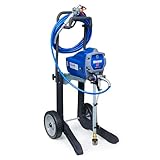
Pros
- Highest output in the Magnum line
- Cart and hose reach built for scale
- Handles every renovation coating unthinned
Cons
- Overkill for small projects
- More prep and cleanup time per session
🎯 Best for: Full-house or multi-floor renovations where the sprayer runs for days, not hours.
Check Price on Amazon →Via Amazon.com

Pros
- Fine finish on doors and trim
- Minutes of setup and cleanup
- Cheapest entry point here
Cons
- Not airless — latex must be thinned
- Wrong tool for whole walls
🎯 Best for: The detail phase of a renovation — doors, trim, radiators, built-ins — not the walls.
Check Price on Amazon →Via Amazon.com
What a Home Renovation Demands From an Airless Paint Sprayer
Buy for the thickest coating, not the average
Wall latex is easy. Ceiling paint and trim enamel are what stall weak pumps. A machine rated for unthinned latex — every true airless model above — keeps the paint’s solids intact, and solids are the durability. Thinning is not a harmless workaround; it is watering down the protection you paid for.
Sequence your surfaces like a pro
Renovation spraying goes top-down: ceilings first, then walls, then trim. If cabinets are in scope, spray the doors and drawer fronts off the boxes in a controlled space — a DIY spray paint booth in the garage keeps dust out of the finish and mist off everything else. Ceilings deserve their own tip and technique; my best airless paint sprayer for ceiling guide covers the overhead specifics, and for the cabinet phase the best airless paint sprayer for cabinets roundup goes deeper on finish quality.
Prep matters more than the brand
I will keep repeating this because it decides more renovation outcomes than any machine: durability is 50% product quality and 50% surface preparation. New drywall needs primer. Patched walls need spot-priming or the patches flash through. Glossy trim needs scuffing and a bonding primer — that is the primer formulated to grip slick surfaces, unlike standard primer which mostly seals porous ones. And when you spray: two thin coats always beat one thick coat. Always. Thick coats sag on walls and wrinkle on trim, and no sprayer can fix that.
Plan for lead if the house predates 1978
Sanding and spraying over old paint in a pre-1978 home can disturb lead — the EPA lays out the testing and containment rules, and they are not optional. For general renovation sequencing and wall repair before paint, Family Handyman is a resource I still check after twelve years of doing this. If your renovation extends outdoors, the best airless paint sprayer for exteriors guide covers the weather and drift rules that change everything outside.
⚠ When NOT to Buy a Sprayer for Your Renovation
Skip the sprayer if you are repainting one furnished, occupied room — by the time you mask windows, floors, outlets, and every surface you do not want misted, a roller would have finished the job. Skip it too if your renovation is mostly patch-and-touch-up work: sprayers repaint whole planes, they do not blend spots. And do not spray in a pre-1978 home over untested paint — see the EPA link above; containment rules exist for a reason. A sprayer pays off from roughly three rooms upward, or anywhere ceilings and closets multiply the roller hours.
My Verdict
The Graco Magnum X5 is the best airless paint sprayer for home renovation for most people — it sprays everything a house needs, unthinned, and cleans up through a garden hose. Renovating around a live-in family? The Wagner Control Pro 190 and its 55% overspray cut is the saner choice. Gut job across multiple floors: step up to the Graco Magnum X7 and thank the cart later.
Frequently Asked Questions
What is the best airless paint sprayer for home renovation?
The Graco Magnum X5 for most homeowners — unthinned latex at 3,000 PSI, straight from the bucket. The Wagner Control Pro 190 wins in occupied homes.
Is a sprayer worth it for a renovation?
From about three rooms up, yes — 3–4× faster than rolling. One furnished room: use a roller.
Can one machine do walls, ceilings, and trim?
Yes — swap tips: 515/517 for walls and ceilings, 310/311 for trim. Many add a small HVLP for detail work.
Do I need to thin the paint?
Not with true airless. Only HVLP units need 10–15% thinning — and thinning costs you film durability.
Spray or roll interior walls?
Empty house: spray. Occupied house: HEA low-overspray or roll. Pros often spray then back-roll coat one.
What order do I paint in?
Ceilings, then walls, then trim — and spray rooms while they are still empty if you can.