
Best Paint for Wood Ceiling: Expert Picks and Honest Reviews
Giving your wooden ceiling a fresh coat of paint can dramatically improve the look and feel of any room. But not all paints are created equal. If you want a long-lasting, professional-looking finish, choosing the best paint for wood ceiling is essential. From hiding imperfections to resisting moisture, the right product makes all the difference.
This guide explores top-rated paints based on real reviews, expert input, and product testing. Whether you’re painting natural tongue-and-groove or covering up old beams, you’ll find something here to suit your needs.
Why You Need Specialized Ceiling Paint
Hides Imperfections and Grain
Ceiling paints are formulated to provide better coverage and minimize lap marks. If you’re painting over wood, especially wood with a heavy grain, you’ll want the best high hiding ceiling paint to mask knots and textures.
Drip-Resistant and Easy to Apply
The best professional paint for ceiling will be spatter-resistant and thicker than typical wall paints, making it easier to apply overhead.
Moisture and Mildew Resistant
In rooms with high humidity, like bathrooms and kitchens, using the best waterproof ceiling paint can prevent issues like bubbling, mold, or peeling.
Top 5 Best Paints for Wood Ceilings
1. Benjamin Moore Waterborne Ceiling Paint
- Finish: Ultra-flat
- Why it’s great: It provides excellent coverage in one coat and dries to a rich, flat finish that hides imperfections.
- Downside: On the pricier side, and sold through Benjamin Moore dealers rather than online, so there is no Amazon link here.

2. Sherwin-Williams ProMar 400 Flat Ceiling Paint
- Finish: Flat
- Why it’s great: Reliable, affordable, and praised by contractors for ease of touch-ups.
- Downside: Not the best in high-moisture areas.
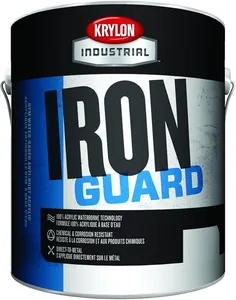
3. KILZ Color-Change Stainblocking Ceiling Paint
- Finish: Flat
- Why it’s great: Goes on pink and dries white, so you never miss a spot. Blocks old stains and works great as a primer for wood.
- Downside: Might need a top coat for a polished look.
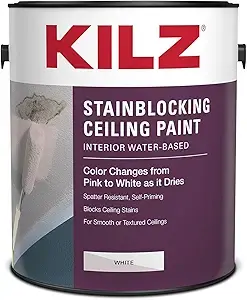
4. Zinsser Ceiling Paint and Primer in One
- Finish: Flat
- Why it’s great: Two-in-one solution, perfect for wood ceilings. Resists mold and mildew.
- Downside: Some users report inconsistent drying time.
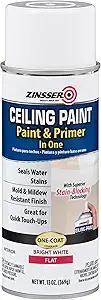
5. Benjamin Moore Aura Bath & Spa (for Moist Areas)
- Finish: Matte
- Why it’s great: The best option for ceilings in bathrooms or kitchens where humidity is a factor.
- Downside: Higher cost, but extremely durable.

Ceiling Paint Finish Recommendation
When painting wood ceilings, the finish you choose can affect both aesthetics and durability.
Recommended Finishes:
- Flat or Ultra-Flat: Best for hiding imperfections and giving a soft, modern look.
- Matte: Slightly more durable than flat, still hides flaws well.
- Satin or Eggshell: More washable and ideal in moisture-prone areas like bathrooms and kitchens.
Avoid glossy finishes, they highlight every knot and imperfection in the wood.
How to Prep a Wood Ceiling Before Painting
- Clean the Surface: Remove dust and grime. Check out our guide on how to clean walls before painting.
- Sand Lightly: Smooth out rough patches or glossy areas.
- Prime: Use a stain-blocking primer like KILZ or Zinsser for raw wood.
- Paint with the Right Tools: Consider using the best ceiling paint roller or even a sprayer for better coverage.
Application Tips for a Professional Finish
Use Quality Tools
Invest in the best ladder for painting to safely reach your ceiling, and don’t forget the best painters tape for clean lines.
Plan Your Timing
Wondering how long it’ll take? Check out how long does it take to paint a room.
Speed Up Drying
Need it done fast? Learn tricks from our article on how to make paint dry fast.
Related Reading for Ceiling Projects
- Best Ceiling Paint
- Best Way to Paint a Ceiling
- Best Ceiling Paint Color
- Best Ceiling Paint for Bathrooms
- Best Paint for Steamy Bathroom Ceiling
- Best Paint for Kitchen Cabinets
Final Thoughts: Choose the Right Ceiling Paint
When choosing the best paint for wooden ceiling, look for coverage, moisture resistance, and the right finish. Benjamin Moore Waterborne Ceiling Paint is our top choice for most situations, while KILZ is unbeatable for prepping stained wood.
By combining the right product with good prep and smart tools, you’ll get a result that lasts for years and looks stunning.
Should You Paint a Wood Ceiling or Leave the Grain Showing?
This is a one-way decision and it deserves more thought than the colour does. Paint fills the grain and sits on the surface, and getting back to bare timber afterwards means stripping an entire ceiling overhead – which is among the least pleasant jobs in home renovation. Stain and clear finishes keep the option open. Paint closes it.
That said, painting a wood ceiling solves real problems. Dark stained timber absorbs a great deal of light, and in a room with modest windows it can make the whole space feel low and closed in. Painting it out in a light colour lifts the ceiling visually and brightens everything below it, and on tongue-and-groove boards the shadow lines stay visible so you keep the texture while losing the heaviness. It also unifies a ceiling made of mismatched or patched boards in a way no stain can.
The technical requirement people miss is that wood moves. Timber expands and contracts with humidity across the year, and the boards shift slightly against each other as it does. A rigid paint film bridging the joints between boards will crack along those lines within a season or two. The way round it is to accept the movement rather than fight it: prime properly, and expect the joint lines to remain visible rather than trying to fill and seal them into one continuous surface.
Knots are the other issue, and they are the reason a wood ceiling needs a specific primer rather than a general one. Resin bleeds out of knots and through ordinary water-based primer, producing yellow-brown circles on a white ceiling weeks after you finished. A knot-blocking primer – traditionally shellac-based – seals them. On a knotty softwood ceiling this is not optional, and it is the single most common reason a painted wood ceiling looks wrong a month later.
If the ceiling is unfinished or previously stained rather than painted, add one more step: the surface needs to be clean, dull and sound. Old varnish or a wax finish must be sanded or de-glossed, because paint will not bond to it. That preparation, done overhead, is the bulk of the work on this job – the painting itself is the quick part.
When Not to Paint a Wood Ceiling
Painting timber is permanent in practice. These are the situations where the answer should be no, or not yet.
- Genuinely characterful or historic timber. Old beams, period boarding and quality hardwood are usually worth more visible than covered, and stripping them later is brutal work.
- Where the ceiling is your main source of warmth in the room. If the scheme depends on the timber tone against pale walls, painting it out can leave the room feeling flat and cold.
- Before fixing a leak or damp source. Stains on a wood ceiling that appear without an obvious cause need investigating first. Paint traps the moisture and the timber keeps degrading underneath.
- Over a waxed or oiled finish that has not been prepared. Paint will not bond to wax or oil. It has to be removed or the surface thoroughly de-glossed and sealed first.
- On knotty softwood without a knot-blocking primer. Resin will bleed through and stain the finish. This is not a case of a slightly worse result – it visibly ruins the ceiling.
Frequently Asked Questions
Do you need a special primer for a wood ceiling?
Yes, and it is the most important product choice on the job. Knots bleed resin through ordinary primers and produce yellow-brown stains weeks later, so knotty timber needs a knot-blocking primer. Over old varnish or gloss you need a bonding primer instead.
Will paint crack along the joints between ceiling boards?
Along the joints, often yes, because timber expands and contracts with humidity and the boards move against each other. The way to live with it is to keep the joint lines as visible shadow lines rather than trying to fill and bridge them into one continuous surface.
Can you paint a stained or varnished wood ceiling?
Yes, but only after preparation. The existing finish must be sanded or de-glossed so the primer has something to grip, and any wax or oil has to be removed entirely. Paint applied straight over a sound varnish will peel.
Does painting a wood ceiling make a room look bigger?
It usually makes it feel lighter and taller, because dark timber absorbs a lot of light. On tongue-and-groove the shadow lines remain, so you keep the texture and lose the visual weight.
Is painting a wood ceiling reversible?
Not in any practical sense. Returning to bare timber means stripping paint overhead across the whole ceiling, which is slow, messy and rarely worth it. Treat the decision as permanent.
What sheen should you use on a wood ceiling?
A flat or matt finish hides surface irregularities best and suits most ceilings. Where the room is humid, or where you want the boards to catch light, step up to an eggshell or satin – just be aware that any sheen shows imperfections more clearly.


