How Paint Colours Get Their Names
Ever walked into a paint store, flipped through a paint color chart, and wondered why names like “Whispering Peach” or “Stormy Sky” exist? The world of paint naming is far more fascinating than it seems. If you’ve ever asked yourself how paint colours get their names, you’re not alone. Behind every label is a mix of psychology, history, culture, and marketing strategy.
The Psychology Behind Paint Colour Names
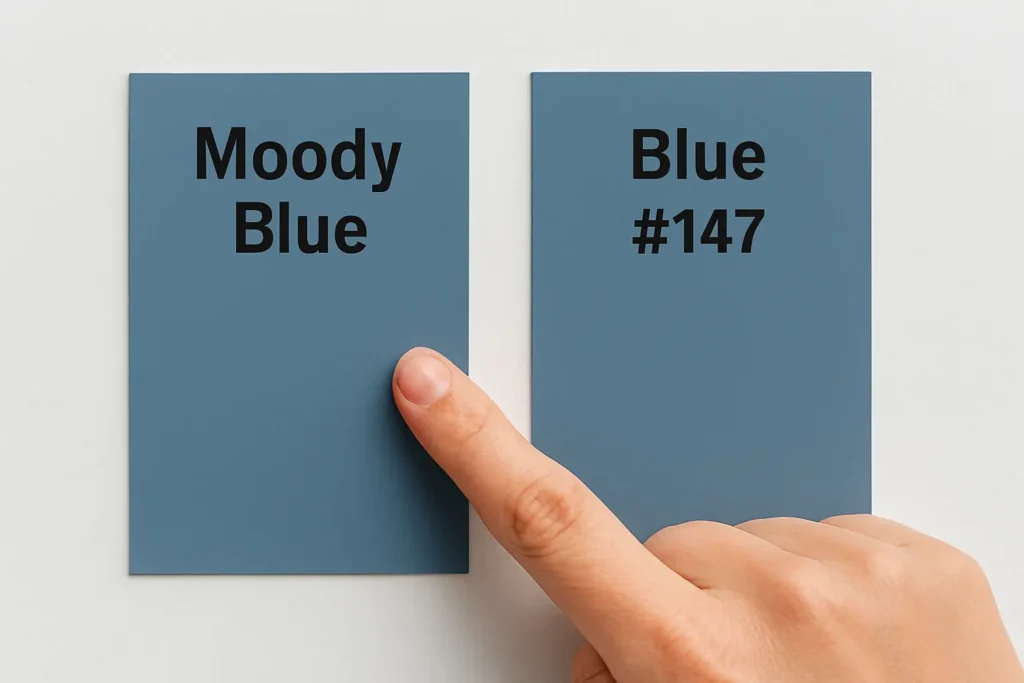
Paint companies know that colours influence mood, memory, and buying choices. A shade called “Moody Blue” will sell differently than “Blue #147.” Descriptive names trigger emotional connections, which is why Moore paint colors and other big brands carefully craft unique names instead of numbers.

If you’re curious about how colours influence home design, you may also want to read about the benefits of painting your home and how colours affect mood.
From Numbers to Stories: Benjamin Moore Colors by Name
Benjamin Moore colors by name are a great example of storytelling in action. Instead of simple codes, they give each shade a narrative. For instance, “October Mist” was chosen as Color of the Year because of its calming and versatile appeal. The company maintains a Benjamin Moore color gallery where homeowners can explore shades tied to lifestyle, emotion, and even nature.
If you’re deciding between light or dark hues for different rooms, check out the best ceiling paint color guide for more insights.
The Role of History and Culture in Paint Names
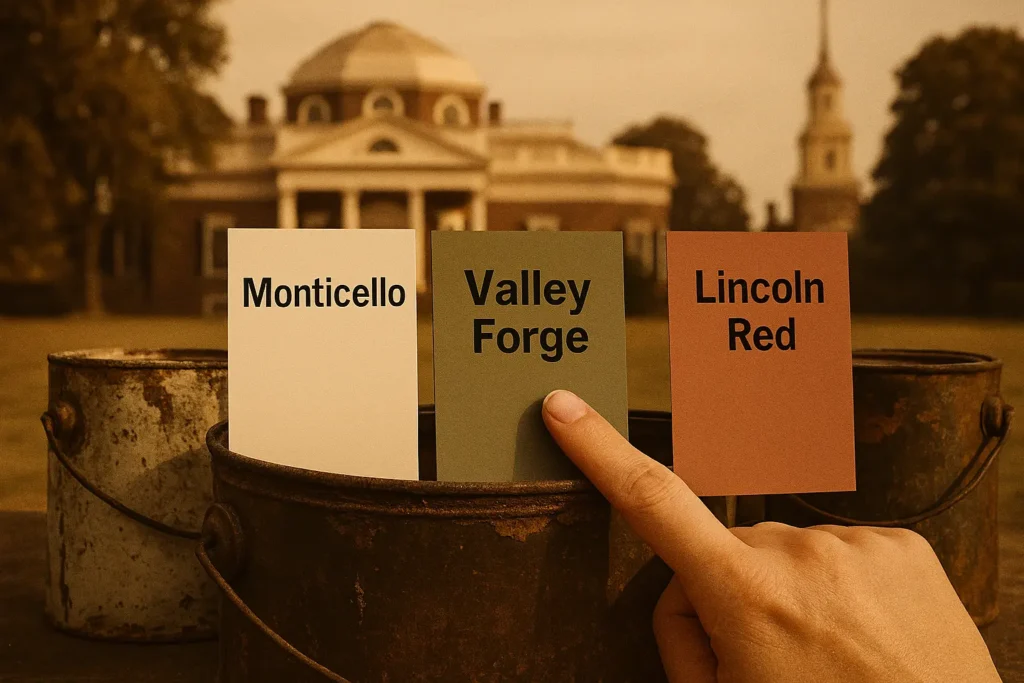
Some paint names have historical or cultural roots. For example, Ben Franklin paint colors pay tribute to American heritage. Other shades draw inspiration from travel destinations, food, or famous artworks. This cultural connection makes colour selection feel more personal.
If you want to explore design rooted in tradition, learning how long it takes to paint a room can help you plan projects that honor both style and history.
The Science of Naming: Paint Color Charts
Behind the creative names lies a systematic process. A Benjamin Moore color paint chart organizes thousands of hues based on undertones, light reflectance, and complementary matches. A paint color chart ensures that names remain consistent across stores and regions, while still giving customers the freedom to choose colours that match their imagination.
Before selecting from a chart, it’s a good idea to clean walls before painting so you see the true finish of your chosen colour.
Benjamin Moore Color Gallery and Emotional Branding
The Benjamin Moore color gallery is more than just a collection of swatches. It’s a curated showcase that allows customers to visualize how colours transform spaces. Benj Moore paint colors use emotional branding by tying shades to feelings of comfort, elegance, or inspiration.
To see how colour choice impacts design, check out the best way to paint edges between wall and ceiling and notice how subtle shifts in tone can completely change a room’s appearance.
Competitors and Their Approach to Colour Naming
While Benjamin Moore is famous for its poetic approach, other companies follow similar strategies. Benjamin paint colors chart lines often highlight nature-inspired names such as “Birchwood” or “Mossy Green” to help customers feel a deeper connection with the product.
If you’re experimenting with creative finishes, you might also enjoy exploring glitter paint for walls, which shows how names and textures go hand-in-hand in influencing design choices.
Why Names Matter More Than You Think
So, how paint colours get their names is not random. It’s a blend of marketing, psychology, history, and science. Names influence how we perceive a shade and whether we choose it over another. That’s why companies like Benjamin Moore invest so much into branding every single colour.
When planning your next painting project, remember: the name on the can isn’t just a label, it’s part of the story you’re bringing into your home. And if you’re curious about transforming a space from top to bottom, explore the best way to paint a ceiling for practical tips that go beyond colour selection.
Final Thoughts
Paint names are carefully crafted to spark imagination, connect to emotions, and guide buying decisions. Whether you’re browsing a Benjamin Moore color gallery or flipping through a paint color chart, remember that each name carries meaning. From Ben Franklin paint colors rooted in heritage to modern lifestyle-inspired tones, naming is as much an art as the painting itself.
Why Two Paints With the Same Name Are Not the Same Colour
Paint colour names are marketing, not specification. Nothing stops two manufacturers using the same evocative word for two visibly different colours, and nothing stops one manufacturer changing what a name refers to between product lines. If you take a name into a shop and ask for it, you are asking for a story rather than a colour.
The reason names exist at all is that a code does not sell. A number tells you nothing about how a room will feel, whereas a name suggests a place, a material or a mood, and that suggestion does real work in a showroom. It also makes a colour ownable in a way a number is not – names can be trademarked and become part of a brand’s identity, which is why they are chosen with as much care as the pigment.
The practical consequence is that the name is the least reliable part of the label. What you should be reading instead is the colour code, which identifies the exact formula within that manufacturer’s system, and the LRV, which tells you how much light the colour reflects and therefore how it will behave at scale in your room. Those two travel accurately. The name does not.
Cross-brand matching is where this bites hardest. A shop can produce a close match to another brand’s colour, but it is a match rather than the same paint – a different base, different pigments and a different binder will read slightly differently in your light, and the difference tends to show up on a large wall rather than on the chip. If you are touching up an existing wall, the reliable route is a physical chip of the actual wall matched at the counter, not a name written on a piece of paper.
There is one more trap worth knowing. Names get reused and retired across a manufacturer’s own catalogue as ranges are updated, so a colour someone recommends from a few years ago may no longer exist under that name, or may now refer to something else. Always convert a name into a code before you buy, and always confirm the code against a physical sample.
When a Colour Name Should Not Guide Your Choice
There are several situations where following a name leads you somewhere you did not intend.
- When you are matching an existing wall. Take a physical chip to the counter for a spectrophotometer match. A remembered or written-down name will not reproduce the colour.
- When you are comparing across brands. The same word from two manufacturers is two different colours. Compare LRV and physical samples, not names.
- When the name describes a mood rather than a hue. Evocative names tell you how the marketing team wants the colour to feel, not whether it leans green or pink – and the undertone is what will decide how it looks in your room.
- When you are working from a photo or a screenshot. Screens do not reproduce paint accurately, so a name attached to an image online tells you very little about the physical product.
- When the recommendation is more than a few years old. Ranges are updated, and names are retired and reused. Confirm the code still exists before you plan around it.
Frequently Asked Questions
Are paint colour names standardised across brands?
No. Names are marketing and are not regulated or shared between manufacturers, so the same word can refer to two visibly different colours from two brands. The colour code within a single manufacturer’s system is the identifier that actually specifies a colour.
What should you write down instead of a paint colour name?
The manufacturer, the colour code, the product line and the LRV. Those four reproduce a colour reliably. A name on its own does not, because it is not tied to a formula across brands or across time.
Can a paint shop match a colour from another brand?
Usually yes, by scanning a physical sample. It is a match rather than the identical paint – different bases, pigments and binders read slightly differently in your light, and that difference shows more on a full wall than on a chip.
What is LRV on a paint label?
Light Reflectance Value: how much light the colour reflects, on a scale running from black to white. It is one of the few numbers that predicts how a colour will behave at full scale, and unlike the name it is comparable between brands.
Do paint colour names ever get retired or reused?
Yes. Manufacturers update their ranges, and names are withdrawn and occasionally reused for different colours. A recommendation from several years ago should be converted to a current code and confirmed against a physical sample before you buy.
Why do brands use evocative names instead of numbers?
Because a number does not communicate anything about how a room will feel, while a name suggests a place, a material or a mood. Names are also ownable in a way numbers are not, which makes them part of a brand’s identity.
Once you have the code rather than the name, the next decision is the product itself. If you are working on walls and ceilings, our guide to the best microfiber paint roller covers the nap length that decides your finish, and why some colours read dingy on the wall explains the undertone problem that names hide.
About the author: Sophie Ulman has renovated and painted more rooms than she can count — and made every mistake in the book so you don’t have to. She focuses on real-world durability: not how products perform on day one, but whether the repair holds through a full seasonal cycle.