Limewash Paint vs Chalk Paint: Key Differences Explained
Updated August 2026 • By Sophie Ulman
If you’ve spent more than five minutes on Pinterest looking at wall treatments, you’ve probably wondered: what’s actually the difference between limewash paint and chalk paint? Both give surfaces that soft, matte, textured look. Both are popular with people renovating older homes. And yet, limewash paint vs chalk paint is a genuinely important distinction — they work differently, last differently, and excel on completely different surfaces.
This guide breaks down exactly where each product wins so you can pick the right one the first time. We’ll cover finish, durability, surfaces, cost, and ease of use — then show you the best products in each category currently on Amazon.
🪨 Limewash Paint
🪵 Chalk Paint
Limewash Paint vs Chalk Paint: Head-to-Head
| Category | 🪨 Limewash Paint | 🪵 Chalk Paint |
|---|---|---|
| Composition | Slaked limestone + water (mineral) | Water-based acrylic + chalk filler |
| Finish | Chalky, variegated, translucent layers | Ultra-matte, uniform, solid coverage |
| How it bonds | Penetrates pores (chemical bond) | Sits on surface (mechanical adhesion) |
| Best surfaces | Brick, plaster, drywall, concrete | Furniture, wood, cabinets, décor |
| Prep required | Clean raw surface, no primer | Minimal — adheres to most surfaces |
| Durability | 15–25 years on masonry | 5–10 years (sealed), less unsealed |
| Sealer needed? | No (walls); optional (outdoor) | Yes — wax or lacquer recommended |
| Reversibility | Difficult once cured | Easier to strip and redo |
| VOCs | Near-zero | Low (water-based) |
| Typical cost | $30–$55/liter | $12–$35/quart |
| Skill level | Intermediate | Beginner-friendly |
| Color variety | Mostly neutrals | 100+ colors available |
Quick Picks: Best Limewash and Chalk Paint
| Pick | Product | Type | Best For | Link |
|---|---|---|---|---|
| Best Limewash | Romabio Classico | Limewash | Walls, brick, exterior | See Price |
| Best Beginner LW | ALL-IN-ONE Limewash | Limewash | Interior walls, easy application | See Price |
| Best Chalk Paint | Annie Sloan Old White | Chalk Paint | Furniture, cabinets, décor | See Price |
| Best Budget CP | Rust-Oleum Chalked | Chalk Paint | Budget furniture projects | See Price |
Product Reviews
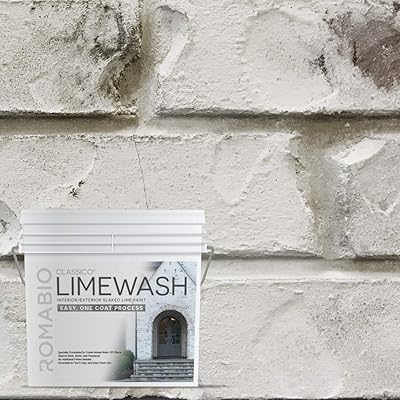
Romabio Classico Limewash — Interior/Exterior
Romabio Classico is the gold standard when it comes to limewash paint vs chalk paint comparisons — it represents the limewash category at its most authentic. Made from Italian slaked lime, it bonds with masonry at a chemical level, creating that signature uneven, variegated finish that faux products struggle to replicate. Apply it at a 1:1 dilution on raw brick or plaster for full coverage, or thin it further for a translucent, barely-there wash. The finish improves with age rather than deteriorating — one of its most compelling advantages over chalk paint for wall applications.
Romabio is not the choice for furniture or cabinets. It’s specifically engineered for mineral surfaces — brick, concrete, plaster, and drywall. If you’re trying to update a kitchen cabinet, stop here and scroll to the chalk paint options below. But for an accent wall, a fireplace, or an exterior facade, nothing on this list comes close to its authenticity or longevity.
✅ Key fact: Near-zero VOCs — safe to use indoors without strong ventilation.
- Authentic mineral formula
- 15–25 year exterior durability
- Breathable — won’t trap moisture
- No primer or sealer needed
- Masonry surfaces only
- Requires dilution and skill
- Limited color range
Best for: Interior/exterior walls, brick, plaster, concrete — not furniture
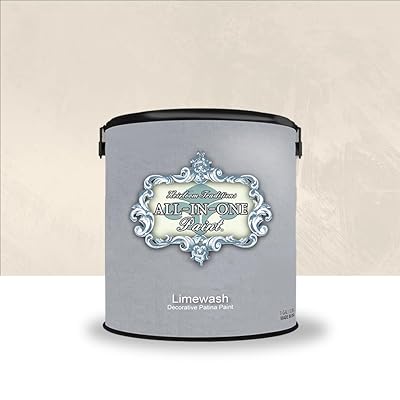
ALL-IN-ONE Limewash Paint — Manor House by Heirloom Traditions
The ALL-IN-ONE Limewash Paint is a water-based formula engineered to deliver the limewash aesthetic without the lime chemistry. For homeowners intimidated by dilution ratios and mineral-surface requirements, this is a significant entry point. It goes on walls straight from the can — brush it in irregular strokes, then blend immediately with a damp cloth for depth and variation. One gallon covers up to 500 sq ft, which makes it cost-competitive per square foot even against chalk paint.
The Manor House colorway — a warm creamy off-white — is by far the most popular, and it reads beautifully on both drywall and brick. It’s also available in a range of other muted tones for those wanting more color flexibility. Note that this is not a true mineral limewash — it won’t penetrate masonry the way Romabio does, and exterior performance in wet climates requires a topcoat sealer. But for interior walls, the visual result is genuinely impressive and far more forgiving to apply than real limewash.
✅ Key fact: Works on drywall AND brick — genuinely versatile indoors.
- Ready-to-use, no mixing
- Works on multiple surface types
- Wide color range available
- 500 sq ft per gallon coverage
- Not a true mineral limewash
- Needs sealer outdoors
- Less durable than Romabio
Best for: Interior accent walls, beginners, drywall, interior brick

Annie Sloan Chalk Paint® — Old White (1 Litre)
Annie Sloan invented chalk paint in 1990, and the original formula remains the benchmark. The Old White shade is the most versatile in the range — it’s warm enough to avoid looking clinical, with just enough yellow undertone to complement both cool and warm wood tones. One liter covers approximately 150 sq ft in two coats, which is on the expensive end per square foot. But what you’re paying for is consistency: the texture, the adhesion to raw or previously painted furniture, and the way it responds to waxing and distressing are simply better than budget alternatives.
The formula bonds to nearly any surface without sanding or priming — one of chalk paint’s defining advantages over limewash in the furniture context. Apply directly to bare wood, laminate, metal, or previously painted pieces and get excellent adhesion. The key limitation is that chalk paint needs sealing — without Annie Sloan’s wax or a compatible lacquer, it will absorb water, dirt, and fingerprints in high-use areas like kitchen cabinets or tabletops. Sealed properly, it lasts 5–8 years on furniture under normal use.
✅ Key fact: No sanding or priming needed — adheres directly to most furniture surfaces.
- Original chalk paint formula
- No prep required on most surfaces
- Easy distressing and blending
- 100+ colors available
- Requires wax or lacquer sealer
- Higher cost per liter
- Not for walls or masonry
Best for: Furniture, cabinets, wood décor, accent pieces — interior only
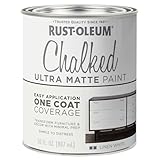
Rust-Oleum Chalked Ultra Matte Paint — Linen White
For homeowners who want the chalk paint look without Annie Sloan’s premium price tag, Rust-Oleum Chalked is the obvious alternative. The 30 oz can (just under a quart) covers 25–75 sq ft depending on surface absorption — enough for a nightstand, a set of kitchen cabinet doors, or a small bookshelf. Linen White is the most popular color and delivers a clean, crisp matte finish that photographs beautifully. Rust-Oleum’s formula is also one-coat capable on many surfaces, reducing project time significantly.
Application is easy enough for complete beginners. The paint levels well, dries in 30 minutes to the touch, and is ready for a second coat in one hour. The trade-off versus Annie Sloan is in texture depth — Rust-Oleum Chalked looks good but lacks the subtle variability of the original. For high-visibility statement pieces, invest in Annie Sloan. For rental flips, staging furniture, or painting pieces that won’t be examined closely, Rust-Oleum Chalked is an excellent value call.
✅ Key fact: One-coat coverage on most surfaces — dries in 30 minutes to touch.
- Significantly lower cost
- One-coat on most surfaces
- 30-minute dry time
- Wide color range
- Less texture depth vs Annie Sloan
- Smaller container (30 oz)
- Needs topcoat for durability
Best for: Budget furniture makeovers, staging, rental properties, beginners
⚡ Key Takeaways: Limewash vs Chalk Paint
- Surface is everything. Limewash belongs on walls and masonry. Chalk paint belongs on furniture and wood. Trying to use chalk paint on exterior brick or limewash on a cabinet are both recipes for disappointment.
- Chalk paint needs a sealer; limewash generally doesn’t. Budget for Annie Sloan Chalk Paint Wax or a compatible lacquer on top of any chalk paint project.
- Limewash is significantly more durable outdoors. Chalk paint has no meaningful exterior use case; mineral limewash can last 25 years on exterior masonry.
- Chalk paint wins on color variety and ease of use. If you’re a beginner with furniture to refresh, it’s the far more forgiving choice.
- Neither needs primer — a major shared advantage over standard latex or oil-based paint.
🎨 Stage: PAINT — Both are Finish-Stage Products
Both limewash paint and chalk paint are PAINT-stage products — they go on after surface prep is complete. For limewash on walls, that means a clean, unpainted mineral surface. For chalk paint on furniture, it means a dust-free, stable surface (priming and sanding are optional). Learn more about prepping surfaces for specialty finishes in our guide to stripping old paint from wood and metal — clearing the old finish first always gives you better adhesion.
🔍 Which Paint Is Right for Your Project?
Answer three quick questions to get a personalized recommendation.

When to Use Limewash vs When to Use Chalk Paint
The shortest possible decision framework: choose based on surface and location, not aesthetics.
You’re working on walls, brick, plaster, or concrete. Especially for exterior projects or anywhere you need near-zero VOCs. Best for anyone who wants a finish that ages beautifully without peeling.
You’re refreshing furniture, cabinets, or decorative pieces. Especially when you need a wide color range, fast results, or the ability to easily distress or layer for an aged look. Seal with wax after application.
You love the limewash look but want it on interior drywall with zero mixing hassle. It bridges the gap between both categories and works on more surfaces than traditional lime.
There is a third finish people mean when they say one of these two names, and it is worth ruling out before you buy. Milk paint is a casein-based powder you mix with water — closer to chalk paint in look, closer to limewash in how unpredictably it sits on a surface, and the only one of the three that will chip off in flakes on a sealed piece unless you add a bonding agent. If the furniture project you have in mind is the reason you are here, read what milk paint actually is first.
⭐ Our Verdict
There’s no universal winner in the limewash paint vs chalk paint debate — only the right tool for the right job. Romabio Classico is the best limewash for walls and masonry, period. Annie Sloan is the best chalk paint for furniture and décor. If you’re a beginner who wants the limewash aesthetic on interior walls without the learning curve, the ALL-IN-ONE Limewash is your best entry point. Budget-focused furniture painters should look at Rust-Oleum Chalked — it delivers 80% of the Annie Sloan result at half the price.
Limewash Paint vs Chalk Paint: Which One Your Surface Actually Needs
Most limewash paint vs chalk paint comparisons stop at how the two finishes look. The decision that costs you money is the surface, so run it this way:
- Porous masonry: brick, stone, render, unsealed plaster. Limewash, and it isn’t close. It penetrates and carbonates into the mineral surface, becoming part of it. Chalk paint sits on top and will flake at the arrises. Start with limewashing brick.
- Interior drywall you want texture on. Limewash, applied over a mineral primer. This is where the cloudy depth people are chasing actually comes from.
- Furniture, cabinets, trim. Chalk paint. It grips varnished and laminated surfaces with minimal prep, which is its real advantage, and it takes wax or a topcoat well on small areas.
- High-touch walls: hallways, stairwells, behind seating. Neither one unsealed. Limewash sealed with a mineral fixative, or a conventional matte emulsion. Unsealed chalk paint burnishes wherever it’s rubbed.
- Exterior masonry. Limewash only, and only a true mineral limewash. Chalk paint has no business outdoors.
Prep matters more than the brand in both cases. Limewash needs a genuinely absorbent, dust-free surface or it dries patchy and chalks off when you brush against it; chalk paint needs degreasing on anything that’s been handled, because it grips almost everything except grease. And two thin coats always beat one thick coat — with limewash especially, the second pass is what creates the movement in the finish.
When NOT to use either of these
- Kitchen splashbacks and bathroom wet zones. Both finishes are porous by design. Steam and splash need a scrubbable acrylic, not a breathable mineral or a wax-sealed matte.
- Over glossy latex or an existing sealer. Limewash needs absorption and will simply not bond. Chalk paint will grip, but sand the sheen off first or you’re relying on luck.
- Anything you need washable within a week. Limewash needs roughly 30 days to carbonate to full hardness. Wiping it early leaves permanent marks.
- Rental walls you’ll need to reverse. Limewash is genuinely difficult to remove — see how to remove limewash paint before you commit a whole room to it.
- Floors, of any kind. Neither product has the abrasion resistance. This is the most common misuse I get asked about.
Frequently Asked Questions
The core difference is in composition and how they bond. Limewash paint is made from slaked limestone and water — it penetrates porous surfaces like brick and plaster at a chemical level. Chalk paint is a water-based acrylic formula with added chalk filler that sits on the surface and adheres mechanically. This makes limewash ideal for walls and masonry, while chalk paint excels on furniture, wood, and décor items.
Technically yes, but the results will differ significantly. Chalk paint on walls produces a flat, opaque finish without the translucent, variegated depth that limewash creates. It also requires a sealer on walls to withstand cleaning and scuffs — limewash walls don’t. For the true limewash aesthetic, use an actual limewash formula. For a budget accent wall with a matte finish, chalk paint is acceptable.
On masonry surfaces, mineral limewash lasts far longer — 15–25 years without peeling, versus 5–10 years for sealed chalk paint on furniture. However, chalk paint is easier to refinish. Limewash on walls weathers gradually and can look even better over time. Chalk paint on furniture, if unsealed, may need refreshing within 1–2 years in heavy-use areas.
You can, but it’s not recommended. Chalk paint is a film-forming product — it sits on top of the brick rather than penetrating it. On a porous surface like brick, this creates adhesion problems, and because the paint can’t breathe, moisture trapped behind the film can cause spalling and peeling over time. For brick, use a purpose-made mineral limewash that penetrates the surface and remains breathable.
Yes — for any surface that gets touched or cleaned regularly. Chalk paint is porous by nature; without a sealer (wax or lacquer), it absorbs liquids, stains, and fingerprints easily. On decorative pieces that aren’t handled, you can leave it unsealed. On furniture, cabinets, or any functional surface, always apply Annie Sloan Chalk Paint Wax or a compatible water-based lacquer as a final step.
Not effectively. True mineral limewash requires a porous, alkaline surface to bond — it’s chemically designed for masonry. On wood furniture, it won’t adhere properly and will brush off once dry. Some faux-limewash paints (like the ALL-IN-ONE Limewash) can technically be used on wood furniture, but the effect is a soft, matte chalk-paint-like finish rather than the mineral depth limewash creates on walls.
Yes — mineral limewash is one of the most environmentally friendly finish options available. It contains near-zero VOCs, is made from naturally occurring limestone, and is naturally antimicrobial and mold-resistant. It doesn’t off-gas harmful compounds after application and has been used safely indoors for thousands of years. Chalk paint is also low-VOC (water-based), but mineral limewash has the cleaner environmental profile of the two.