Best Microfiber Paint Roller
When you want a flawless, streak-free finish, the tool you use can matter just as much as the paint itself. Choosing the best microfiber paint roller can save you from lint, roller marks, and the need for extra coats, giving you that smooth, professional look.
Microfiber rollers are popular because they hold more paint, shed less, and create an even finish. But they aren’t always the only or best choice. Depending on your surface, you might find that woven, foam, knit, or polyester rollers perform better. Let’s break down microfiber paint roller vs woven, vs regular, vs foam, vs knit, and vs polyester, then explore the best options available today.
Microfiber Paint Roller vs Other Types
Microfiber vs Woven
Woven rollers are tightly stitched, often from mohair or wool, and are known for leaving ultra-smooth finishes on gloss and semi-gloss paints. Microfiber, made from ultra-fine synthetic fibers, holds more paint and speeds up coverage. If you’re working on smooth ceilings or walls, microfiber gives better coverage, while woven rollers are still ideal when you want a glass-like finish. If you’re tackling ceilings, it’s worth learning the best way to paint a ceiling to get consistent results.
Microfiber vs Regular Synthetic
Standard synthetic rollers are durable and affordable, but they often leave more stipple texture. Microfiber rollers create smoother results and are perfect for high-visibility walls. For very rough walls or older plaster, standard polyester rollers can withstand more wear. If you’re unsure how much time the project might take, here’s a helpful guide on how long it takes to paint a room.
Microfiber vs Foam
Foam rollers are solid and deliver a smooth finish on cabinets, doors, and furniture. However, they hold less paint and require frequent reloading. Microfiber holds more paint, covers larger surfaces faster, and reduces roller marks, making it a better option for most walls and ceilings.
Microfiber vs Knit Paint Rollers
Knit rollers are looped and absorb a lot of paint, making them fast for large areas. However, they tend to leave a more textured finish. Microfiber rollers deliver a smoother result, which is better for living rooms and accent walls where appearance matters.
Microfiber vs Polyester Paint Rollers
Polyester rollers are strong and budget-friendly, but they often shed and leave more texture behind. Microfiber provides a finer, cleaner finish on smooth walls and ceilings. If you’re dealing with heavy texture or roughcast, a long-nap polyester might last longer, while microfiber excels on standard drywall.
Features to Look for in the Best Microfiber Paint Roller
Choose the Right Nap
- 1/4″ to 3/8″ nap: Smooth walls, ceilings, and trim
- 1/2″ nap: Lightly textured walls
- 3/4″ nap or more: Roughcast or stucco
Longer naps hold more paint but can create more texture, so match the nap to the surface.
Check Fiber Quality
Look for shed-resistant microfiber covers with thermally bonded ends. High-quality split microfiber creates a smooth finish, while cheap covers may leave fuzz in your paint.
Pick the Right Size
Use standard 9″ rollers for walls and ceilings, and 4″ mini rollers for trims, cabinets, and tight spaces. Make sure your roller frame fits snugly to prevent wobbling. If you’re also planning to paint ceilings later, check out these top tools for painting ceilings.
Ensure Easy Cleanup
Choose rollers that are washable and reusable. Microfiber is easy to clean with water-based paints, though oil-based paints will require solvents.
Using Microfiber Rollers on Different Surfaces
Walls and Ceilings
For standard drywall, a 3/8″ nap microfiber roller gives smooth coverage and fewer drips. Prep your surface well — here’s a simple guide on how to clean walls before painting to avoid dust and streaks. Microfiber rollers are ideal for applying even coats on ceilings too.
Roughcast or Textured Walls
Rough surfaces need more paint capacity. A longer nap microfiber can work, but expect faster wear. On very deep texture, a knit or high-nap polyester roller may be more effective. If you’re painting older, textured ceilings, using the best paint roller for textured ceilings can save time and effort.
Professional Finishes
Professional painters often use microfiber rollers because they leave fewer roller marks and require fewer coats. They’re ideal for living rooms, kitchens, and ceilings where a smooth finish is essential.
Best Microfiber Paint Roller: Top Picks from Amazon
1. Mister Rui 4-Inch Microfiber Roller Covers (10-Pack)
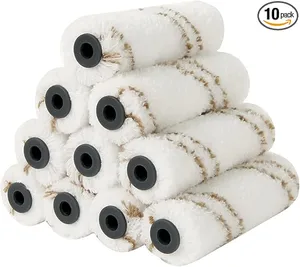
Perfect for cabinets, doors, and trim. These 10mm nap mini rollers are shed-resistant, washable, and budget-friendly. They don’t hold as much paint as full-size rollers, so they’re best for smaller surfaces.
2. Allgala 12-Piece Shedless Microfiber Mini Sleeves
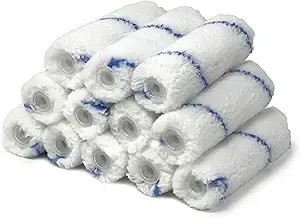
These shedless mini rollers give a smooth finish with a 3/8″ nap that balances coverage and smoothness. They’re excellent for window frames and cabinets, though they’ll be slow on large walls.
3. True Blue 9-Inch Premium Microfiber Roller Covers
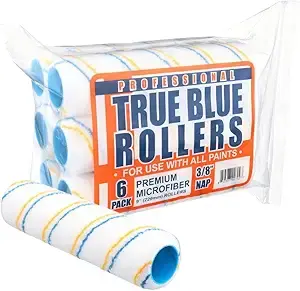
Full-size microfiber rollers with high paint pickup and release. Available in 3/8″ and 1/2″ nap, they’re ideal for walls and ceilings. Use a sturdy frame, especially when painting overhead.
4. Wooster Brush R523 18-Inch Microfiber Roller Cover
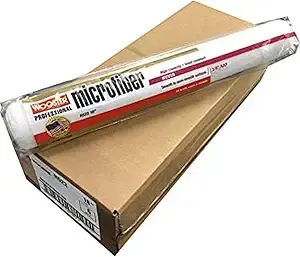
This 18″ roller offers massive coverage, perfect for painting large walls or ceilings quickly. It’s reusable and durable, though heavy when fully loaded, so an extension pole is recommended.
5. Pro Grade 10-Piece Mini Microfiber Roller Kit
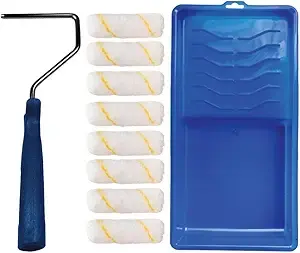
A starter kit that includes a tray, frame, and mini microfiber covers. It’s great for beginners doing small projects, though the included frame is basic and the tray is small.
Which One Should You Choose
- Full walls and ceilings: True Blue 9″ microfiber rollers are perfect
- Trim, cabinets, and doors: Mister Rui or Allgala mini rollers give smooth results
- Large rooms or professional use: Wooster 18″ microfiber rollers save time
- Beginner projects: Pro Grade mini kit is affordable and easy to use
- Rough surfaces: Use a longer nap microfiber or a high-nap polyester roller
Tips for Best Results with Microfiber Rollers
- Clean and prep surfaces first with this wall cleaning guide
- Avoid overloading paint to prevent drips
- Allow each coat to fully dry. You can speed things up using these paint drying tips
- Plan your project timeline with this guide on how long it takes to paint a room
Final Thoughts
The best microfiber paint roller can make your painting project faster and more professional-looking. For most home projects, a 9″ microfiber roller with a 3/8″ nap delivers the smoothest results. Mini rollers are perfect for trim and cabinets, and large 18″ rollers are great for pros covering big walls or ceilings.
Invest in a high-quality microfiber roller, prep your surfaces well, and you’ll get that flawless, even finish that elevates your entire space.
What Nap Length Do You Actually Need on a Microfiber Roller?
Nap length is the single specification that decides whether a roller leaves a smooth wall or a stippled one, and almost nobody checks it. They buy a roller, it works badly, and they blame the paint.
The rule is simple once you see what nap is for. The pile has to reach into the texture of the surface. On a smooth wall — new drywall, a skim coat, a previously rolled flat wall — a short nap around a quarter to three-eighths of an inch lays the paint down in a tight, even film with almost no orange peel. Put a thick nap on that same smooth wall and the long fibres flick paint as they release, and you get a pronounced stipple you did not want and cannot easily sand out.
Go the other way and the failure is different. On heavy texture, brick, block or a popcorn ceiling, a short nap only touches the high points. It looks like it is covering because paint is going on, but the low spots stay bare and you discover it when the wall dries and the recesses show through. That is where a half-inch, three-quarter or even inch-and-a-quarter nap earns its place: the pile is long enough to push paint down into the valleys.
Microfiber changes the calculation slightly in your favour. The fibres are finer and denser than standard knit or woven covers, so a microfiber roller holds more paint and releases it more evenly at the same nap length. In practice that means a microfiber three-eighths often gives a smoother result on a wall than a standard three-eighths would, and it is why microfiber has largely taken over for smooth interior work.
The one habit that improves results more than any upgrade: wash a new roller cover before its first use and spin it out. New covers shed fibres, and those fibres end up embedded in your first coat, standing up off the wall where you cannot pick them out without sanding. A minute under the tap saves an hour of picking lint out of a finished wall — I have done the picking, and it is not a job worth repeating.
When NOT to Use a Microfiber Roller
Microfiber is the right default for interior walls and ceilings, but there are finishes and products where it is the wrong tool.
- High-gloss and enamel finishes on trim. Any roller leaves some stipple, and gloss shows every bit of it. Use a foam roller or brush these out properly.
- Thick, heavy-bodied coatings. Elastomeric, block filler and textured coatings are formulated for a long, coarse nap that can carry and place them. Fine microfiber pile clogs and drags.
- Solvent-heavy products, unless the cover is rated for them. Strong solvents break down some synthetic covers mid-job, which sheds fibre into the finish. Check the cover’s compatibility before using it with anything other than latex.
- Straight onto raw, splintery timber. The pile snags and tears on rough grain. Sand first, or use a brush.
- Reused without cleaning between colours. Microfiber holds a lot of paint deep in the pile, which is its advantage and also means a quick rinse does not clear it. Dried residue from the last colour will bleed into the next one.
Frequently Asked Questions
What nap length is best for smooth interior walls?
A quarter to three-eighths of an inch. Short nap lays a tight, even film on a smooth surface with minimal orange peel. A thicker nap on a smooth wall flicks paint as it releases and leaves a stipple you did not ask for.
Is a microfiber roller better than a standard knit roller?
For interior walls and ceilings in latex, generally yes. The fibres are finer and denser, so the cover holds more paint and releases it more evenly, which means fewer trips to the tray and a smoother finish at the same nap length.
Should you wet a microfiber roller before painting?
Wash it and spin it out before first use, yes. New covers shed loose fibre that ends up standing proud in your first coat. Damp – not dripping – also helps the cover load evenly on the first pass.
Can you use a microfiber roller on a textured ceiling?
Only with a long enough nap. On popcorn or heavy texture you need three-quarters of an inch or more so the pile reaches into the recesses, and you should plan on a single pass, because rolling texture twice pulls it off the ceiling.
How do you clean a microfiber roller cover?
Rinse under running water working the pile with your fingers until the water runs clear, then spin or shake it out and stand it on end to dry. Because the pile is dense it holds paint deep down, so a quick rinse is not enough between different colours.
Why does my roller leave lines on the wall?
Usually too little paint on the cover, or rolling back over paint that has started to set. Load the roller fully, keep a wet edge, and finish each section with a single light pass from top to bottom before moving on.
About the author: Sophie Ulman has renovated and painted more rooms than she can count — and made every mistake in the book so you don’t have to. She focuses on real-world durability: not how products perform on day one, but whether the repair holds through a full seasonal cycle.