
[IMPROVED] Glitter Paint for Walls: 4 Picks That Don’t Look Cheap
Updated: September 2026 | By Sophie Ulman
Glitter paint for walls can turn a plain bedroom into a Pinterest board. It can also become a mistake you’re repainting within a month. The difference comes down to particle size, the base coat underneath it, and how much glitter you’re willing to work into a roller tray. Get it wrong and the sparkle photographs like static on an old television.
Most of the disappointment I hear about glitter walls traces back to the same handful of decisions. Chunky glitter gets picked for a full room instead of a single accent wall. There’s no matching base coat underneath. Or the additive is cheap and settles to the bottom of the can before it’s even opened. I looked at four glitter products that actually hold up on a wall: two pre-mixed paints, a mix-it-yourself additive, and a brand built for feature walls. I also cover the prep and application steps that keep the shimmer even instead of patchy. If you only read one section, skip to the verdict near the bottom.
The Two Decisions That Matter Before You Buy Glitter Paint
Before comparing brands, make two calls first — they decide which product on this page is actually right for you.
1. Pre-mixed or additive? If you already know the exact wall color you want, buy a glitter additive and mix it into that paint yourself. If you’re fine with the finish shades already on offer, a pre-mixed glitter paint saves you the mixing step and guarantees even distribution — no clumping, no settling.
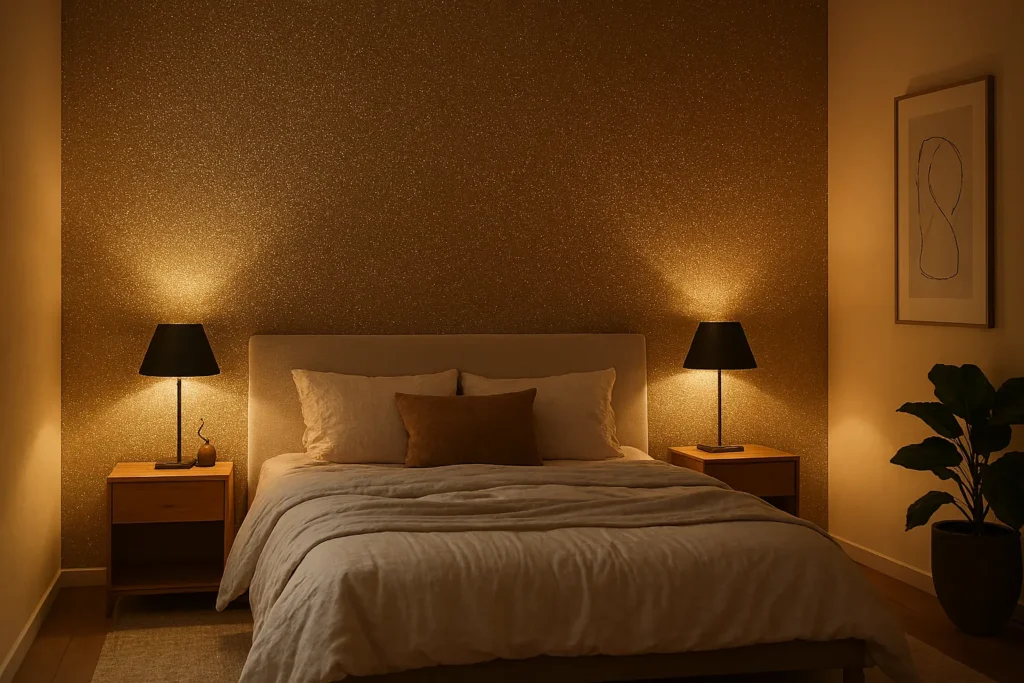
2. Whole room or one wall? Fine glitter in a pre-mixed paint reads as a subtle shimmer under lamp light and works across a full room, including a kid’s room or a hallway. Chunky, high-density glitter is a feature-wall decision — I’ve never seen it work well on all four walls of an occupied room without looking like a craft project.
Quick Picks at a Glance
| Pick | Product | Best For | Style |
|---|---|---|---|
| Best Overall | Rust-Oleum Glitter Interior Wall Paint | Full accent walls, ready to roll | Rich, even shimmer |
| Low-Key Shimmer | Valspar Crystal Glow Glitter Paint | Living rooms, adult spaces | Subtle, fine glitter |
| Best Additive | Hemway Glitter Paint Additive | Custom color matching | Adjustable density |
| Feature Walls | Crown Glitter Paint | Single statement wall | Fine, restrained sparkle |
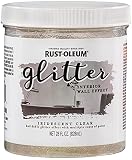
If you’re buying one glitter paint and want it to just work, this is the one I point people to. The glitter is suspended evenly through the can rather than settling in a layer at the bottom. That means the first roller load looks the same as the last. It rolls on like a slightly thicker standard wall paint — no separate mixing step, no clumping on the roller nap.
The finish reads as a rich, consistent shimmer rather than isolated sparkle points. That’s what makes it forgiving for a full accent wall instead of a small craft surface. Plan on two coats for full coverage and even glitter density; a single coat tends to show roller lap marks where the glitter sits thinner.
Key spec: Glitter is pre-suspended in the formula — no settling, no separate mixing step before rolling.
✅ Pros
- Ready to roll straight from the can
- Even glitter distribution, no settling
- Rich shimmer that suits a full accent wall
- Standard roller and brush application
❌ Cons
- Fixed color and glitter tone — no custom mixing
- Two coats needed for even density
- Thicker than standard paint — slower to cut in around trim
Best for: A full accent wall in a bedroom or living room where you want guaranteed even shimmer without mixing anything yourself.
Via Amazon.com

Not every room can carry a full-sparkle wall. This is the pick for people who want the effect without anyone immediately clocking it as “glitter paint.” Under direct light it reads as a fine, almost pearlescent shimmer; it’s only at an angle, or under a lamp at night, that the glitter actually catches and shows itself.
That restraint is exactly why it works in living rooms and other spaces adults spend a lot of time in. It upgrades a plain wall color instead of announcing itself. Application is standard latex behavior: two coats, normal dry time, no special tools. It’s the safest starting point if you’ve never used a glitter product and aren’t sure how much shimmer your space can take.
Key spec: Fine, low-density glitter — visible at an angle or under lamp light, subtle under flat daylight.
✅ Pros
- Elegant, restrained shimmer effect
- Works in adult living spaces without looking novelty
- Applies like standard latex paint
- Low risk if you’re new to glitter finishes
❌ Cons
- Too subtle if you want an obvious sparkle wall
- Effect is lighting-dependent — flat rooms show less shimmer
Best for: Living rooms, dining rooms, and other adult spaces where you want shimmer that reads as elegant, not novelty.
Via Amazon.com
🔗 Related Reading
- How to Clean Walls Before Painting — the glitter finish only adheres well to a clean, dust-free surface
- Best Dark Green Paint Colors — a dark base coat is what makes fine glitter pop the most

This is the pick if you already love a specific wall color and don’t want to switch to whatever shade a glitter paint brand happens to sell. You mix the glitter powder directly into your own can of interior paint, so the base color is entirely yours. I’ve matched it into everything from a warm cream to a near-black navy.
The tradeoff is that you’re doing the mixing work yourself, and it matters. Stir it in gradually and keep stirring through application — glitter this fine settles toward the bottom of the tray if the roller sits for more than a few minutes. Test a small swatch on cardboard first — glitter density that looks right in the can can look sparse once it’s rolled thin on drywall.
Key spec: Mixes into any interior paint — full color control, but requires continuous stirring during application to prevent settling.
✅ Pros
- Works with any paint color you already have
- Adjustable glitter density — subtle to bold
- One additive covers multiple rooms if colors differ
❌ Cons
- Requires constant stirring to prevent settling
- Extra mixing step compared to pre-mixed paint
- Test swatch strongly recommended before a full wall
Best for: Anyone who has already picked a wall color and wants to add glitter without switching paint brands.
Via Amazon.com

Crown’s glitter paint sits between the two extremes on this list. It has more visible shimmer than the Valspar pick, but finer and more restrained than a full sparkle-wall product. That middle ground is exactly why it’s my go-to recommendation for a single feature wall — behind a bed, or in an entryway. You want the wall to read as a deliberate design choice, not the loudest thing in the room.
Coverage and application match standard interior emulsion — roller or brush, two coats for full opacity and consistent glitter tone. Because the sparkle is fine rather than chunky, it also holds up better under a topcoat. That makes it a safer bet if you want to seal it in a higher-traffic hallway or entry.
Key spec: Mid-density fine glitter — visible without dominating the wall, suited to one feature surface rather than a full room.
✅ Pros
- Balanced shimmer — noticeable but not overwhelming
- Standard roller/brush application, two coats
- Holds up well under a protective topcoat
❌ Cons
- Limited color range compared to standard interior paint
- Best on one wall, not a full room, at this glitter density
Best for: A single feature wall — behind a bed, in an entryway, or on a fireplace surround — where you want a deliberate, contained sparkle.
Via Amazon.com
All four picks above ship through Amazon with the links on this page. If you’d rather compare more retailers before buying, our roundup of the best places to buy paint online covers other options.
💡 Pro Tips — Applying Glitter Paint on Walls
- Prime with a matching base coat first. Glitter paint is semi-translucent. Priming the wall in a shade close to the final color means one less coat of the expensive glitter product to reach full opacity.
- Fine glitter needs constant stirring. On additive-based projects, glitter settles to the bottom of the tray within minutes. Stir every few roller loads, not just once at the start.
- Two thin coats beat one thick coat. A single heavy coat pools glitter unevenly and shows roller lap lines; two thinner coats build consistent density and hide seams.
- Test on cardboard before committing. Glitter density that looks bold in the can often looks sparse once rolled thin across drywall — a sample patch saves a full wall repaint.
- Seal high-traffic walls with a clear topcoat. A glitter finish near doorways or hallways sheds slightly over time without a sealer; a clear coat locks the particles in place.
You’re in the PAINT phase of a wall refresh. Surface is cleaned and prepped, base coat is down and fully dry. Now the glitter coat goes on. Apply in thin, even passes and let each coat dry fully before the next. Rushing this step is the single most common cause of patchy, streaked glitter walls.
🧮 Glitter Paint Coverage Calculator
Wall area: sq ft
How to Choose Glitter Paint for Your Walls
Glitter paint isn’t one product category — it’s a spectrum from barely-there shimmer to full sparkle-wall statement. Here’s what actually separates the options.
Glitter Particle Size and Material
Fine glitter — often mica-based rather than plastic — creates a soft shimmer that shifts subtly with light and reads as sophisticated rather than juvenile. Chunky glitter is usually cut plastic or PET flakes, similar to what you’d find in craft glitter. It’s what most people picture when they hear “glitter wall” — a bolder, more novelty-leaning look. For background on the material itself, see this overview of how glitter is manufactured.
Pre-Mixed Paint vs. Glitter Additive
Pre-mixed glitter paint is the lower-risk choice: the manufacturer has already solved the settling and distribution problem, and every roller load looks the same. A glitter additive gives you full color control. The tradeoff is a mixing step you have to manage yourself, including stirring through the entire application to keep glitter suspended.
Base Coat Color and Sheen
Because glitter paint is semi-translucent, the color underneath shows through and affects the final look. A dark base — deep green, navy, or charcoal — makes fine glitter pop hardest, since the particles catch light against a dark backdrop. A lighter base, like a warm cream, produces a softer, more diffuse shimmer that suits a full room better than a single accent.
Where Glitter Walls Work Best
A single accent wall — behind a bed, in a powder room, or on a fireplace surround — is the safest, highest-payoff placement. It gives you enough sparkle to notice, with low commitment if you change your mind. A full room in fine, subtle glitter can work in a bedroom or living room. What I’d avoid is chunky, high-density glitter across every wall of a room you spend a lot of waking time in. It tends to feel busy rather than elegant after the first few weeks. If you’re refreshing the whole room, pair the glitter wall with a calm finish on the other surfaces — see our guide to the best ceiling paint so the sparkle stays the focal point.
How to Apply Glitter Paint to Walls in 5 Steps
1. Clean and prep the wall
Wash the surface to remove dust, grease, and any residue, and patch or sand imperfections. Glitter paint reflects light, which means it also highlights bumps and patches that flat paint would hide. See our full guide on cleaning walls before painting for the exact steps.
2. Apply a matching base coat
Paint the wall in a color close to your intended final shade and let it dry fully, typically 2–4 hours for latex. This reduces how many coats of the more expensive glitter product you’ll need for full opacity.
3. Choose the right glitter size for the effect you want
Fine glitter for subtle shimmer across a full room, chunkier glitter for a single bold feature wall. Decide before you buy — switching mid-project means starting over.
4. Mix or open your glitter paint and test first
If using an additive, stir it thoroughly into your base paint. Either way, apply a sample patch to cardboard or a hidden section of wall and let it dry before committing to the full surface.
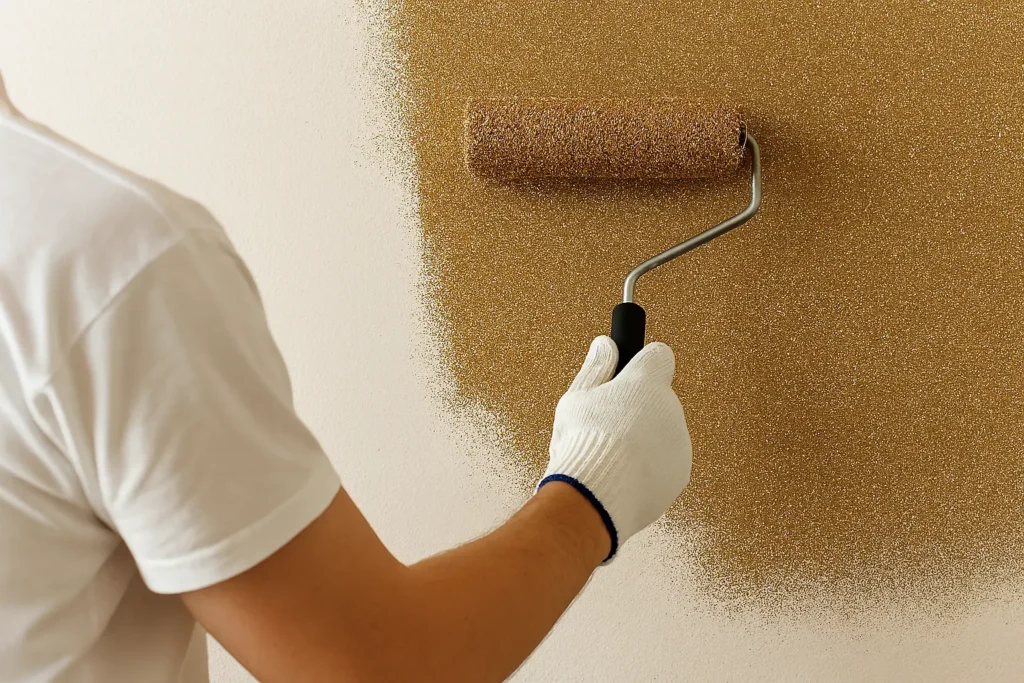
5. Apply two thin, even coats
Use smooth, consistent roller strokes and avoid overloading the roller, which causes clumping. Let the first coat dry completely before the second — this is what keeps the final glitter density even across the whole wall.
Don’t skip the dry time between coats. Rolling a second coat over glitter paint that’s still tacky drags the glitter particles instead of layering them, leaving streaks that show under any angled light. Check the can’s recoat window — most glitter formulas need longer than a standard latex paint, and our guide on how to make paint dry fast covers safe ways to speed that up without ruining the finish.
Our Verdict
For most people asking about glitter paint for walls, Rust-Oleum Glitter Interior Wall Paint is the easiest starting point. It offers even distribution straight from the can, no mixing, and a rich enough shimmer to justify a full accent wall. If you want something more restrained for a living room or dining room, the Valspar Crystal Glow gives you the effect without it dominating the space. Already committed to a specific wall color? The Hemway additive is the only option here that lets you keep it. And if you want one deliberate feature wall rather than a full sparkle statement, Crown Glitter Paint hits the middle ground best.
Frequently Asked Questions
Does glitter paint for walls come in blue?
Yes. Pre-mixed glitter paints are sold in a range of base colors including blue, and glitter additives let you mix glitter into any blue paint you already own. If you want a specific blue shade, the additive route gives you more control than picking from a pre-mixed color chart.
What exactly is glitter wall paint?
Glitter wall paint is interior paint with fine glitter particles — usually mica or cut plastic flakes — suspended in the formula. It applies with a standard roller or brush and dries to a shimmering finish that catches light differently than flat or satin paint.
How do you get a sparkly painted wall without it looking cheap?
Use fine, mica-based glitter rather than chunky craft-style glitter, and apply it over a matching base coat. Limit it to one accent wall rather than a full room. Two thin, even coats also matter more than the product itself for avoiding a patchy, cheap-looking result.
Can I add glitter to any interior wall paint?
Yes, with a glitter additive made for paint, like the Hemway product in this guide. Stir it into your chosen interior paint gradually, and keep stirring through application since glitter settles toward the bottom of the tray within minutes if left still.
Is glitter paint suitable for a living room wall?
Yes, if you choose a fine, low-density glitter like the Valspar Crystal Glow pick rather than a bold, chunky finish. Fine glitter reads as elegant shimmer in a living room, while high-density glitter tends to feel more like a kid’s room or novelty space.
Can I apply a glitter topcoat over existing wall paint?
Yes — clear glitter topcoats and sealers are made to go over a wall you’ve already painted, so you don’t have to repaint the base color. Make sure the existing paint is clean and fully cured first, and test a small section since topcoats vary in how much they alter the sheen underneath.
What’s the best glitter to mix into paint?
A fine, mica-based glitter additive designed specifically for paint, rather than craft glitter, mixes evenly and doesn’t clump on the roller. Craft glitter is coarser and tends to sit on the surface instead of blending into the paint film, which shows as an uneven, gritty texture once dry.
Do I need a topcoat over glitter paint?
A topcoat isn’t required, but it’s worth adding in hallways, entryways, or any high-traffic wall, since glitter can shed slightly over time without one. In a low-traffic bedroom accent wall, most people skip it with no issues.