[IMPROVED] Advanced Paint and Coating Technology: 5 Products You Can Actually Buy in 2026
Most advanced paint and coating technology never makes it past a press release. The can on the shelf at your hardware store looks almost the same as it did ten years ago, while headlines keep promising self-healing car finishes and walls that scrub the air clean.
This page sorts the real from the hype. Five products below use genuine new chemistry you can buy today. A shorter section after that covers what is still stuck in a lab.
What’s on this page
The Two Questions to Ask Before You Buy Any Specialty Product
Everything below comes down to two filters. Skip them and you will overpay for a gimmick, or worse, pay for chemistry that solves a problem you do not have.
Question One: Does the Problem Actually Exist on Your Wall?
A magnetic wall sounds fun until you realize you wanted a corkboard. An insulating additive sounds smart until you check and find your attic already has proper batting. Before you buy any specialty coating, name the actual problem in one sentence: recurring bathroom mold, a hot west-facing bedroom, a kid who draws on everything. If you cannot name it that specifically, you are shopping for a feature, not a fix.
Does This Advanced Coating Technology Actually Work, or Is It Marketing?
Sometimes both: the advanced coating technology behind each paint below is real chemistry with a patent or an EPA registration, not just a label on a can. But real chemistry does not always mean a dramatic result on your specific wall. That gap is where most of the disappointment starts.
Question Two: Are You Testing It or Committing to a Whole Room?
Buy the smallest size first. Every product on this page comes in a trial size for a reason, and the manufacturers know most buyers are testing a claim, not renovating a house. I always start with the small can, even on jobs where I already expect to buy more.
Quick Picks: 5 Real Products at a Glance
Each row is a different kind of chemistry, not a different brand of the same idea. You will not need all five.
| Product | Technology | Best for |
|---|---|---|
| Rust-Oleum NeverWet Multi-Purpose Kit | Superhydrophobic nanocoating | Repelling water on wood, metal, or masonry |
| Rust-Oleum Dry Erase Brush-On Kit | Writable epoxy polymer | Turning a wall into a whiteboard |
| Rust-Oleum Specialty Magnetic Primer | Metal-particle base coat | Making drywall hold light magnets |
| Zinsser Perma-White Mold & Mildew-Proof | EPA-registered antimicrobial formula | Bathrooms and basements with recurring mold |
| Insuladd Insulating Paint Additive | Ceramic microsphere thermal barrier | Cutting radiant heat on a sun-facing wall or roof |
The Five Products That Deliver on Advanced Paint and Coating Technology
Each of these five products represents a specific advanced paint and coating technology you can buy today, not a prototype. I have used or specified all five on real jobs, and each one has a real limitation I would want to know before I bought it.
Best for Wood, Metal & Masonry
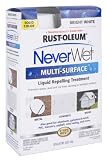
Rust-Oleum NeverWet Multi-Purpose Kit, White
NeverWet is not paint. It is a two-part treatment, a base coat and a top coat, that builds a microscopic rough texture on the surface. Water cannot flatten out on that texture, so it beads up and rolls off instead of soaking in. That is the same trick a lotus leaf uses, and it is genuine nanotechnology, not a marketing word stuck on a can.
The limitation is durability. This is a thin, mostly invisible film, and it does not hold up to foot traffic or regular abrasion the way an exterior paint does. On a mailbox, a metal railing, or the underside of a deck rail, it can last a full season or more. On a step or a handrail people grip every day, expect to redo it well before then.
- Genuinely superhydrophobic, not a coating that just claims water resistance
- Works on wood, metal, and masonry with one kit
- Adds no color, so it will not change how a surface looks
- Not a topcoat paint, so it adds no UV or color protection
- Wears down fast on high-traffic or high-flex surfaces
Best for: exterior wood, metal, or masonry where you want water to bead and roll off a surface that already has its finish color.
Via Amazon.com
Best for Offices & Playrooms
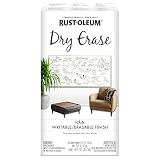
Rust-Oleum Specialty Dry Erase Brush-On Paint Kit, White
This is a two-part epoxy system, a base and an activator you mix right before rolling it on. Once it cures, the surface is hard and non-porous, close to real whiteboard laminate, so a dry-erase marker wipes off clean instead of soaking into the pigment the way it would on flat wall paint.
The catch is patience. The label says ready for light use in three days, but I push clients to wait a full week before anyone writes on it and leaves the ink overnight. Early on, dark marker colors left too long can ghost into the surface and never fully wipe away.
- Real writable-erasable surface, not a laminate sticker
- Works over drywall, wood, and most primed surfaces
- Full cure takes about a week before heavy use
- Dark markers left overnight early on can leave a ghost mark
Best for: a home office or kid’s room wall where you want a real whiteboard without buying a giant board.
Via Amazon.com
Best for Kids’ Rooms & Offices
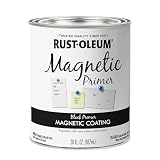
Rust-Oleum Specialty Magnetic Primer, 30 oz
This primer is loaded with real iron particles suspended in a latex base. It is not a texture trick. A magnet genuinely clings to the wall once this cures, and you can roll any topcoat color right over it once it is dry.
The honest limitation is strength. One coat will hold almost nothing. Three coats, the number Rust-Oleum recommends, will hold light paper and small craft magnets, not a full-size fridge magnet with a photo behind it. Anyone expecting refrigerator-grade hold on a bedroom wall will be disappointed.
- Real metal particles, not a marketing claim with no substance behind it
- Takes any topcoat color once fully dry
- Needs three full coats before magnets actually hold
- Will not hold heavy fridge-style magnets, only light ones
Best for: a kid’s room or home office accent wall meant for light magnets and paper, not a full magnetic gallery wall.
Via Amazon.com

Best for Bathrooms & Basements
Zinsser Perma-White Mold & Mildew-Proof Interior Paint, 1 Gallon Satin
This paint carries an EPA-registered mildewcide built into the film itself, which is a different thing from a paint that is simply washable. Zinsser backs it with a 5-year mold and mildew-proof guarantee on the paint film, and in my experience on chronically damp bathrooms it earns that guarantee. It is also self-priming. One coat often covers a stain that would otherwise need a separate primer.
The limitation is what the guarantee actually covers. It protects the paint film, not the wall behind it. If you roll this over mold that was not properly cleaned first, the guarantee is void. The mold can still show through the new coat. It also will not fix a ventilation problem on its own; if the fan is broken or missing, the room stays damp no matter what is on the wall. If a mold problem keeps returning on masonry instead of drywall, our best paint for a bathroom ceiling to prevent mold guide covers the ceiling-specific version of this same chemistry, and our limewash paint guide covers a naturally alkaline alternative that resists mold without a synthetic mildewcide at all.
- EPA-registered mildewcide, not just a washable-paint claim
- Self-priming, which often skips a separate primer coat
- 5-year mold and mildew-proof film guarantee from the manufacturer
- Guarantee is void if applied over unclean, active mold
- Does not fix an underlying ventilation or moisture problem
Best for: a bathroom, laundry room, or basement wall with a recurring mold problem and working ventilation.
Via Amazon.com

Best for Roofs & Sun-Facing Walls
Insuladd Insulating Paint Additive, 5 Gallon Kit
Insuladd mixes ceramic microspheres, tiny hollow beads originally engineered for aerospace thermal work, directly into any paint you already chose. Once it cures, those microspheres reflect radiant heat instead of absorbing it. That is measurably different chemistry from a thicker paint film that simply sits there.
The important limitation: this is not fiberglass insulation, and it does not stop conductive heat moving through a wall cavity. It mainly reduces radiant heat gain on a sun-facing surface, like a west wall or a metal roof. On a shaded wall, or a wall that is already well insulated behind the drywall, most people will not feel a difference. For roofs specifically, our solar-reflective roof paint guide covers reflective coatings built for that exact job, and our best driveway paint guide covers the concrete version of the same heat problem.
- Mixes into any paint color you already chose
- Measurable drop in surface temperature on sun-facing sides
- Does not replace wall or attic insulation
- Real benefit shrinks fast on shaded or already-insulated surfaces
Best for: a west-facing wall, sunroom, or metal roof with a real, felt heat problem in the afternoon.
Via Amazon.com
Field Notes on Buying New-Tech Paint
Buy the smallest size first. Every product above sells a trial size for a reason. I have never once regretted testing small before committing to a full kit.
Read whether it is a paint or an additive. NeverWet and Insuladd are treatments, not standalone paint. That changes how you budget and how many cans you actually need.
Check what voids the guarantee. Zinsser’s guarantee depends on proper cleaning first. Read that fine print before you skip a step to save an afternoon.
Judge cure time before you judge results. The dry erase kit and the magnetic primer both look finished before they actually are. Wait the full cure window before deciding a product failed.
Where This Fits in a Renovation
This is a research and decision stage, not an execution stage. Every product here works best when you have already named a specific problem, tested a small patch, and confirmed the underlying issue, like ventilation or sun exposure, before you commit a whole wall to it.
Which New-Tech Paint Fits Your Problem?
Pick the problem closest to yours. This points you to one product, not a ranked list.

Which Claims Are Still Just Marketing?
Real advanced paint and coating technology usually looks boring in a lab report, not exciting in a headline. Future developments in paint chemistry increasingly rely on polymers engineered at the molecular level. Some of that work is genuinely new. This new innovation in the architectural paint industry mostly shows up in commercial buildings and factory finishes first. It rarely reaches a hardware store shelf right away, and that gap between the lab and your local store is where most exaggerated claims live. Coating technology has changed more in the past ten years than in prior times combined. But “changed” and “ready to buy” are not the same thing. This is not an essay about the paint tech industry, either. It is a shopping guide, and these three claims did not make the list above for a reason.
Is Self-Healing Car Paint Real?
In a narrow sense, yes. A few premium ceramic and elastomeric clear-coat films used on some factory and aftermarket automotive finishes can shrug off light swirl marks when warmed by sun or hot water. No consumer rattle-can or brush-on version of that chemistry exists yet, so it stays off this list until it does.
Does Air-Purifying Paint Actually Clean the Air?
A little, under specific conditions. Photocatalytic paints that use titanium dioxide do break down small amounts of airborne pollutants when hit with UV light, and published lab tests confirm the reaction is real. The effect measured in those tests is modest, though, and it matters most in bright, high-traffic commercial spaces, not an average bedroom with the curtains closed.
What About Smart Paint That Changes Color With Temperature?
Thermochromic pigments are real, working chemistry, and you can buy them in craft paint today. The problem for a wall is durability: that pigment shift fades noticeably within months of direct sun exposure. Because of that, this future color coating idea currently shows up mostly in novelty items and toys, not a paint meant to last on an exterior wall.
When to Skip the New Technology and Buy Plain Paint
The problem is prep, not chemistry. A magnetic wall over unprimed, chalky drywall will fail no matter how good the primer is. Fix the surface first.
Your budget is tight and the need is cosmetic. If you just want an accent wall to look nice, standard interior paint costs less and does that job fine.
You will not follow the application steps. Zinsser’s guarantee and the magnetic primer’s hold both depend on doing every coat and every prep step. Skip steps and you are paying premium prices for standard results.
The manufacturer will not show independent test data. Real technology has data behind it. If a brand only offers marketing copy and no third-party test results, treat the claim as unproven.
How to Trial an Advanced Coating Technology in Four Steps
Should you trial a specialty coating before buying the full can? Yes, always. Buy the smallest size, test a patch in the real location, wait the full cure time, and only then judge the result.
1. Buy the Smallest Size First
Every product above comes in a trial size. Start there, even if the math says a bigger kit is cheaper per square foot. A failed test on a full room costs far more than a second small can.
2. Test a Patch in the Real Location
Do not test on scrap wood in the garage. Test on the actual wall, roof section, or railing where the product needs to work, since sun exposure, humidity, and surface texture all change the outcome. Before you paint over anything, our guide to cleaning walls before painting covers the prep step most people skip.
3. Wait the Full Cure Time
Most of these products look finished long before they actually are. The dry erase kit needs about a week, the magnetic primer needs three full coats, and NeverWet needs its two-part system to fully set. Judging early is the most common reason people call a real product a failure.
4. Check It Under Real Conditions
Test the magnet with what you will actually hang, run water on the treated wood during actual rain, and let the mold-resistant paint sit through a full humid week before deciding it worked. If you want a faster-curing option for the rest of the room while you wait on the specialty patch, our guide to making paint dry fast covers that separately, and our best airless paint sprayer guide covers the application side of newer spray technology if you are covering a large area.
The Verdict
If you have a recurring mold problem in a bathroom or basement, buy the Zinsser Perma-White first. It is the product on this page with the most real-world proof behind it, and the EPA registration is not marketing.
If your problem is heat on a sun-facing wall or roof, the Insuladd additive is worth the smallest kit as a test. For a whiteboard wall or a magnetic accent wall, buy the specific product for that job and commit to every coat the label asks for. Every product above is proof that advanced paint and coating technology can be real and useful while still being narrow in what it actually fixes. And if you cannot name your problem in one sentence, skip all five and buy plain paint instead, since our guide to the benefits of painting your home covers what a normal repaint already does well.
Questions I Get Asked About Advanced Paint and Coating Technology
What are the biggest application innovations in painting and decorating right now?
The biggest changes are in application, not just formula. Self-priming formulas, no-sand bonding primers, and additives that mix into paint you already own are letting DIYers skip steps that used to require a professional. That matters more day-to-day than most of the headline chemistry.
How do professional decorators stay updated on the latest paint technologies?
Mostly through manufacturer trade shows and rep visits, not press coverage. Most of what changes year to year in advanced paint and coating technology is application behavior, like cure time and adhesion, not the dramatic claims that make headlines.
Is air-purifying paint a real product I can buy?
Yes, but treat the claim carefully. Photocatalytic paints with titanium dioxide are real and tested, but the measured effect is modest and matters most in bright commercial spaces, not a typical bedroom.
More Questions About Specific Products
Does insulating paint additive actually lower energy bills?
It can, on the right surface. Ceramic microsphere additives like Insuladd reduce radiant heat gain on sun-facing walls and roofs. They will not meaningfully change a bill on a shaded wall that already has good insulation behind it.
What is magnetic paint, and does it really hold magnets?
It is a primer loaded with real iron particles, not a texture trick. It holds light magnets and paper after three coats, but it will not hold a heavy fridge-style magnet the way a steel appliance does.
Can I turn my wall into a whiteboard with dry-erase paint?
Yes, with a two-part epoxy kit and patience. Two coats and roughly a week of cure time gets you a real writable, erasable surface, not a temporary decal.
Is there a paint that changes color with temperature?
The pigment exists and it is real chemistry, but it is not durable enough for a wall yet. Thermochromic color-shifting pigments fade within months of direct sun, so they currently show up in novelty items rather than exterior paint.