Best Paint for Aluminum Without Primer (And When You Still Need One)
Skip the primer on the wrong piece of aluminum and the paint doesn’t fail slowly — it fails in sheets. One frost cycle, one pressure wash, and the whole coat lifts off in strips you can peel with your fingernail. That’s the risk you’re taking, and it’s worth naming before we get to products. The good news: the best paint for aluminum without primer genuinely exists, and it works — but only on aluminum that meets one specific condition most articles never mention.
I learned that condition the hard way. The first time I sprayed an aluminum storm door with a self-priming paint, I wiped it down with a damp rag and went straight to painting. It looked perfect for five months. Then the first hard freeze came and the paint let go along the bottom rail in one continuous sheet. Here’s what I learned: the paint wasn’t the problem. The mill scale and oxide film I never removed was. Every product below assumes you handle that step — and I’ll show you the 30-second test that tells you whether you can honestly skip primer at all.
What’s in this guide
Quick picks at a glance
Four of these five qualify as the best paint for aluminum without primer in the literal sense — they carry their own bonding resin. The fifth is the primer you buy when the shortcut doesn’t apply, and I’d rather you know that up front than find out next spring.
| Pick | Product | Format | Best for |
|---|---|---|---|
| Best overall | Krylon Fusion All-In-One | 12 oz spray | Clean, pre-finished aluminum — patio furniture, trim, hardware |
| Best for mixed materials | Rust-Oleum Universal All Surface | 12 oz spray | Projects that combine aluminum with plastic or wood |
| Best for pitted metal | Rust-Oleum Universal Hammered | 12 oz spray | Weathered, chalky, or lightly pitted aluminum |
| Best brush-on | Rust-Oleum Stops Rust Enamel | 1 quart | Railings, gutters, and large flat runs |
| When primer is required | Rust-Oleum Self-Etching Primer | 12 oz spray | Bare mill-finish aluminum that fails the water test |
The 5 paints reviewed
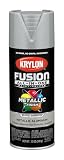
Krylon Fusion All-In-One Spray Paint & Primer, Aluminum
Fusion isn’t a normal spray paint with primer stirred in. The resin is built to soften the top few microns of the surface it lands on and lock into it mechanically as it cures. On aluminum that means it grips the oxide layer instead of sitting on top of it — which is exactly why it can legitimately skip a separate primer coat where standard enamel can’t.
I use it most on aluminum patio furniture and storm-door hardware, where the metal is already pre-finished from the factory. On those surfaces it’s excellent. Here’s the honest limit: on bare, freshly cut mill-finish aluminum it is noticeably weaker. I sprayed a raw aluminum bracket with it and could scratch through to metal with a key at the two-week mark. Pre-finished aluminum, no problem. Raw aluminum, use the etching primer at the bottom of this list.
- Bonds without a separate primer on finished aluminum
- Fast recoat window — second coat inside an hour
- Sprays at any angle, including upside down
- Weak adhesion on raw mill-finish aluminum
- Thin build — needs three coats for full hide over dark metal
Via Amazon.com
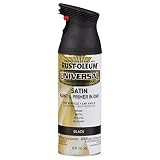
Rust-Oleum Universal All Surface Spray Paint, Satin Black
Universal uses an oil-modified alkyd that cures by oxidation rather than flashing off solvent alone. The practical effect is a thicker, tougher film than most aerosols leave behind, and one that keeps flexing slightly as the metal expands and contracts through a summer. Aluminum moves more than steel with temperature, so that flexibility matters more here than people expect.
What makes it my pick for mixed projects is that the same can bonds to plastic, wood, and metal without switching products — useful when a piece has aluminum framing and plastic end caps. The trade-off is cure time. It’s tack-free in an hour but stays soft for a full 24, and if you handle it at hour six you’ll leave fingerprints in the film. I’ve done it. Plan the job so the piece can sit overnight untouched.
- Same can works across aluminum, plastic, and wood
- Thicker film than most one-coat aerosols
- Genuine rust-inhibitive package for hardware nearby
- Long soft-cure window — 24 hours before handling
- Strong solvent smell; outdoor or ventilated use only
Via Amazon.com
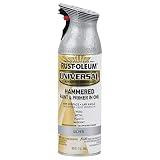
Rust-Oleum Universal All Surface Hammered, Silver
Hammered finishes work by suspending fine particles that break the surface into a dimpled texture as the film levels. That texture does something useful on old aluminum: it scatters light across the pits and chalked spots instead of reflecting a flat plane that shows every flaw. A smooth gloss on 20-year-old aluminum highlights damage. Hammered hides it.
It suits badly oxidized aluminum railing posts that are too chalked to look right under anything glossy, because the hammered texture hides the surface. The limitation is honest and specific: hammered finishes are hard to touch up invisibly. If you chip it, the repair patch won’t match the surrounding texture unless you respray the whole section.
- Masks pitting, chalking, and old scratches
- Texture resists showing new dings
- No primer needed on cleaned, scuffed aluminum
- Touch-ups don’t blend — plan to respray whole sections
- Limited color range compared with smooth finishes
Via Amazon.com
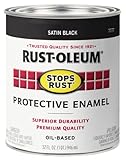
Rust-Oleum Stops Rust Brush-On Protective Enamel, Quart
Aerosols make sense until you’re covering 90 square feet of gutter run, at which point you’re buying eight cans and fighting overspray on the siding. This quart is the same oil-based enamel chemistry in a brushable form, and it lays down a heavier film per coat than any spray can manage. Heavier film means better weather resistance on horizontal surfaces where water sits.
On aluminum it bonds well to any surface that already holds a sound coating, and it’s my default for previously painted aluminum gutters and downspouts. The limitation you need to plan around is brush marks. This enamel levels slowly, and if you overwork it as it starts to set — around the eight-minute mark on a warm day — you’ll drag ridges into the finish that stay there. Lay it on, tip it off once, walk away.
- Far cheaper per square foot than aerosol
- Heaviest film build of anything on this list
- No overspray to mask for
- Shows brush marks if overworked
- 4-to-6 hour recoat — a two-day job, not an afternoon
Via Amazon.com
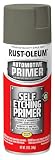
Rust-Oleum Automotive Self-Etching Primer
This one is on the list precisely because it contradicts the headline, and you deserve to know when the shortcut stops working. Self-etching primer carries phosphoric acid that bites microscopically into bare metal and converts the surface into a phosphate layer. Paint can key into that layer mechanically. On raw aluminum, no self-priming topcoat replicates this — it’s a chemical reaction, not a stickier resin.
Use it on any aluminum that arrives bare: freshly cut stock, sandblasted parts, mill-finish trim, boat components. It sprays thin on purpose and you should keep it that way — one light pass, 30 minutes, topcoat. The limitation nobody warns about is the recoat window. Leave etching primer bare for more than about 24 hours and it begins to chalk, and your topcoat then bonds to dust rather than primer. Prime and paint the same day.
- The only reliable answer for bare mill-finish aluminum
- Etches and primes in a single step
- Topcoat-ready in 30 minutes
- Adds a step you were trying to avoid
- Dark green tint needs full hide from the topcoat
Via Amazon.com
Pro tips from the field
Run the water break test before you buy anything. Wash a small area, rinse it, and watch the water. If it sheets into an even film, the surface is genuinely clean and a self-priming paint will bond. If it beads up or breaks into islands, there’s oil or oxide left and no paint on earth will hold. Thirty seconds, and it decides your whole product choice.
Scuff with a red abrasive pad, not sandpaper. Aluminum is soft. Sandpaper digs grooves and loads up with metal in about ten seconds. A red Scotch-Brite pad dulls the oxide film evenly without gouging, which is exactly what you want.
Two thin coats always beat one thick coat. On aluminum this is not a style preference. A thick coat skins over while the solvent underneath is still leaving, and the trapped solvent is what lets a coat release in sheets six months later.
Don’t paint aluminum below 50°F or in direct sun. Cold slows the cure past the point where the film ever hardens properly. Hot metal flashes the solvent before the resin can wet the surface. Early morning shade is the sweet spot.
Degrease last, not first. Scuff, then wipe with denatured alcohol, then paint within the hour. Sanding after degreasing just puts the contamination back.
How many cans will you need?
Enter your surface area and the calculator returns cans for two thin coats, which is what every product above assumes.

How to choose the best paint for aluminum without primer
Every recommendation on this page comes down to one question, and it isn’t about the paint. It’s about which kind of aluminum is sitting in front of you. Get that wrong and the best paint for aluminum without primer will still fail, because the shortcut depends entirely on the surface.
Pre-finished aluminum: the shortcut works
If your aluminum came from the factory with a coating on it — anodized, powder-coated, painted, or clear-lacquered — you’re not painting aluminum at all. You’re painting a finish that sits on aluminum. Self-priming paints bond to that finish reliably once it’s clean and dull. This covers most patio furniture, storm doors, window frames, and light fixtures, and it’s where the best paint for aluminum without primer earns its reputation.
Bare mill-finish aluminum: the shortcut fails
Raw aluminum grows an oxide layer within minutes of hitting air. That layer is chemically inert and mechanically loose — paint can grip it, but the oxide itself lets go from the metal underneath. This is why raw aluminum needs an acid etch and no self-priming topcoat can substitute. If you can see bright, unfinished silver metal, plan on primer. Our full breakdown of spray primers for wood and metal covers the alternatives if the automotive etch isn’t right for your job.
Weathered aluminum: it depends on the chalk
Old aluminum siding and railings develop a chalky powder as the original finish breaks down. Rub the surface with a dark cloth. If the cloth comes away white, that chalk has to be washed off completely — paint bonded to chalk is paint bonded to nothing. Once it’s genuinely clean, weathered aluminum takes a self-priming topcoat well, and the hammered finish above hides the pitting. There’s more detail in our guide to painting siding if you’re working on a whole elevation.
Spray or brush?
Format changes the economics, not the chemistry — the best paint for aluminum without primer comes in both, and neither bonds better than the other. Under 30 square feet with detail work, spray. Over 60 square feet of simple shape, brush. Between those, either works and the deciding factor is masking — if the aluminum sits against siding or glass you’ll spend longer taping than painting, and a brush skips that problem entirely. For a broader look at what holds on aluminum generally, our main aluminum paint guide covers primed systems too, and aluminum boat paint handles the submerged case, which follows different rules entirely.
When skipping primer will fail you
Do not skip primer on bare mill-finish aluminum, on any surface that fails the water break test, or on aluminum with existing paint that’s already flaking. Those three cases account for nearly every peeling failure I’ve been called to look at, and no product on this list fixes them.
Also skip the shortcut on galvanized steel that looks like aluminum — a common mix-up on gutters and fence posts. Fresh galvanizing carries a manufacturing oil that repels paint entirely and needs its own cleaning step. And if the piece is going underwater, on a grill, or on an engine, none of this applies: submerged and high-heat aluminum need dedicated coatings, not household paint. Our metal fence paint guide and rusty metal guide cover the neighboring cases.
The prep sequence that actually matters
Prep matters more than the brand. Durability on aluminum is roughly half product quality and half surface preparation, and the half you control is the cheap one. Here’s the sequence I use every time.
- Wash. Warm water and dish soap, stiff brush, full rinse. Remove chalk, pollen, and road film before anything else.
- Test. Run the water break test. Sheeting means clean. Beading means go back to step one.
- Scuff. Red abrasive pad over every square inch. You want the sheen gone, not the metal removed.
- Rinse and dry. Flush the abrasive dust off and let it dry fully — aluminum holds water in seams longer than you’d think.
- Degrease. Denatured alcohol on a lint-free cloth. Paint within the hour.
- Etch, only if needed. One light pass of self-etching primer on any bare metal, topcoated the same day.
- Two thin coats. Respect the recoat window on the can. Always.
One safety note worth taking seriously: aerosol paints release solvents that concentrate fast in a closed garage. The EPA’s guidance on volatile organic compounds is clear about ventilation during and after painting, and if you’re spraying for more than a few minutes indoors, OSHA’s respiratory protection standards explain why a dust mask isn’t the right tool. An organic vapor cartridge is.
The verdict
For pre-finished aluminum — which is most of what people actually paint — Krylon Fusion All-In-One is the best paint for aluminum without primer, and it isn’t close. It bonds without a separate step and holds through a full seasonal cycle on the surfaces it’s meant for.
If your project mixes aluminum with plastic or wood, Rust-Oleum Universal All Surface saves you a second product. If the metal is old and pitted, the Hammered version hides what smooth paint would advertise. For gutters and long runs, the brush-on Stops Rust enamel costs a fraction per square foot.
And if you’re looking at bright bare metal, buy the self-etching primer. Skipping it there isn’t a shortcut — it’s a repaint scheduled for next spring.
Questions people ask
Yes, on pre-finished aluminum. Factory-coated aluminum — anodized, powder-coated, or previously painted — takes a self-priming paint reliably once it’s washed and scuffed. Bare mill-finish aluminum is the exception and needs an acid etch first.
Krylon Fusion All-In-One. Patio furniture is almost always pre-finished, which is exactly the surface Fusion is designed for, and its fast recoat window means you can finish a whole set in an afternoon.
On properly prepped pre-finished aluminum, five to eight years outdoors before you’d consider a refresh. On bare aluminum with no etch, expect visible failure within one to two seasons — often at the first hard freeze.
Scuff, don’t sand. Aluminum is soft enough that sandpaper gouges it and clogs immediately. A red abrasive pad removes the sheen evenly, which is all the mechanical key a self-priming paint needs.
It will, and better than to bare aluminum. The anodized layer is stable and paintable once dulled. Wash it, scuff it until the shine is gone, wipe with alcohol, then apply two thin coats.
Almost always one of three things: oxide or oil left on the surface, a coat applied too thick to release its solvent, or paint applied over chalk. The water break test catches the first, two thin coats prevent the second, and a proper wash handles the third.
No. Etching primer is for bare metal. On sound existing paint it adds nothing — the topcoat bonds to the old finish, and that’s what you want. Save it for anywhere the old coating has worn through to silver.