Limewash Paint: Everything You Need to Know Before Choosing It
When it comes to giving your home a timeless, rustic, and natural finish, few options rival limewash paint. Unlike standard acrylic or latex paints, limewash has been used for centuries across Europe and is making a strong comeback in modern interiors and exteriors. Its soft, chalky texture and eco-friendly composition make it a favorite among designers, DIY enthusiasts, and homeowners seeking something different from the typical smooth finish. Related: how to limewash walls.
In this guide, I’ll walk you through limewash paint meaning, its pros and cons, where to buy it, how to use it for different rooms, and why it could be the perfect choice for your next renovation. Related: how to limewash brick.
My first limewash job taught me why that last question matters more than any color chart. I brushed a textbook limewash onto a garden wall and watched roughly half of it come away the following spring in hand-sized curls, peeling at the edges like sunburned skin. Someone had sealed that wall years before I ever touched it, and nothing about the surface gave it away until the lime started lifting. A thirty-second splash of water would have told me everything I needed to know before I opened the bucket — now I never skip it, and it is the first thing I cover below.
Quick pick: if you are ordering limewash online rather than from a paint shop, the one I link throughout this guide is Meoded limewash, which is made for interior and exterior walls.
What’s on this page
Quick Picks at a Glance
Three products cover almost every limewash job I get asked about. The table below is the short version — the full cards right after it cover who each one is actually for.
| Product | Best for | Coats needed |
|---|---|---|
| Meoded Lime Wash Paint | Interior and exterior walls, first-time limewashers | 2 |
| VASARI Lime Plaster & Paint | Small accent areas, fireplaces, trial patches | 1–2 |
| Romabio Classico Limewash | Exterior brick and stucco, one-coat coverage | 1 |
Three Products Worth Buying

Best All-Around Pick
Meoded Lime Wash Paint
This is the one I point people to first because it is formulated for both interior and exterior walls, so you are not buying two different products for an accent wall and a porch column. It goes on with a natural-bristle brush in loose, cross-hatched strokes, and the matte, mottled finish comes through by the second coat rather than the first.
- Works on interior and exterior walls
- Soft, variegated matte finish
- Breathable, VOC-free formula
- Needs a porous, unsealed surface
- Two coats recommended for even color
Best for: homeowners doing their first limewash project who want one product that works indoors and out.
Via Amazon.com

Best for Small Accent Areas
VASARI Lime Plaster & Paint
VASARI is made from natural lime and powdered marble rather than a synthetic filler, and the quart size is exactly right for a fireplace surround, an alcove, or a test patch before you commit a whole room. I reach for this one when a client wants to see the real texture on their own wall before buying a gallon of anything.
- Natural lime and marble, no synthetic fillers
- Quart size is ideal for test patches
- Fine, subtle texture
- Smaller sizes cost more per square foot
- Still needs a porous surface
Best for: fireplaces, alcoves, and test patches before committing to a full wall or room.
Via Amazon.com

Best for Exterior Brick & Stucco
Romabio Classico Limewash
Romabio’s Classico is an Italian slaked-lime formula built to cover in a single coat, which matters on an exterior where you are working off a ladder or scaffold and every extra coat means another day of weather risk. The Bianco White shade is the one I have used most on brick façades that needed to look aged on day one rather than after five years of weathering.
- True one-coat coverage on most brick
- Italian slaked-lime formula
- Faster exterior application
- Smaller 2.5L size means buying multiples for larger façades
- One coat looks thinner on very smooth stucco
Best for: exterior brick and stucco jobs where you want full coverage without a second coat.
Via Amazon.com
Why It Fails on Most Modern Walls
Before you buy a drop, there is one question that decides whether this project works: is your surface even capable of taking limewash? Regular paint forms a film that grips a surface mechanically. Limewash soaks in and turns back into limestone inside the pores of the masonry — no pores, no bond.
- Sealed brick or stone: a clear masonry sealer blocks absorption completely — the number one cause of failure.
- Anything already painted with latex or acrylic: limewash cannot penetrate a cured plastic film.
- Vinyl, metal, plastic, and modern hard-fired brick: no porosity for the lime to carbonate into.
A sealer is invisible once it has cured, which is what makes this the most common limewash mistake. That is exactly the mistake I made on that garden wall, and it is why I now run this test on every job before I open a can.
The 30-Second Water Test
- Splash water on the surface in three separate spots.
- Watch for sixty seconds.
- If the water soaks in and the patch darkens, the surface is porous and limewash will bond.
- If the water beads or sits there, the surface is sealed or coated — limewash will fail.
Test in more than one spot. Walls get patched, repointed, and partially sealed over the years, so it is common for one section to drink and another to repel. If even one patch fails the test, that area needs stripping or a different product before you commit to the whole wall.
What is Limewash Paint?
Limewash paint is a traditional finish made from slaked lime (calcium hydroxide), water, and natural pigments. Once applied, the paint absorbs into the surface rather than sitting on top, creating a textured, matte finish that feels alive. Unlike synthetic paints, it allows the wall to breathe, reducing issues with moisture buildup. Related: best limewash paint.
This unique absorption process also means that limewash walls develop a natural variation in tone, giving your space an earthy, old-world charm that regular paint simply can’t replicate. Fresh lime sits around pH 12 when it is wet, which is one reason it resists mildew far better than most people expect — I limewashed a damp basement stairwell mostly to see what would happen, and three years later it is still clean.
Before painting, always ensure your walls are properly prepped. Read our guide on how to clean walls before painting for best results.
Limewash Paint Pros and Cons
Like any product, limewash paint has its advantages and limitations.
Pros:
- Natural Look: Creates a warm, soft, mottled texture.
- Eco-Friendly: Made with natural minerals, VOC-free, and safe for indoor use.
- Breathable: Prevents trapped moisture, ideal for older homes.
- Durable: Becomes stronger over time as it calcifies.
- Unique Finish: No two limewashed walls look exactly the same.
Cons:
- Requires Proper Surface: Works best on porous surfaces like brick, plaster, or stone.
- Fading: Can lighten over time, requiring touch-ups.
- Application Learning Curve: Not as straightforward as rolling latex paint.
- Limited Color Range: More muted and natural shades compared to modern paints.
If you’re torn between durability and aesthetics, check our guide on the benefits of painting your home to see how limewash compares.
Limewash Paint for Interior Walls
One of the most popular uses today is limewash paint for interior walls. Its calming, chalky finish works especially well in living rooms, bedrooms, and bathrooms.
- Limewash Paint Bedroom: Adds a cozy, cocoon-like feeling.
- Limewash Paint Bathroom: Works beautifully in low-sheen, moisture-friendly spaces (but pair with proper ventilation).
- Limewash Paint Living Room: Creates a warm, inviting environment with timeless depth.
If you’re painting ceilings to complement your limewash walls, check our detailed guide on the best ceiling paint colors for smooth design flow.
Limewash Paint for Exterior Walls
Historically, limewash was primarily used outdoors. In fact, it remains one of the best paints for exterior walls thanks to its breathability and natural weather resistance. Over time, it develops a patina that feels authentic rather than worn out. Related: how to limewash fireplace.
Homeowners who want character in their façade often choose limewash because it allows buildings to “age gracefully.” Unlike synthetic paints that peel, limewash wears down evenly, maintaining charm for decades. Outdoors, expect five to seven years before it has thinned enough to want a refresh — and refreshing is the easy part, since there is nothing to strip and nothing to sand. Wash the wall, soak it, and put another coat straight over the old one.

Photo by Jelena Lapina on Unsplash
Limewash Paint Texture: Why It Stands Out
The main reason designers love limewash is its texture. Instead of flat, one-dimensional walls, limewash creates a layered, cloud-like effect.
- Limewash Paint Wall: Perfect for feature walls that stand out subtly.
- Limewash Paint Texture Seamless: While irregularity is part of its beauty, skilled application can create smoother, seamless finishes.
- Limewash Paint Interior Accents: Works on fireplaces, alcoves, and stairwells.
If you’re looking for other ways to bring texture into your home, you may also enjoy our guide on how to stain a fence for rustic wood finishes.
Popular Brands: Portola Paints Limewash
Among modern brands, Portola Paints Limewash is one of the most recognized. Known for its curated color palette and high-quality ingredients, Portola makes limewash accessible for both professionals and DIYers.
The company offers pre-tinted options in trendy shades like soft beige, muted greens, and earthy browns. If you’re considering Portola, remember to order samples first—since limewash looks very different depending on lighting and surface texture.
Limewash Paint Colors: Timeless and Modern Choices
While limewash traditionally comes in neutral and earthy shades, modern formulations include a wide variety of tones.
- White & Creams: Classic, airy, and timeless.
- Beige & Taupe: Cozy and grounding.
- Limewash Paint Green: A growing favorite in interiors for its calming, natural appeal.
- Soft Blues & Greys: Great for creating serene bedrooms and bathrooms.
Want a perfect ceiling match for your chosen wall color? Explore the best white ceiling paints for a crisp, balanced finish.
Where to Buy Limewash Paint
Finding limewash paint near me depends on your location:
- Limewash Paint UK: Widely available at specialty paint shops, online retailers, and B&Q (limewash paint B&Q).
- Limewash Paint Canada: Found at eco-friendly suppliers and boutique paint companies.
- Limewash Paint US: Portola Paints, Romabio, and independent local shops stock it nationwide.
- Online Stores: Many brands sell directly, making it easy to find niche colors. Shop on Amazon
For tools, rollers, and brushes to get started, check out our recommendations for the best tools to paint a ceiling.
What Actually Matters Before You Buy
Coverage: How Many Gallons You’ll Actually Use
Coverage on limewash is quoted lower than ordinary paint because it soaks into the surface instead of sitting on top of it — expect 100–150 sq ft per gallon on the first coat of porous brick, improving to 150–200 sq ft on the second as the surface fills in. Smooth plaster drinks less and covers closer to 200 sq ft per gallon.
Cure Time and When It’s Actually Durable
Limewash dries to the touch in 2–4 hours, but the real strength comes from carbonation — the lime slowly reacting with carbon dioxide in the air and turning back into limestone. That process takes roughly 2–4 weeks to substantially finish, and the finish keeps hardening for months after that. I avoid washing a limewashed wall or touching it with anything abrasive for at least the first month.
What Limewash Costs by Project
| Job | Product needed | Rough cost | Time |
|---|---|---|---|
| Brick fireplace surround | 1L kit | $45–70 | 2–3 hours |
| Interior accent wall | 2.5L | $80–110 | Half a day |
| Full interior room, brick | 2 × 2.5L | $160–220 | 1–2 days |
| Exterior of a small house | 15L + brush | $400–600 | 2–3 days |
Renovation Stage: FINISH
Limewash is a FINISH stage product — it goes on after every repair, patch, and repoint is done and cured, never before. Applying it over fresh patches that have not fully dried creates uneven absorption and a blotchy result that no amount of extra coats fixes.
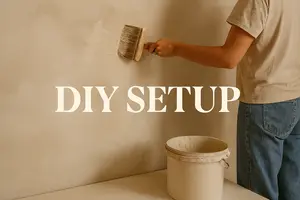
Limewash Painting Tips for Beginners
If you’ve never used limewash before, here are a few practical tips:
- Prep the Surface: Works best on porous surfaces like plaster, stone, or brick. Prime smooth walls with a mineral-based primer.
- Dampen Walls First: Lightly misting the wall helps limewash absorb better.
- Use a Large Brush: Rollers don’t give the same textured effect, use a masonry or block brush.
- Layer in Cross Motions: Apply in X or sweeping patterns for a mottled finish.
- Expect Variation: Remember, unevenness is the beauty of limewash.
If you’re painting a full room, you’ll also want to know how long it takes to paint a room so you can plan ahead.
Field Notes
I’d skip a roller even if someone hands you one — it flattens the exact texture you are paying for. My rule of thumb is to mix small batches, because limewash can shift a shade lighter or darker between buckets of the same color. The first wall I ever limewashed looked blotchy and uneven after a day, and I nearly panicked and added a second coat right away. I waited instead, and by the end of the week the mottling had settled into the finish I actually wanted — a second coat that soon would have flattened it.
When Not to Limewash
Skip it on any wall that has ever been painted with latex or acrylic — it will not bond, no matter how many coats you add. Skip it in kitchens or bathrooms that get scrubbed with grease-cutting cleaners; the surface is still a soft mineral and abrasive cleaning wears it down faster than normal wiping. And skip it below grade on a basement wall with active water intrusion rather than just dampness — limewash tolerates moisture vapor well, but it will not fix a wall that is actively leaking.
How Much Limewash Will You Need?
This assumes two coats on brick or plaster. Enter your wall dimensions to get a rough gallon count.
Limewash Paint vs. Traditional Paint
- Limewash: Breathable, natural, textured, eco-friendly.
- Acrylic/Latex: Smooth, wide range of colors, easy to apply.
- Oil-Based: Durable but less eco-friendly and harder to work with.
For certain rooms like bathrooms, you may still want to explore the best paint for bathroom ceilings to prevent mold before deciding.
Limewash vs. Whitewash vs. Mineral Paint: A Closer Look
These three get used interchangeably online, and they are not the same thing. Choosing the wrong one is how a finish ends up washing off in the first heavy rain.
| Limewash | Whitewash | Mineral (silicate) paint | |
|---|---|---|---|
| Binder | Slaked lime | Diluted latex paint | Potassium silicate |
| Bonds by | Carbonating into pores | Film on the surface | Fusing into silica |
| Breathable | Yes, fully | No | Yes |
| Look | Soft, mottled, matte | Thin, streaky, flat | Even, matte, opaque |
| Lifespan outdoors | 5–7 years, softening | 2–4 years, peeling | 20+ years |
| Reversible | Yes, with pressure washing | No | No |
| Cost per gallon | $70–110 | $15–30 | $90–140 |
Whitewash is the budget imitation — watered-down latex that mimics the look for a season or two before it peels, because it’s still a plastic film pretending to be a mineral. If a video tells you to thin a gallon of wall paint to make limewash, it is describing whitewash. Mineral paint is the permanent option, worth picking when you never want to revisit the wall. Limewash sits between the two: the aged, hand-applied look, with the option to remove it later.
Verdict: Is Limewash Paint Right for Your Wall?
For a first interior accent wall or fireplace: I’d start with the Meoded or VASARI quart size on a test patch after running the water test — it is the cheapest way to see if you like the mottled look before committing a whole room.
For exterior brick or stucco: Romabio Classico’s one-coat formula saves real time off a ladder, and the 5–7 year outdoor lifespan is honest about when you’ll want to refresh it.
The bottom line: limewash earns its reputation on porous masonry and plaster, and it fails for exactly one avoidable reason — a sealed or previously painted surface. Run the thirty-second water test before you buy anything, and the rest of this guide takes care of itself.
Final Thoughts
Limewash paint isn’t for everyone, but if you’re drawn to natural textures, timeless character, and eco-friendly finishes, it might be exactly what your home needs. Whether you’re revamping a bedroom, bathroom, or living room, or breathing life into an exterior wall, limewash delivers a one-of-a-kind aesthetic that grows more beautiful with age.
If you’re new to the process, start small, maybe a feature wall or fireplace, and build from there. Once you see the charm of limewash in action, you’ll understand why it has lasted for centuries and continues to inspire modern design.
Frequently Asked Questions
What is limewash paint made of?
Limewash is made from slaked lime (calcium hydroxide), water, and natural mineral pigments — no acrylic, latex, or plastic binders. That mineral-only recipe is what lets it soak into masonry and carbonate back into a limestone-like finish instead of sitting on top as a film.
Does limewash paint wash off in the rain?
Properly applied limewash on a porous, unsealed surface does not wash off — it carbonates into the wall over 2–4 weeks and becomes part of the surface. Freshly applied limewash that has not cured yet, or limewash applied over a sealed or previously painted wall, can rinse or peel away.
How long does limewash paint last?
Indoors, limewash effectively does not fail — it is a mineral surface in a stable environment and will outlast the room’s decor. Outdoors, expect five to seven years before it has thinned enough to want a refresh.
Can you put limewash paint on drywall?
Not directly. Drywall is sealed and not porous enough for limewash to bond. You need a mineral-based primer designed to give drywall the porosity limewash requires, or the finish will flake.
What is the difference between limewash and whitewash?
Limewash is slaked lime that carbonates into a porous surface and is fully breathable. Whitewash is usually diluted latex paint that sits on top as a thin film, looks similar at first, but peels within two to four years outdoors instead of lasting five to seven.
How much does limewash paint cost per gallon?
Most limewash products run $70–110 per gallon, more than ordinary latex paint but less than specialty mineral silicate paint. A small fireplace surround can cost as little as $45–70 total using a 1-liter kit.
Can you remove limewash paint once it is applied?
Yes — limewash is one of the few finishes that is genuinely reversible. A pressure washer or a stiff brush with water will take it back down to bare masonry, which is not true of latex, acrylic, or mineral silicate paint.
Is limewash paint waterproof?
No, and it is not meant to be. Limewash is vapor-permeable by design, which lets moisture pass through the wall instead of trapping it — that breathability is why it resists mildew so well, but it will not seal out standing or driving water the way a waterproof coating does.