The Best Paint for Wood Porch Floors That Handle Weather and Foot Traffic
Updated: May 2026 · ✓ PAINT Stage
Wood porch floors are one of the hardest surfaces to paint correctly — and one of the easiest to paint badly. The best paint for wood porch floor needs to flex as the boards expand in summer heat and contract in winter frost, bond without peeling, and survive both rain and daily foot traffic. Standard exterior wall paint fails here. Regular floor paint formulated for concrete often fails here too. You need a specific kind of flexible acrylic enamel built precisely for painted wood floor surfaces.
We evaluated the top options available and narrowed it to three formulas that consistently deliver on wood porch floors. Here’s how each performs and when to choose which.
Quick Picks at a Glance
| # | Product | Best For | Link |
|---|---|---|---|
| 1 | Valspar 1534 Porch & Floor Latex Enamel | Best Overall — Wood | View |
| 2 | KILZ Low-Lustre Porch & Patio Enamel | Best Mildew Resistance | View |
| 3 | Rust-Oleum 262360 Porch & Floor Urethane | Best Longevity | View |
⚠️ Wood vs. Concrete: Know Your Surface First
This guide covers wood porch floors only. Painting a concrete porch floor requires different prep (etching, masonry primer) and different formula priorities. If your floor is concrete, see our guide to the best paint for concrete porch floor or our full porch floor paint overview that covers both surfaces.
Full Product Reviews
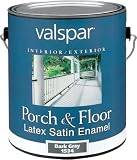
Valspar’s 1534 is the formula most often cited when experienced painters are asked about the best paint for wood porch floor performance. Its 100% acrylic latex base is engineered with flexibility in mind — it can expand and contract with wood as temperatures swing between seasons without breaking the film along grain lines. That flexibility is what separates it from rigid oil-based enamels, which look great initially but crack along board seams and knots after the first freeze-thaw cycle.
Coverage runs 300–400 sq ft per gallon on smooth, sanded wood. The satin sheen is subdued enough to avoid the slippery look of high-gloss options while still being cleanable and durable. Application is easy with a 3/8″ roller, and it levels well enough to minimize brush marks on cut-in edges. Two solid coats on primed wood deliver a finish that should last two to three seasons before needing a refresh. For a traditional painted wood porch, this is the benchmark product.
- Excellent flex on wood surfaces
- Satin finish is durable and cleanable
- Good leveling — minimal roller marks
- Water-based, easy cleanup
- Available in Dark Gray — limited color range
- Requires clean, sanded, primed wood
Best for: Traditional painted wood verandas, covered front porches, and any wood floor that goes through freeze-thaw cycles.
Check Price on AmazonVia Amazon.com
More from ThePaintly
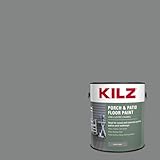
KILZ is the name most associated with stain-blocking primers, but their porch floor formula is a genuinely strong topcoat in its own right. The 100% acrylic latex base handles outdoor exposure well, and the standout feature for wood porches in damp climates is the built-in mildew resistance. If your porch is shaded, faces north, or stays wet from rain blown in from the side, KILZ’s formula fights the mold growth that makes paint look dingy and eventually destroys the wood underneath.
The low-lustre finish is slightly less shiny than the Valspar satin — a small difference visually but meaningful for wet traction. Dry-to-touch in one hour, recoatable in four to six hours, which means a full two-coat job is doable in a single day. Coverage is 300–400 sq ft per gallon on smooth wood, 200–300 on weathered boards. This is one of the best paint for wood porch floor options in humid climates where mildew is a real threat.
- Mildew-resistant formula for damp climates
- Low-lustre finish offers good wet traction
- Fast recoat window for same-day two coats
- Works on both wood and concrete
- Ready-mixed colors limited online (Slate/Silver Gray)
- Low-lustre is slightly flat for some tastes
Best for: Shaded porches, north-facing entries, covered porches in humid southern climates, and anywhere mildew is a recurring issue.
Check Price on AmazonVia Amazon.com
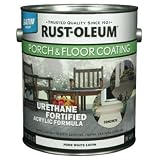
If you want the longest finish life from the best paint for wood porch floor you can buy, Rust-Oleum’s urethane-fortified formula is the choice. Adding urethane to the acrylic base hardens the dried film substantially — it resists scuffs, staining, and abrasion better than pure acrylic paints. If your front porch takes heavy shoe traffic, or you drag outdoor furniture across it regularly, that extra hardness shows up in real years between touch-ups.
The satin finish levels beautifully with a quality roller and shows minimal lap marks. UV resistance is excellent — colors hold for longer in direct sun without the chalking or fading that cheaper formulas show after a few summers. Coverage is 300–400 sq ft per gallon. Dry-to-touch in one hour, recoatable in four. Users typically report a solid three-plus year finish life on well-prepped wood surfaces — meaningfully longer than standard acrylic latex alone.
- Urethane-enhanced durability and scuff resistance
- Superior UV color retention
- Clean satin finish with good leveling
- 3+ year finish life on wood with proper prep
- Slightly higher price than standard acrylics
- Limited color range in ready-mix online
Best for: High-traffic wood porches, entry stoops, and any wood floor where you want maximum time between repaints.
Check Price on AmazonVia Amazon.com
Related Guides
Head-to-Head Comparison
| Feature | Valspar 1534 | KILZ Low-Lustre | Rust-Oleum Urethane |
|---|---|---|---|
| Formula base | 100% Acrylic Latex | 100% Acrylic Latex | Urethane-Acrylic |
| Best for | Flex & wood grain | Mildew resistance | Longevity & durability |
| Finish | Satin | Low-Lustre | Satin |
| Coverage (smooth) | 300–400 sq ft/gal | 300–400 sq ft/gal | 300–400 sq ft/gal |
| Recoat time | 4 hours | 4–6 hours | 4 hours |
| Mildew resistance | Standard | Enhanced | Standard |
| Scuff resistance | Good | Good | Excellent |
🖌️ PAINT Stage
These reviews cover the PAINT stage — the final finish coat after fill, sand, and prime. The best paint for wood porch floor is applied over a dry, primed surface with a clean 3/8″ nap roller. Two coats, with full dry time between each coat, is the standard for lasting performance.
🧮 Wood Porch Floor Coverage Calculator

How to Choose the Best Paint for Wood Porch Floor
Why Flexibility Matters More Than Hardness on Wood
Concrete is a rigid substrate — it barely moves. Wood is alive. It absorbs and releases moisture throughout the year, swelling in summer humidity and contracting in winter cold. A paint film that can’t move with the wood will crack along grain lines and board seams within one season. That’s why the best paint for wood porch floor prioritizes acrylic latex flexibility over oil-based hardness. All three products reviewed here use 100% acrylic or urethane-acrylic binders specifically for this reason.
Satin vs. Low-Lustre: What’s Right for Your Wood Porch?
Both finishes work well on wood porches, but they have different characters. Satin has a slight sheen that repels water well and is easier to wipe clean. Low-lustre is closer to flat — it’s more natural-looking on traditional wood floors and provides marginally better traction. Neither is significantly slippery when dry. For wet conditions, neither matches the performance of a true anti-slip formula. If your porch is regularly rain-exposed, consider our full porch floor paint guide which includes anti-slip options.
How to Prep a Wood Porch Floor Before Painting
All three products reviewed here require proper prep to deliver their rated performance. Sand the surface with 80-grit to remove peeling paint and establish tooth, then finish with 120-grit for smoothness. Vacuum all dust. Apply a coat of exterior wood primer (or a bonding primer for previously painted surfaces). Allow primer to dry fully per label instructions before applying the topcoat. Two coats of topcoat with the manufacturer’s recoat window between coats will give you a finish that lasts. For stripping old failing paint, see our guide to paint removers for wood.
When to Repaint a Wood Porch Floor
Repaint when you see: peeling or flaking sections, chalky texture when you rub the surface, bare wood showing through, or water no longer beading on the surface. On an average residential porch, that typically means repainting every two to four years depending on foot traffic and weather exposure. A light scuff-sanding and one fresh topcoat (no stripping needed on sound existing paint) is usually enough to restore appearance and water protection.
Our Verdict
For most wood porches, the Valspar 1534 is the best paint for wood porch floor — it has the right balance of flexibility, coverage, and satin durability for traditional painted boards. If your porch is shaded and mildew is a problem, swap to the KILZ Low-Lustre Enamel for its built-in mildew resistance. If you’re painting a high-traffic entry stoop and want to push the repaint interval as far as possible, invest in the Rust-Oleum urethane formula for its superior scuff resistance and multi-year durability. All three are proven formulas for wood; the right choice depends on your climate and traffic level.
Frequently Asked Questions
The Valspar 1534 Porch and Floor Latex Satin Enamel is our top pick for wood. Its 100% acrylic latex formula flexes with wood grain, which prevents the cracking and peeling that rigid paints develop along board seams. Proper surface prep (sanding + priming) is equally important — no paint holds on poorly prepared wood.
No. Regular exterior wall paint isn’t formulated for foot traffic, abrasion, or the scuffing a floor receives. It will wear quickly and peel within months. Always use a paint specifically labeled for porch and floor use — these formulas are harder, more flexible, and designed for horizontal surfaces under traffic.
Only if the existing paint is failing — peeling, flaking, or bubbling. If the existing paint is sound, a thorough sand with 80-grit to remove gloss, followed by priming, is sufficient. Stripping to bare wood is only necessary when old paint is peeling in large sections. See our paint remover guide for the fastest stripping options.
With proper prep and two coats, quality porch floor paint lasts 2–4 years on wood under normal residential foot traffic. The Rust-Oleum urethane formula typically reaches the upper end of that range. Heavy traffic, direct sun exposure, and skipped primer steps shorten finish life significantly.
Two coats of topcoat over primer is the standard recommendation. On bare or heavily weathered wood, three coats may be needed for full coverage. Never apply one thick coat — thin, even coats cure more completely and bond more durably than a single heavy application.
Porch floor paint creates an opaque film on top of the wood surface. Deck stain penetrates into the wood and adds color and protection without a thick surface film. Paint gives better waterproofing and a more uniform look; stain shows wood grain, is easier to reapply, and doesn’t peel the way paint can. Paint is the traditional choice for covered porches; stain is more common on open decks.