Best Large Paint Roller: Complete Guide for Fast, Flawless Coverage
If you’re tackling a big wall, ceiling, or even an exterior surface, choosing the best large paint roller can completely change your painting experience. Large rollers can dramatically speed up coverage while giving a smooth, professional finish, if you choose the right type for your surface and paint.
In this guide, you’ll learn what makes a roller “large,” which features define the best professional paint rollers, and how to pick one that delivers both speed and quality.
Why Size Matters When Choosing a Large Paint Roller
Standard rollers are about 9 inches, but large rollers are typically 12 to 18 inches wide, which means you can cover more surface with each pass. That reduces lap marks, makes edges easier to blend, and cuts your project time in half.
However, bigger isn’t always better. Large rollers can be heavy, especially when fully loaded with paint. If the frame flexes or the nap isn’t suited to your surface, you can end up with splatter, streaks, and fatigue.
Before starting, it’s worth reviewing the best way to paint a ceiling so you know how to handle wide rollers on large horizontal surfaces.
Features That Define High Quality Paint Rollers
The difference between a cheap roller and a high quality paint roller comes down to its construction and materials. Look for:
| Feature | Why It Matters |
|---|---|
| Nap length | Short nap (¼”–⅜”) gives a smooth finish, while long nap (½”–¾”) holds more paint for textured surfaces. |
| Cover material | Microfiber or synthetic covers work best for water-based and acrylic paints, while wool excels with oil-based paints. |
| Core quality | A solvent-resistant core won’t warp or crack after cleaning. |
| Frame strength | Strong metal frames prevent wobbling and ensure even pressure. |
| Reusability | Durable rollers save money over time and give more consistent results. |
If you’re not sure which nap or cover to choose, check out this guide on best paint roller covers to match the roller to your surface type.
Picking the Best Type of Paint Roller for Each Surface
The best type of paint roller depends on both the surface texture and the paint you’re using. Choosing the wrong nap is one of the most common mistakes DIY painters make.
Best Roller for Interior Walls
For smooth drywall or plaster, a ⅜-inch microfiber or synthetic roller gives the ideal balance of paint pickup and smooth finish. It’s especially effective if you’re applying two thin coats rather than one heavy coat.
If you’re repainting ceilings at the same time, it also helps to learn the best ceiling paint color to get a seamless contrast between walls and ceilings.
Best Roller for Smooth Walls
Smooth walls demand precision. A ¼-inch nap microfiber roller leaves almost no texture, making it ideal for finishes where you want a glass-like surface. This is common in modern interior designs and accent walls.
Best Paint Roller for Acrylic
Acrylic paints are slightly thinner than latex, so they pair well with microfiber or other synthetic rollers. They don’t shed, rinse out easily, and resist matting. If you’re painting trim or paneling with acrylic, also read these pro tips for trim painting to get sharp edges.
Prepping Surfaces Before Using a Large Roller
Even the best quality paint rollers won’t deliver great results if your surface isn’t prepped. Before rolling:
- Clean the walls thoroughly so dust and grease don’t clog the roller fibers. Here’s a full guide on how to clean walls before painting.
- Prime bare drywall or patches using a good primer, see the best drywall primer to ensure strong adhesion.
- Cut in edges with a brush or edging tool before rolling large areas, as explained in this article on the best way to paint edges between wall and ceiling.
This prep allows your large roller to glide smoothly and cover more evenly.
Best Large Paint Rollers to Buy Right Now
Below are three highly rated large rollers and kits from Amazon. Each is reviewed for coverage, durability, ease of use, and overall value.
ROLLINGDOG 18-Inch Adjustable Large Paint Roller Frame
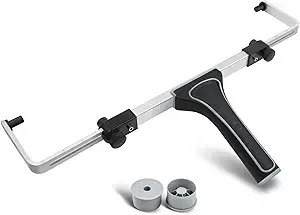
Why it stands out: This adjustable frame extends from 12″ to 18″ and is built from sturdy aluminum with reinforced pins for zero wobble.
Pros
- Extremely rigid frame prevents flexing during long strokes
- Adjustable width makes it versatile for walls and ceilings
- Lightweight enough to use with an extension pole
Cons
- Covers not included (sold separately)
- Heavier when fully loaded with paint
Best for: Painters who already have good roller covers and want a long-term, professional-grade frame.
PinStone 10-Piece Large Paint Roller Kit
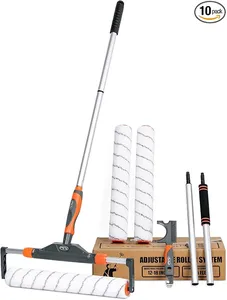
Why it stands out: This kit includes a 12–18″ adjustable frame, ½” nap nylon covers, an ergonomic pole, and a large paint tray—everything you need in one box.
Pros
- Complete set with covers, tray, and pole
- Nylon covers shed very little and hold lots of paint
- Extension pole reduces ladder use
Cons
- ½” nap may leave light texture on smooth walls
- Takes up more storage space than standard rollers
Best for: DIYers handling big spaces who want a full system for large walls or even exterior siding.
Voomey 18-Inch Microfiber Large Paint Roller Kit

Why it stands out: It comes with 12″ and 18″ microfiber roller covers, a sturdy frame, extension pole, and an oversized tray with liners.
Pros
- Microfiber gives a super-smooth finish with minimal lint
- Large tray and liners make loading and cleanup fast
- Two roller sizes let you switch for different areas
Cons
- Bulky components require more storage space
- Microfiber must be cleaned gently to avoid matting
Best for: Getting a professional finish on large, smooth interior walls or ceilings with acrylic paint.
How to Use a Large Roller Like a Pro
Load Paint Properly
Dip the roller cover, not the frame, into the tray and roll it back and forth until evenly coated. Avoid overloading, which causes drips and splatter.
Use the “W” Technique
Start by rolling a “W” on the wall, then fill it in without lifting the roller. This ensures smooth, consistent coverage.
Work in Manageable Sections
Paint 3–4 foot sections at a time and overlap slightly while the previous section is still wet to prevent lap marks.
Maintain Your Roller
Wrap the roller in plastic during breaks to prevent drying. Clean thoroughly after painting—especially microfiber covers, which need gentle rinsing to last. If you do get drips or runs, this guide on how to fix paint drips can help you correct them before they dry.
An 18-inch roller is the right tool for open wall and ceiling, and the wrong tool for everything else. On doors, cabinet faces and trim you want the opposite of nap — a foam roller lays a film flat enough that you stop seeing stipple under a raking light. If the wall is the feature rather than the background, a patterned paint roller puts a repeat on it in one pass for the price of a stencil kit. And when the surface is genuinely large — a full exterior, a warehouse wall — the arm gives out before the roller does, which is the case for a power paint roller that feeds from the can.
Mistakes to Avoid When Using Large Rollers
- Using a long nap on smooth walls, which leaves stipple texture
- Buying cheap frames that bend under weight
- Skipping surface prep, which causes peeling and uneven coverage
- Trying to roll tight corners, cut them in first
To speed up drying between coats, try these tips on how to make paint dry fast.
Final Thoughts
A good quality paint roller can transform the look and speed of your paint job. For large walls and ceilings, the right choice is usually a 12–18″ microfiber roller with a sturdy frame. For rough or textured surfaces, use a longer nap nylon roller. And for ceilings, go for a lightweight frame paired with a pole for easier control.
Investing in the best large paint roller saves time, improves finish quality, and reduces fatigue, especially when combined with smart prep like cleaning walls before painting and choosing the best ceiling paint to match your walls. With the right roller, your next big painting project can be faster, cleaner, and far more satisfying.
About the author: Sophie Ulman has renovated and painted more rooms than she can count — and made every mistake in the book so you don’t have to. She focuses on real-world durability: not how products perform on day one, but whether the repair holds through a full seasonal cycle.