Best Commerical LED Ceiling Panels: A 2025 Buyer’s Guide With Real-World Picks
Upgrading a retail store, office, clinic, school, or warehouse? The lighting you choose shapes productivity, comfort, and operating costs for the next 5–10 years. This guide explains everything you need to know about choosing the best commerical led ceiling panels, with clear picks for different spaces, hands-on installation advice, and user-style product reviews that talk about what is good, what is not, and who each panel really serves.
Quick picks by space
Decision guide, step by step
1) Start with your grid and light levels
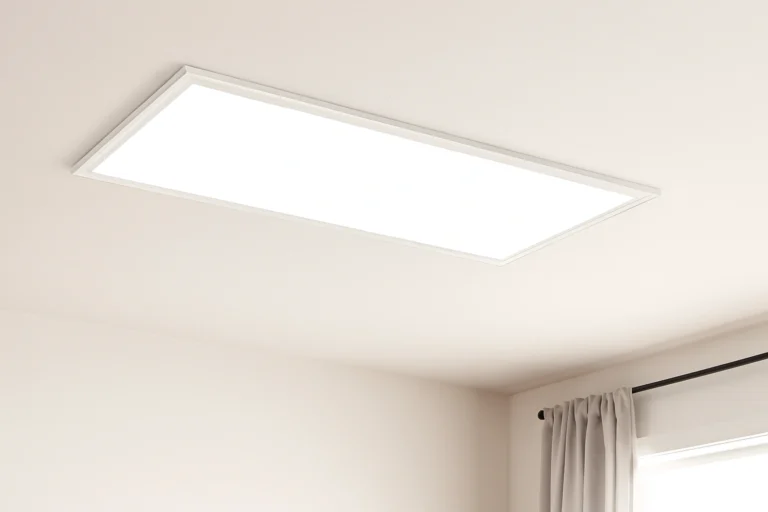
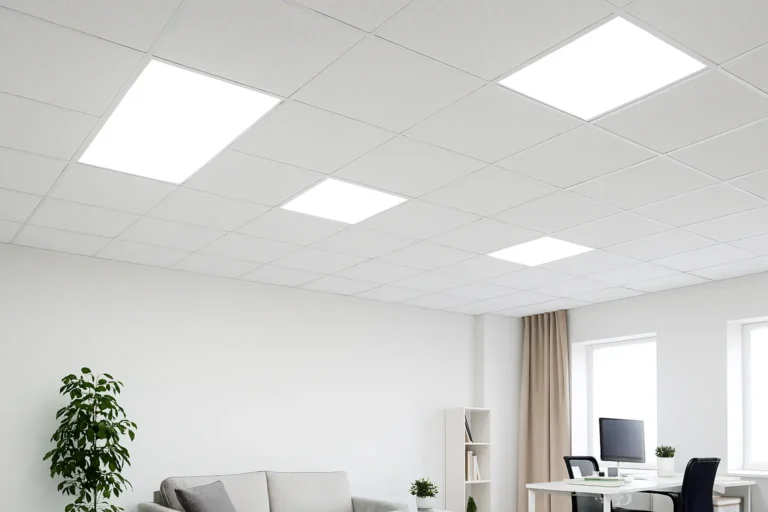
Confirm tile size and counts, typically 2×2 ft or 2×4 ft. Plan panel spacing against target lux (foot-candles) for each task area. Back-lit panels usually give stronger, more even output than some budget edge-lit designs, which can show subtle hotspots at steep viewing angles.
2) Choose color temperature and CRI by room
- 4000 K: Looks neutral, great for offices and classrooms.
- 5000 K: Feels crisp in retail, corridors, and inspection areas.
- Selectable-CCT: Panels let you tune after install, protecting you from “too warm” or “too cool” surprises.
3) Dimming and controls
Commercial spaces often use 0–10 V dimming. Make sure your driver supports it and that your controls match. Many budget “dimmable” panels only work with 0–10 V, not typical residential TRIAC wall dimmers.
4) Driver quality and serviceability
The LED driver is the most common failure point. Prefer brands with accessible drivers and at least 5-year warranties. If you are fitting out dozens of fixtures, verify spare driver availability.
5) Trial before rollout
Always install 2–4 panels as a mockup. Check for glare on screens, color consistency across batches, and any flicker at low dim levels.
Installation checklist
Get pro results on day one
- Tune CCT per room type, then walk with stakeholders to confirm preference.
- Measure light levels at desks and aisles to verify your layout model.
- Dim to ~70–80 percent for headroom; you can always brighten later.
- Log every driver setting in a spreadsheet for future maintenance.
Smart guides to help you finish the room
New lighting often pairs with paint and finishing work. If you are repainting, these deep-dives will save time and rework:
- Preparing the surface, see how to clean walls before painting for residue removal and primer decisions.
- If you plan a fresh ceiling coat, start with the best way to paint a ceiling and the best ceiling paint roller to avoid lap marks under bright panels.
- Matching trims and edges, see best way to paint edges between wall and ceiling.
- For damp rooms near HVAC or restrooms, pick finishes from best ceiling paint for high moisture bathrooms or best paint for bathroom ceiling to prevent mold.
These choices matter because bright commercial panels make surface defects and roller marks easier to see.
How to choose the best commerical led ceiling panels for your use case
- Office and co-working
Aim for 4000 K with a high-quality diffuser and low flicker to reduce eye fatigue. 0–10 V dimming helps during presentations. - Retail and showrooms
5000 K can make products pop. Watch CRI and R9 for color-critical items like clothing, cosmetics, and food. - Healthcare and labs
Consistency and easy cleaning matter. Seek sealed diffusers and strong brand support. - Education
Uniformity is key across large rooms; selectable CCT lets you adapt for interactive displays and testing environments. - Warehouses and back-of-house
Favor efficacy and durability. You might blend panels with linear high-bays in tall spaces.
Product reviews that read like a user, not a spec sheet
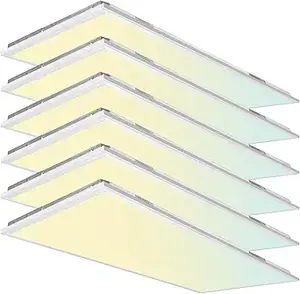
1) Hykolity 2×4 FT LED Flat Panel Troffer, back-lit, 0–10 V dimming, wattage and CCT selectable
Why it is good
If you manage mixed areas, open plan, huddle rooms, corridors, this single SKU covers most of them. Tuning wattage and CCT on the driver is like having multiple models in one. Uniform back-lit design reduces the “bright edges, dim center” look you sometimes see in cheaper edge-lit panels. Good pick when you want fewer stocking headaches.
Who benefits
Office fit-outs, schools, and landlords who need flexible, repeatable installs without re-ordering multiple variants.
Pros:
Cons:
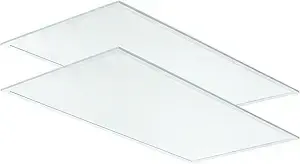
2) Lithonia Lighting CPANL 2×4, switchable CCT and lumen output
Why it is good
You get switchable color temperatures and multiple lumen packages on one chassis, which helps standardize across floors while fine-tuning brightness per room. Lithonia is widely specified in commercial projects, so service and documentation are easy to find.
Who benefits
Design-build teams and property managers who value brand support and SKUs that can flex between conference rooms and corridors.
Pros:
Cons:
3) Parmida 2×2 Edge-Lit LED Flat Panel, dimmable

Why it is good
Small rooms and hallways do not always need a 2×4. This 2×2 brings bright, even light in a compact footprint. Edge-lit construction keeps it ultra-thin, helpful when you are tight on plenum space.
Who benefits
Clinics, small classrooms, law offices, and corridors where a 2×4 looks oversized.
Pros:
Cons:
4) NuWatt 2×4 LED Panel, surface-mount options, universal voltage, 0–10 V
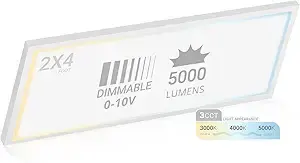
Why it is good
When your grid is inconsistent or you need a clean surface-mount finish, NuWatt’s kits and universal 120–277 V drivers simplify retrofits across multi-tenant buildings. 0–10 V dimming plays well with standard commercial controls.
Who benefits
Property managers retrofitting older buildings with mixed voltages, or spaces without a full drop-ceiling.
Pros:
Cons:
5) Hykolity 2×4 Troffer, multi-pack for budget rollouts
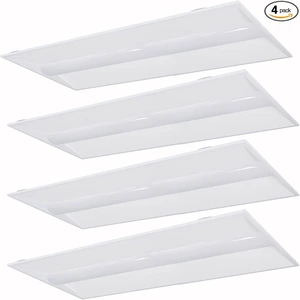
Why it is good
Large renovations need consistent performance at scale. This multi-pack balances price with back-lit uniformity, 0–10 V dimming, and high efficacy. Good choice for districts, call centers, and value-driven office rollouts.
Who benefits
Schools, multi-floor offices, and managed facilities where price per unit matters but you still want clean, even light.
Pros:
Cons:
Recommended products, at a glance
| Model | Sizes | Dimming | Standout feature | Link |
|---|---|---|---|---|
| Hykolity 2×4 back-lit, selectable | 2×4 | 0–10 V | On-device wattage and CCT toggles | Buy Here |
| Lithonia CPANL switchable | 2×4 | Dimmable | Switchable lumens and 3500/4000/5000 K in one | Buy Here |
| Parmida 2×2 edge-lit | 2×2 | Dimmable | Ultra-thin profile for tight plenums | Buy Here |
| NuWatt 2×4 surface-mount | 2×4 | 0–10 V | Surface kit for non-grid ceilings, 120–277 V | Buy Here |
Maintenance and troubleshooting
Related reads to round out your project
- Ceiling makeover in bright light, see best ceiling paint and best white ceiling paint for smooth, uniform finishes under panels.
- Speed up jobs with best ladder for painting and these best tools to paint a ceiling.
- Working around textured ceilings? Compare best way to paint a popcorn ceiling and best ceiling paint after popcorn removal.
Final words
The “best” panel is the one that fits your grid, meets your target light levels, dims cleanly with your controls, and stays consistent year after year. If you want a safe, versatile starting point, choose a selectable CCT, back-lit panel with 0–10 V dimming from a brand with accessible support. Trial a small batch, tune settings to the room, and document everything. You will feel the difference on day one, and your maintenance team will thank you in year five.